

Delta Pupils Learn on Bare Floors as Schools Decay Despite Rising Education Budget
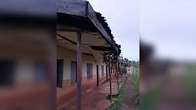
Public schools across several communities in Delta State are operating in deplorable conditions, with many pupils learning in roofless classrooms and sitting on bare floors despite a sharp increase in government spending on education over the past three years.
Findings from affected communities revealed widespread infrastructure decay, shortage of teachers, lack of desks and chairs, and unsafe learning environments in many schools, raising concerns about the implementation and oversight of education projects in the oil-rich state.
The state government increased education funding from N46.55 billion in 2024 to N67.42 billion in 2025, before raising it further to N105.086 billion in the 2026 budget. The allocation, captured under the state’s “Budget of Accelerating the MORE Agenda,” was expected to support school construction, rehabilitation of facilities and expansion of technology-driven learning.
However, residents and parents say the condition of many schools do not reflect the huge financial commitments announced by the government.
At Ejedinka Primary School in Aniocha North Local Government Area, classrooms have reportedly deteriorated badly, with several buildings lacking roofs and furniture.
Thick bushes now surround parts of the premises, while poor access roads and the absence of fencing have heightened safety concerns for pupils.
Community members said the school has suffered years of neglect despite repeated appeals for intervention.
A resident, Dr. Jude Iyitor, recalled that the school once had a reputation for quality education but has now fallen into disrepair.
According to him, inadequate staffing, poor infrastructure and the absence of learning materials have discouraged enrolment and affected academic activities.
Another resident, who declined to be identified, said many pupils now sit on bare floors during lessons because classrooms lack desks and chairs.
He added that repeated appeals to authorities had yielded little response, warning that the condition of the school was putting the future of children in the community at risk.
Similar concerns were raised at Obi Ezeamaka Primary School and Isioma Onyeobi College, where residents described learning conditions as poor and facilities inadequate.
The Executive Director of Global Peace Development Nigeria, Mr. Ebruke Esike, also expressed concern over conditions in schools located in rural communities in Isoko North and South local government areas.
Speaking during a stakeholders’ meeting in Asaba, Esike said several schools in communities such as Oter-Iyede, Erawha, Uro-Irri, Idheze and Ukpude lacked adequate furniture and teaching personnel.
He cited Ukpude Primary School as one of the schools facing acute staffing shortages, noting that only a few workers currently manage academic and administrative activities there.
At Aka Primary School, residents said pupils learn in empty classrooms without windows, doors, desks or chairs.
Former Financial Secretary of Ukpude Community, Samuelson Atamu, described the situation as unacceptable for an oil-producing area, saying children were being forced to study under extremely difficult conditions.
Residents blamed years of neglect and poor response from authorities for the worsening crisis.
An education stakeholder, who spoke anonymously, alleged that corruption and mismanagement within the education sector were partly responsible for the poor state of schools despite yearly budget increases.
Meanwhile, sources within government circles said Governor Sheriff Oborevwori was displeased with the condition of public schools and recently approved a reshuffle involving the education ministries.
Under the changes, Rose Ezewu was moved from the Ministry of Secondary Education to the Ministry of Primary Education, while Kingsley Ashibuogwu was reassigned to oversee secondary education.
The redeployment was announced earlier this year by the Secretary to the State Government, Kingsley Eze Emu.
Sources said the changes were intended to improve monitoring and accountability in the education sector amid growing public criticism over deteriorating infrastructure in public schools.
Efforts to obtain official comments from government officials were unsuccessful, as calls and messages sent to relevant authorities were not returned.
Education stakeholders have warned that unless urgent intervention is carried out, worsening infrastructure and poor learning conditions could deepen the education crisis in many communities across the state.