How Tinubu Stopped Bleeding Economy Through Subsidy Removal, FX Control
For decades, Nigeria’s wealth has been siphoned off through intricate systems of legalized looting, primarily hidden within the structures of fuel and foreign exchange (FX) subsidies.
While many critics are quick to label every administration as corrupt, a closer look at President Bola Ahmed Tinubu’s bold policy shifts reveals a strategic dismantling of the very mechanisms that once enriched a select few at the expense of millions.
Let take a short history lesson on how much was paid on fuel subsidy starting from Obasanjo administration of 1999, approximately ₦ 300 billion annually, with higher proposals toward 2007, there was a hike during Umaru Musa Yar’Adua administration with ₦ 1.37 trillion for 2007–2009. During Goodluck Jonathan administration, subsidy payments skyrocketed, leading to major scandals and the “Occupy Nigeria” protests in 2012, a total of ₦ 6.68 trillion between 2010 and 2014. Muhammadu Buhari administration saw an increase of ₦ 1.27 trillion (₦ 7.95) trillion between 2015-2022. But in2022 alone, fuel subsidy costs were approximately ₦ 4 trillion.
The most effective way to steal from the public is through a system so complex that the average citizen cannot track the flow of funds. The fuel subsidy was exactly that. Imagine a scenario where the government agrees to subsidize 1,000 liters of fuel for the population. A corrupt system, however, can easily claim a subsidy for 20 million liters. This artificial inflation creates a massive windfall for those in power and their cronies, who pocket the difference on the remaining 19,999,000 liters without the public ever realizing they are being robbed. Similarly, the FX subsidy functioned as a get rich quick scheme for the elite. When the official dollar rate is held artificially low say at ₦600 while the market value is ₦1,000 those with access to official channels can collect billions of dollars weekly. By simply moving that money to the open market, they become overnight billionaires, profiting hundreds of millions on every transaction. If President Tinubu truly wanted to enrich himself and his inner circle, the easiest path would have been to maintain these subsidies. Instead, he chose the difficult path of removal to ensure the nation’s resources actually reach the people.
To prove the effectiveness of fuel subsidy removal, the daily fuel consumption before removal (2023) was heavy with 66.7 -69. million liters daily and sometimes peaks to over 71 million liters. After removal there was a drastic reduction in daily consumption with about 46.38 – 48.43 million daily. When both data are compared (before and after removal) there is a difference of about 28% to 35% which suggest that there was a reduction because the business is no longer lucrative for smuggler who buy at a subsided price in Nigeria to sell in neighboring countries which often lead to supply deficit in Nigeria. Executive Chairman of the Nigeria Revenue Service, (NRS) Zacch Adedeji opined that Nigeria would have spent about N52 trillion on fuel subsidies, representing 76% of the N68 trillion 2026 budget, if the policy had not been removed, this shows how much the government is saving.
The current resistance to these reforms mirrors a historical record in Southwest. In the 1950s, there were differences in opinion between Chief Obafemi Awolowo and Chief Samuel Ladoke Akintola. Following a political setback in 1955, Akintola proposed populist measures: removing women from the tax net and reducing taxes for men to regain popularity. Awolowo, a visionary leader, disagreed. He understood that without tax revenue, a government cannot fund development. Awolowo’s philosophy was clear: collect taxes and use them for visible, life-changing projects. He knew that if people saw their money building major highways and expanding the economy, they would support the system. Unfortunately, the populist route was taken, leading to a period where development in the Southwest stalled because the funds were mismanaged or stolen.
The removal of these subsidies is not an act of austerity for the sake of it; it is a redistribution of wealth from the cabals to the vulnerable. The effect of this is already visible in several groundbreaking initiatives, such as the Tertiary Education Trust Fund (TETFUND), subsidized dialysis, and the Nigeria Education Loan Fund (NELFUND), which provides enough money to ensure brilliance is not stifled by poverty. Furthermore, for the first time, the government is implementing ASUU agreements, providing life pensions for lecturers, and paying salary to civil servants without massive external borrowing. This ensures that the funds saved from subsidies are pumped directly into state and local government projects. The Tinubu administration is proving that the government no longer needs to borrow just to pay salaries. By stopping the massive looting through fuel and FX subsidies, the administration is reclaiming Nigeria’s sovereignty and ensuring that the nation’s wealth finally belongs to the people.
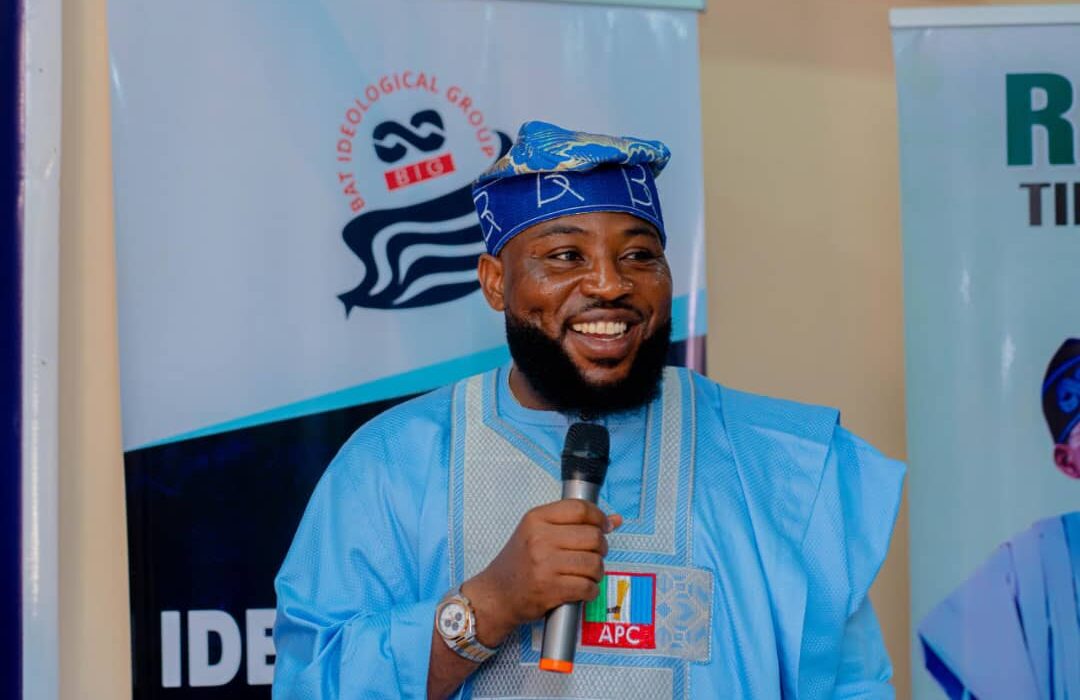
Bamidele Atoyebi is the Convener of BAT Ideological Group, National Coordinator of Accountability and Policy Monitoring and a publisher at Unfiltered and Mining Reporting