Tinubu Reinvigorating Fiscal Federalism Through Grassroots Reforms, Says Atoyebi
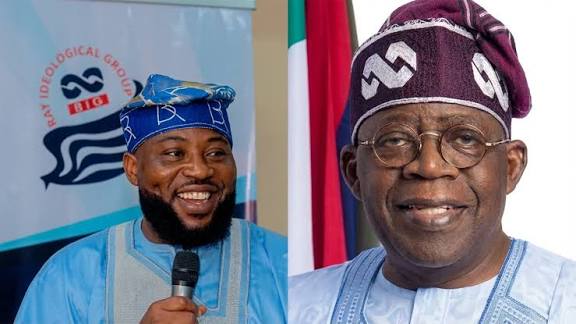
The Convener of the Bola Ahmed Tinubu Ideological Group has described President Bola Ahmed Tinubu as the “architect of modern fiscal federalism,” citing a series of decentralisation policies aimed at strengthening grassroots governance and redistributing economic power across Nigeria.
In a detailed statement, the Convener said Tinubu’s approach to fiscal federalism — defined as the financial relationship among federal, state, and local governments — is shifting from theory to practical implementation through policies that empower subnational entities.
“President Tinubu is not treating the grassroots as an afterthought but as the engine room of national development,” the convener said. “What we are seeing is a deliberate bottom-up governance model where resources and responsibilities are being pushed closer to the people.”
The group pointed to Tinubu’s record as former governor of Lagos State, where he created 57 Local Council Development Areas (LCDAs) out of 20 constitutionally recognised local governments, as a defining example of his decentralisation philosophy.
Despite resistance from the federal authorities at the time, the convener noted that Tinubu sustained the structure, arguing that “breaking governance into smaller, more responsive units brought development closer to communities and created jobs at the local level.”
Drawing on a Yoruba proverb: “Eni gbe omo jo ni omo moju” (a child recognises those who play with them), the convener said Tinubu’s political strength stems from consistent grassroots engagement.
“By taking governance to people’s doorsteps, he builds loyalty that is not transactional but organic,” he added. “It’s like watering the roots of a tree rather than just polishing the leaves.”
The statement also highlighted what it described as Tinubu’s “human-centred federalism,” which includes personal interventions in citizens’ welfare.
Citing an account by associate Alhaji Tejumade, the convener said Tinubu has supported individuals with medical assistance and educational opportunities. In one instance, he reportedly helped a businesswoman secure a £100,000 grant through international connections after she opted for guidance over direct financial aid.
“That is governance beyond policy, it is empowerment that multiplies itself,” the convener said.
At the national level, the group identified key reforms under Tinubu’s administration, including the decentralisation of electricity, which allows states to generate and distribute power independently.
“For decades, power failures were blamed solely on the Federal Government,” the convener noted. “Now, governors have both the authority and responsibility to solve energy challenges within their domains.”
On security, the convener referenced moves toward state policing and the establishment of forest guards, describing them as “a seismic shift from over-centralised control to community-based security.”
“Security is local,” he said. “Those who understand the terrain are better positioned to protect it.”
The statement further cited the expansion of federal institutions, including the spread of military training facilities and the extension of the Nigerian College of Aviation Technology into multiple campuses across geopolitical zones, as part of efforts to promote regional inclusion.
In addition, the convener highlighted the approval of a ₦17 billion grassroots development fund targeted at 8,804 political wards nationwide.
According to him, the initiative is designed to bypass bureaucratic delays by working directly with verified community-based organisations to execute local projects.
“This is fiscal federalism at its most practical level,” he said. “It ensures that development is not trapped in paperwork but felt in real communities.”
He maintained that the cumulative effect of these policies positions Tinubu as a transformative figure in Nigeria’s governance structure.
“From Lagos to the federation, the same philosophy applies — empower the base, and the whole system becomes stronger,” the convener said. “That is the legacy of modern Nigerian federalism in motion.”
The convener of the Bola Ahmed Tinubu Ideological Group, also serves as the national coordinator of Accountability and Policy Monitoring PR, and a publisher of Unfiltered and Mining reports.