



U.S. Navy Proposes $305 Billion Shipbuilding Plan, Signaling Major Industrial Push
The U.S. Navy has submitted a $305 billion shipbuilding proposal covering fiscal years 2027 through 2031, marking the second-largest request of its kind since 1955, according to budget documents and supporting analyses released this month.
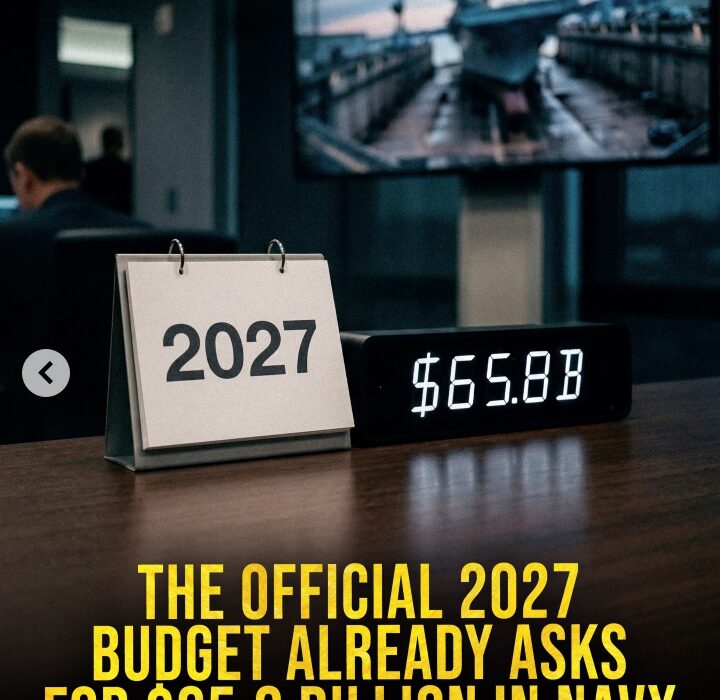
The fiscal year 2027 budget alone includes $65.8 billion for naval construction, a roughly 50 percent increase over the previous year’s enacted levels. That single-year request would fund 34 new vessels: 18 warships and 16 support ships. The broader five-year proposal underscores a strategic emphasis on distance, logistics, and operational endurance, with procurement priorities including submarines, destroyers, amphibious vessels, and logistics support ships.
The budget request builds on two recent policy frameworks: the administration’s Maritime Action Plan and Executive Order 14269, “Restoring America’s Maritime Dominance.” Together, these documents outline a strategy to reverse decades of decline in U.S. shipbuilding capacity amid rising competition from global rivals, particularly China.
A central structural proposal within the budget is the creation of a Maritime Security Trust Fund (MSTF). Unlike traditional annual appropriations, the MSTF would establish a dedicated revenue stream for shipbuilding, fleet maintenance, and maritime workforce training. The fund would be financed through a fee levied by cargo weight on foreign-built commercial vessels docking at U.S. ports.
The budget requests $1.4 billion in initial seed funding to operate until those revenue mechanisms become active. The proposal requires congressional authorization.
The budget also allocates $2.6 billion to the Maritime Administration, including $500 million for port infrastructure, $250 million for a Commercial Shipbuilding Infrastructure Development Program, and $105 million for the Small Shipyard Grant Program—a $70 million increase from current levels. National security maritime programs would see increases as well, with the Maritime Security Program receiving $400.5 million and the Tanker Security Program nearly doubling to $167.6 million.
Observers note that the proposal tests not only military ambition but also industrial capacity. Shipyards, supplier networks, labor availability, and long-term maintenance infrastructure will all face scrutiny under the proposed spending levels. While the budget represents a significant policy statement, it remains a request. Congress controls appropriations, and lawmakers rejected substantial portions of the previous year’s maritime budget. Hearings and negotiations are expected over the coming months.
Analysts point out that large fleets are not realized at the moment funding is approved, but only when a nation retains the physical and industrial ability to build them. Whether this proposal translates into lasting fleet expansion will depend on legislative action and the resilience of the U.S. maritime industrial base.