
An Economy Grows Commensurate to Infrastructure
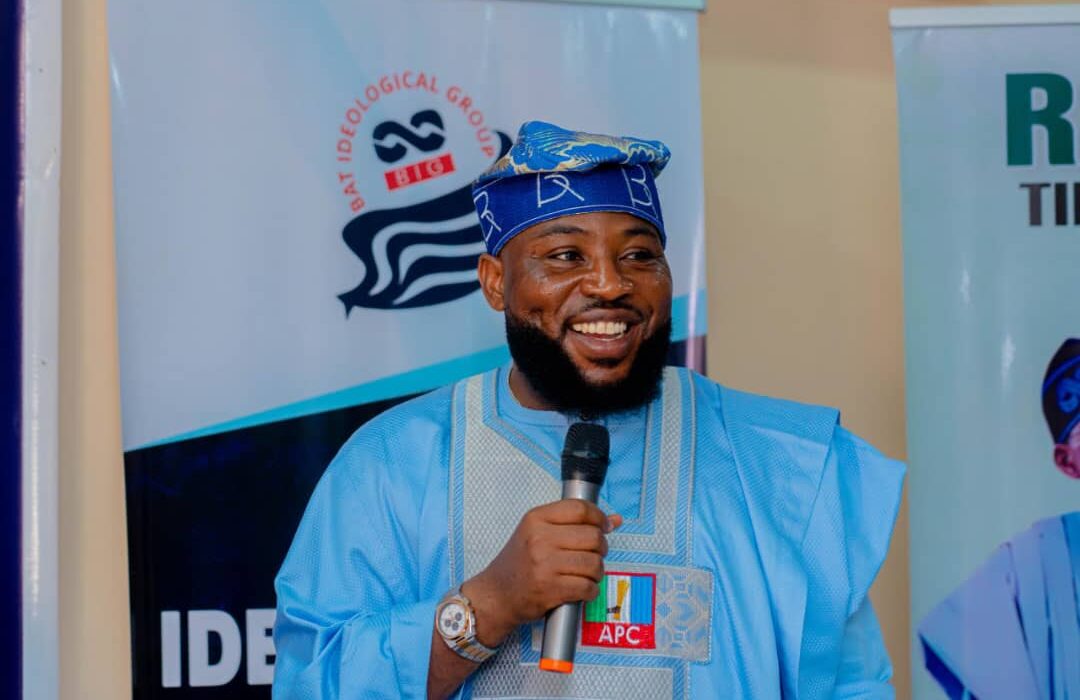
By Bamidele Atoyebi
The vision of catapulting Nigeria into a $1 trillion economy by 2030 is an ambitious roadmap that demands more than just policy tweaks, it requires a complete structural overhaul. Central to this transformation is the understanding that a modern economy cannot function on an antiquated/outdated foundation. For decades, Nigeria has attempted to support a growing GDP on the back of infrastructure built in the late 1970s. To bridge this gap, the government has adopted a strategy of aggressive investment through borrowing, recognizing that the cost of inaction is far higher than that of credit.
As of 2026, Nigeria’s economic reality is often described as trying to balance a skyscraper on a donkey. In 1978, when the nation’s GDP was approximately $40 billion, the government commissioned foundational projects like the Murtala Muhammed International Airport (1979), the Tin Can Island Port (1977), and the Lagos-Ibadan Expressway. Today, that same infrastructure is expected to carry an economy valued at over $350 billion. This massive disconnect creates bottlenecks that stifle productivity, increase the cost of doing business, and prevent the country from reaching its true potential.
History shows that no nation has achieved industrial status by saving its way there, they consciously and deliberately built their way there. To reach the $1 trillion mark, the current economic agenda emphasizes that infrastructure is the primary catalyst. By modernizing seaports, expanding rail networks, and creating digital backbones, the government aims to create an environment where private enterprises can thrive. Without these arteries, the flow of goods and services remains restricted, keeping the economy in a low-growth trap.
Economists argue that borrowing for consumption is a debt trap, but borrowing for production specifically infrastructure is an investment. When a government takes a loan to build a highway or a power plant, it is creating an asset that will generate revenue and taxes for decades. This “patient capital” allows the country to build today and pay back tomorrow using the wealth generated by the new infrastructure. In this context, debt is not a burden but a bridge to future prosperity.
One of the most immediate benefits of these large-scale projects is job creation. Major initiatives like the Lagos-Calabar Coastal Highway, Ajaokuta–Kaduna–Kano Natural Gas Pipeline project and the Lagos-Sokoto Road are not just transport routes; they are massive employment schemes. From the engineers and architects to the thousands of manual labourers and material suppliers, these projects inject liquidity directly into the pockets of citizens, stimulating local economies and reducing the unemployment rate.
Beyond simple transportation, the current administration is shifting toward economic corridors. The Lagos-Calabar Coastal Highway, for instance, is designed to link fertile agricultural zones, industrial hubs, and tourism centers. By integrating fiber optic ducts and power lines into road construction, the government is ensuring that these corridors support both physical trade and the digital economy. This holistic approach ensures that the roads lead to markets, not just other cities.
Nigeria’s strategy mirrors the paths taken by developed nations and emerging tigers. Countries like China, Brazil, and even early 20th-century America utilized significant debt to fund the railways and highways that eventually made them global powerhouses. By studying these models, Nigeria is attempting to compress decades of development into a single, aggressive push toward 2030, recognizing that infrastructure is the force multiplier for all other economic variables.
The infrastructure gap in Nigeria is estimated to require trillions of dollars to close. Currently, Nigeria’s infrastructure stock sits at roughly 35% of GDP, while many of its African peers exceed 50%. This deficit is estimated to bleed 2-4% of GDP growth every year through lost productivity and logistics failures. Borrowing to fix these issues is a calculated move to stop this bleeding and redirect those losses into productive growth.
The path to 2030 is an admixture of both challenges and opportunities. While the debt levels are a point of public discussion, the focus remains on the quality of the spending. If the administration successfully delivers these critical projects, the Nigeria of 2030 will look vastly different a nation where a $1 trillion economy sits securely on a modern, world-class foundation, finally matching its infrastructure to its immense human and economic potential.
Bamidele Atoyebi is the Convener of BAT Ideological Group, National Coordinator of Accountability and Policy Monitoring and a publisher at Unfiltered and Mining Reporting