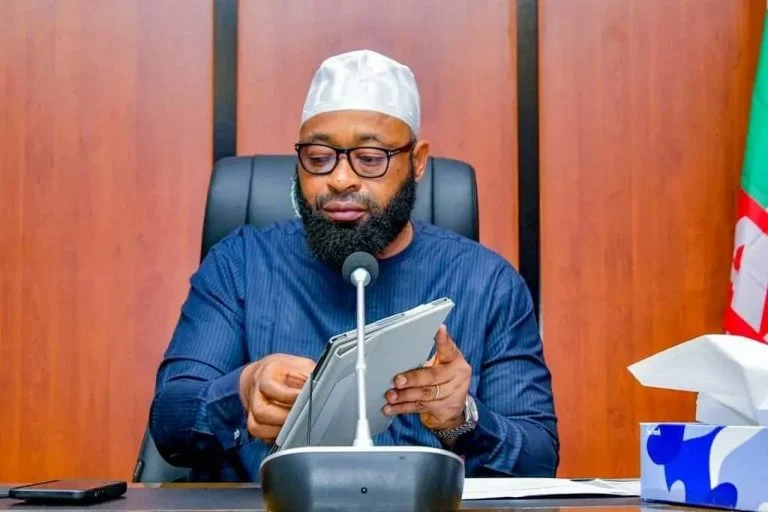

Tinubu Metamorphosis (Jagaban)
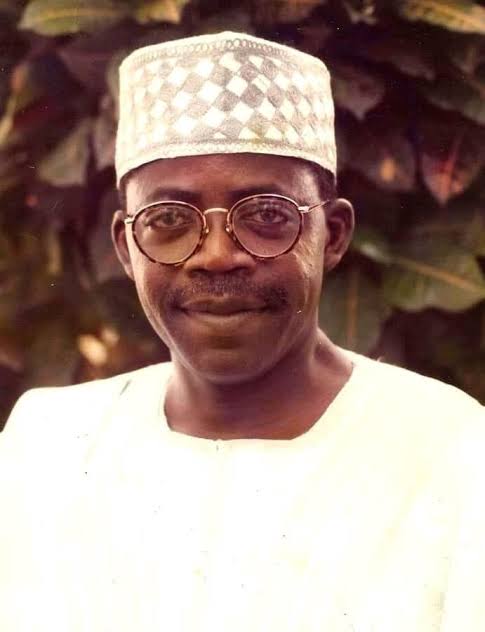
Tinubu Metamorphosis (Jagaban)
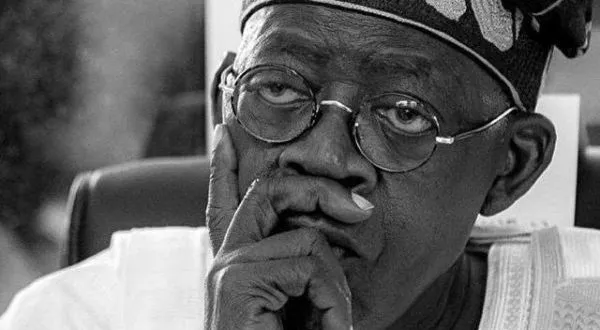
The rise of Bola Ahmed Tinubu is a narrative of strategic patience, financial re-engineering, and the cultivation of a vast political machinery that eventually led him to the highest office in Nigeria. His journey began far from the halls of power, as he built a professional foundation in the United States, studying accounting at Chicago State University. Working for global firms like Deloitte and GTE, he gained the fiscal expertise that would later define his governance style. Upon returning to Nigeria in the 1980s, he joined Mobil Oil Nigeria, eventually rising to the position of Treasurer, a role that cemented his reputation as a technocratic heavyweight before he ever cast a political shadow.
Tinubu’s formal entry into politics occurred during the short-lived Third Republic in 1992, where he was elected to the Senate representing Lagos West. However, his tenure was cut short by the military coup following the annulment of the June 12, 1993, presidential election. This period transformed Tinubu from a lawmaker into a pro-democracy activist. As a founding member of the National Democratic Coalition (NADECO), he became a fierce opponent of General Sani Abacha’s regime. His activism eventually forced him into a dangerous exile in 1994, where he continued to fund and mobilize the resistance against military rule from abroad.
The return to civilian rule in 1999 marked the beginning of Tinubu’s executive ascent when he was elected Governor of Lagos State under the Alliance for Democracy (AD). Lagos at the time was a city-state plagued by crumbling infrastructure, systemic waste, and a crushing dependence on federal allocations. Tinubu’s first term was defined by “financial re-engineering,” as he overhauled the state’s internal revenue generation. By digitizing tax collection and expanding the tax base, he moved Lagos from a monthly revenue of roughly N600 million to over N10 billion, effectively making the state the only one in Nigeria capable of surviving without federal handouts.
His second term (2003–2007) was characterized by a legendary standoff with the federal government under President Olusegun Obasanjo. When the presidency withheld Lagos’s local government funds due to the creation of new administrative areas, Tinubu did not back down. Instead, he utilized his newly built internal revenue to keep the state running, a move that earned him the title of a “federalism champion.” During this time, he also laid the 24-year developmental master plan for Lagos, initiating projects like the Bus Rapid Transit (BRT) system and the Eko Atlantic City project, which his successors would continue to build upon.
After leaving the governor’s mansion in 2007, Tinubu transitioned into the role of a “Kingmaker.” While many governors fade into obscurity after their tenures, Tinubu focused on consolidating the fractured opposition in Southwest Nigeria. He led his party, the Action Congress (AC), to reclaim several states through legal battles and strategic alliances. His influence grew so potent that he became known as the “Jagaban of Borgu” and the “Lion of Bourdillon,” a reference to his home in Lagos where he hosted the country’s most powerful political figures.
The defining moment of his national strategy came in 2013 with the formation of the All Progressives Congress (APC). Tinubu was the primary architect of the “mega-merger” between his Action Congress of Nigeria (ACN) and Muhammadu Buhari’s Congress for Progressive Change (CPC), along with other factions. This was a historic feat, as it united the political interests of the North and the Southwest. His tactical support was the deciding factor that allowed Buhari to defeat an incumbent president for the first time in Nigerian history in 2015, confirming Tinubu’s status as the most powerful unelected politician in the country.
Between 2015 and 2022, Tinubu navigated the complexities of being a party leader without a formal government role. He maintained control over the Lagos political machine, ensuring his hand-picked successors won every election, while simultaneously expanding his “talent hunt” by placing his loyalists in key federal positions, including the Vice Presidency. Despite facing internal party friction and occasional estrangement from the presidency, he meticulously preserved his “structure”—a network of loyalists, traditional rulers, and grassroots mobilizers across the country.
In January 2022, Tinubu made his long-anticipated move, famously declaring that “Emi lo kan” (It is my turn). His campaign for the APC presidential ticket was a masterclass in political maneuvering; he overcame significant opposition from within the presidency and a crowded field of younger aspirants to win the party primary in a landslide. He chose a “Muslim-Muslim” ticket with Senator Kashim Shettima, a controversial but strategic move designed to secure the critical voting blocs of the North-East, prioritizing electoral math over religious optics.
The 2023 general election was the most competitive in Nigeria’s history, as he faced a three-way battle against Atiku Abubakar and the insurgent “Obidient” movement led by Peter Obi. Tinubu’s campaign focused on his “Renewed Hope” manifesto, leaning heavily on his record of transforming Lagos into a modern economy. Despite losing his home state of Lagos to Peter Obi in a shock result, his broad national footprint and the consistency of his regional strongholds allowed him to secure the plurality of votes required to be declared the winner by the electoral commission.
On May 29, 2023, Bola Ahmed Tinubu was sworn in as the 16th President of Nigeria, completing a 30-year journey from the Senate to the State House. His rise represents the culmination of a “long game” played with corporate precision and political ruthlessness. Today, his administration is defined by the same bold, high-stakes decision-making that characterized his time in Lagos most notably the removal of the fuel subsidy and the unification of exchange rates as he attempts to apply his “Lagos Blueprint” to the challenges of a complex and struggling nation.