
From Allies to Adversaries: The Wike, Fubara Power Struggle
From Allies to Adversaries: The Wike, Fubara Power Struggle
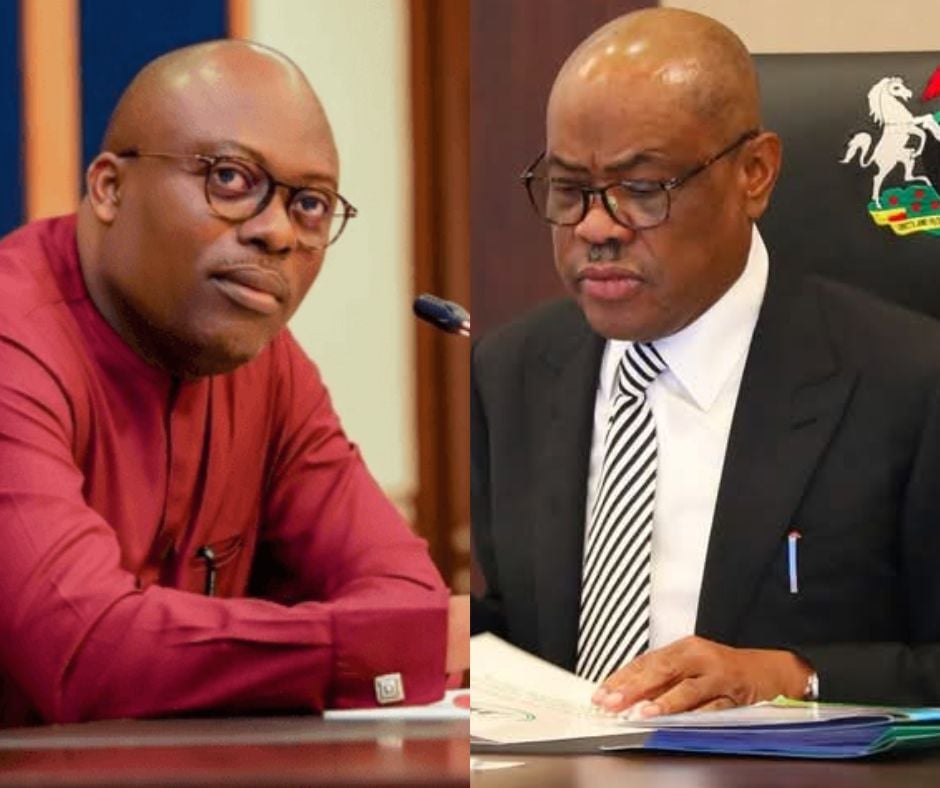
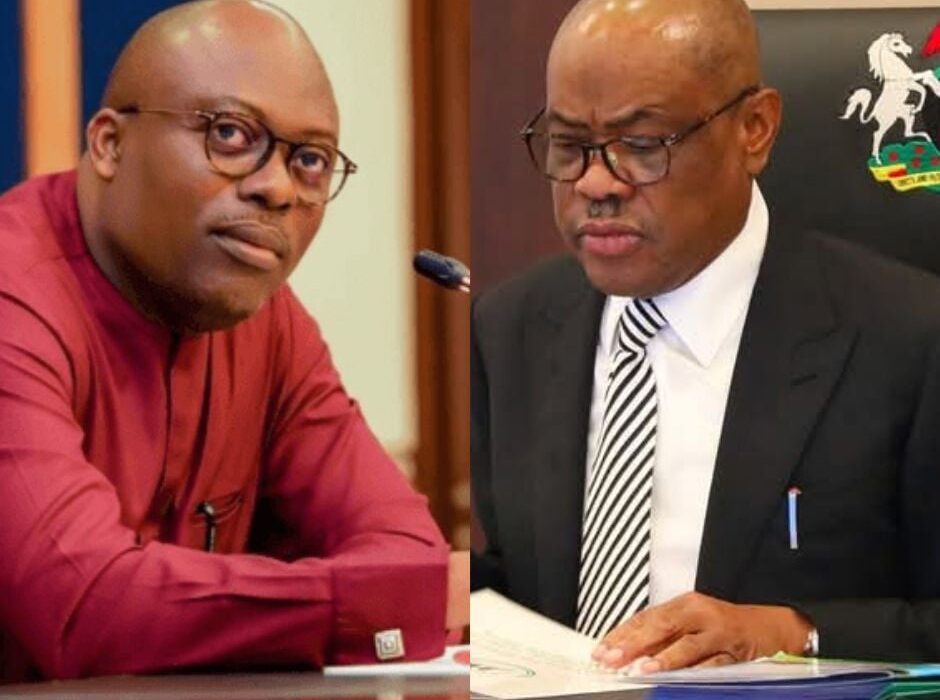
The conflict between Nyesom Wike, the Minister of the Federal Capital Territory, and his successor, Governor Siminalayi Fubara, is a complex struggle for political supremacy in Rivers State. It marks a dramatic breakdown of a “godfather-protégé” relationship that was once seen as the strongest in Nigerian politics. Wike, who served as Governor from 2015 to 2023, handpicked Fubara a career civil servant and former Accountant General to ensure his political legacy remained intact and his influence over the state’s resources and structures continued.
The friction began almost immediately after Fubara’s inauguration in May 2023. While Wike expected to maintain a “steering wheel” role from Abuja, Fubara began to realize that being a “puppet governor” was unsustainable for governance. The first signs of strain appeared when Fubara started making independent decisions regarding administrative appointments and state projects, slowly distancing himself from the rigid control Wike had established over the state’s political machinery during his eight-year tenure.
A significant bone of contention was the control of the Rivers State House of Assembly. Wike had ensured that the vast majority of the 32-member house were his staunch loyalists. When Fubara began to assert his executive authority, Wike reportedly interpreted this as an act of “ingratitude.” In October 2023, the tension reached a boiling point when 27 members of the Assembly, led by Speaker Martin Amaewhule, moved to impeach Fubara, a move widely believed to be orchestrated by Wike from the FCT.
The impeachment attempt triggered a chaotic chain of events, starting with the mysterious bombing of the House of Assembly complex on October 29, 2023. In the wake of the fire, Governor Fubara visited the site, only to be met with teargas and water cannons from police forces, an image that went viral and solidified public sympathy for the Governor. Fubara famously declared that he was “ready to die” to protect the mandate of the people, marking his official declaration of war against his former benefactor.
In a bold retaliatory move, the Fubara administration ordered the demolition of the Assembly complex, citing structural integrity issues caused by the fire. This left the pro-Wike lawmakers without a formal chambers. Simultaneously, a small group of four lawmakers loyal to Fubara elected an alternative Speaker, Edison Ehie, leading to a “dual assembly” crisis where both factions claimed legitimacy and passed conflicting resolutions and budgets.
The conflict eventually drew in the presidency. In December 2023, President Bola Tinubu brokered a “peace pact” in Abuja between Wike and Fubara. The agreement required Fubara to withdraw all court cases and re-appoint Wike-aligned commissioners who had resigned in protest. While Fubara complied to maintain peace, many observers and Rivers State elders criticized the deal as “one-sided” and unconstitutional, arguing that it favored Wike’s interests over the Governor’s executive independence.
However, the “Abuja Peace Accord” proved to be a fragile ceasefire rather than a solution. By early 2024, the conflict reignited over the control of the People’s Democratic Party (PDP) structure in Rivers State. The 27 pro-Wike lawmakers formally defected to the All Progressives Congress (APC), prompting a legal battle over whether they had vacated their seats.
This defection shifted the battleground from a personality clash to a full-blown partisan war for the state’s future electoral control.
The financial dimension of the conflict has also been central to the fallout. Fubara’s administration began to audit state accounts and review long-standing contracts awarded during the previous administration. This move was seen as a direct threat to Wike’s “political family,” which had relied on the state’s patronage system for years. By challenging the financial status quo, Fubara struck at the heart of Wike’s power base, ensuring that the rift would become irreversible.
By late 2025 and entering early 2026, the crisis escalated beyond mere politics into a constitutional stalemate. The courts became the primary arena, with conflicting judgments emerging from the State High Court and the Federal High Court regarding the legality of the 2024 and 2025 budgets.
The instability grew so severe that it impacted local government elections and the disbursement of federal allocations, essentially putting the state’s governance on a knife-edge.
Today, the Wike-Fubara conflict has transformed Rivers State into the epicenter of Nigerian political volatility. What began as a disagreement over “political loyalty” has evolved into a fight for the survival of the state’s democratic institutions. As Fubara continues to consolidate his own “Simplified” political movement and Wike maintains his grip via federal influence, the battle remains a high-stakes chess match that will likely determine the outcome of the 2027 general elections in the region.