


Japan’s PM Seat Now Musical Chair as Third Leader Resigns
Japan’s Prime Minister Shigeru Ishiba has resigned after less than a year in office, extending the country’s long-running cycle of unstable leadership.
His exit follows two major election defeats that left his ruling Liberal Democratic Party (LDP) weakened in both houses of parliament.
The resignation came just a day before LDP lawmakers were expected to vote him out.
Ishiba’s departure now sets the stage for the third leadership contest in four years, underscoring the deep internal rivalries that have long characterised Japanese politics.
Ishiba, who succeeded Fumio Kishida in 2024 after corruption scandals and economic malaise brought down his predecessor, had attempted to legitimise his administration by calling a snap election shortly after taking office. Instead, the gamble backfired.
Furious voters punished the LDP for its scandals and for rising living costs, handing the party its worst defeat in more than a decade and stripping it of its majority in the lower house.
A second blow came earlier this year when the party lost control of the upper house, fuelling growing calls within the LDP for Ishiba to step aside.
Initially, the prime minister resisted. He insisted he needed to manage critical issues such as a pending trade deal with Washington.
But by Sunday, with mounting pressure from within the party and an internal leadership vote looming, Ishiba conceded.
“Voices had been mounting from within the party that the PM must take responsibility… [and] the writing was on the wall,” said Tomohiko Taniguchi, a professor at the University of Tsukuba and former special adviser to the late Prime Minister Shinzo Abe.
“So rather than waiting to endure public humiliation, Ishiba chose to step down.”
The resignation now triggers an LDP leadership vote expected in early October.
Whoever wins will almost certainly become prime minister, given the party’s dominance in Japanese politics.
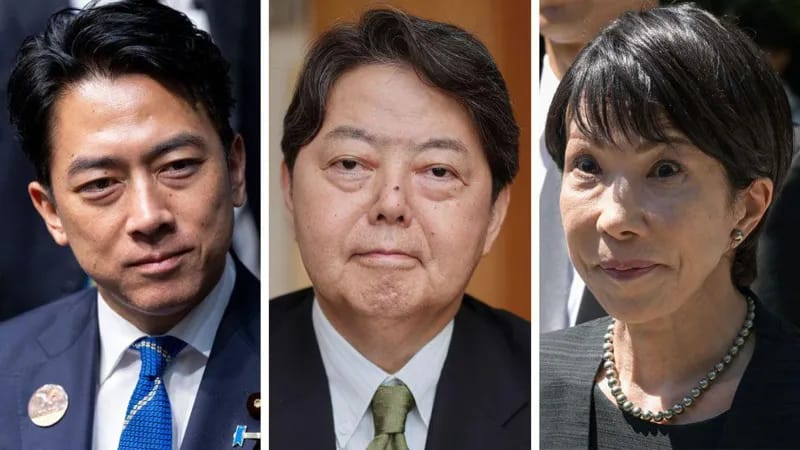
Potential contenders include Shinjiro Koizumi, the youthful agriculture minister and son of former prime minister Junichiro Koizumi; Yoshimasa Hayashi, the current chief cabinet secretary; and Sanae Takaichi, a conservative lawmaker who would be Japan’s first female prime minister if elected.
Japan has seen more than 10 prime ministers in the last two decades, a pattern analysts say reflects the country’s “one-party democracy.”
With the LDP entrenched in power, the fiercest political battles happen inside the party itself — and rival factions often push leaders out as quickly as they rise.
“Even though you might be selected as leader, as soon as you’re in office, you have dozens of people manoeuvring to try to get you out again,” explained James Brown, professor at Temple University Japan.
That churn leaves the next prime minister facing what Brown called a “poisoned chalice”: managing strained US-Japan relations, addressing voter frustration over inflation and stagnant wages, and trying to reclaim conservative voters who have drifted to newer far-right parties such as Sanseito.
As attention turns to who will replace Ishiba, many Japanese wonder whether the next leader will be able to break the cycle of short-lived premierships — or simply become the next casualty of the LDP’s factional politics.
BBC