
Tinubu Presses for Restructured Global Governance, Finance, Healthcare at BRICS Summit
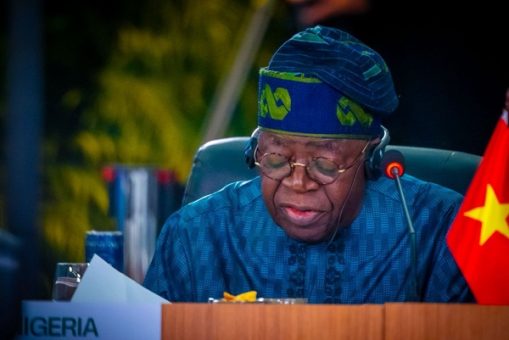
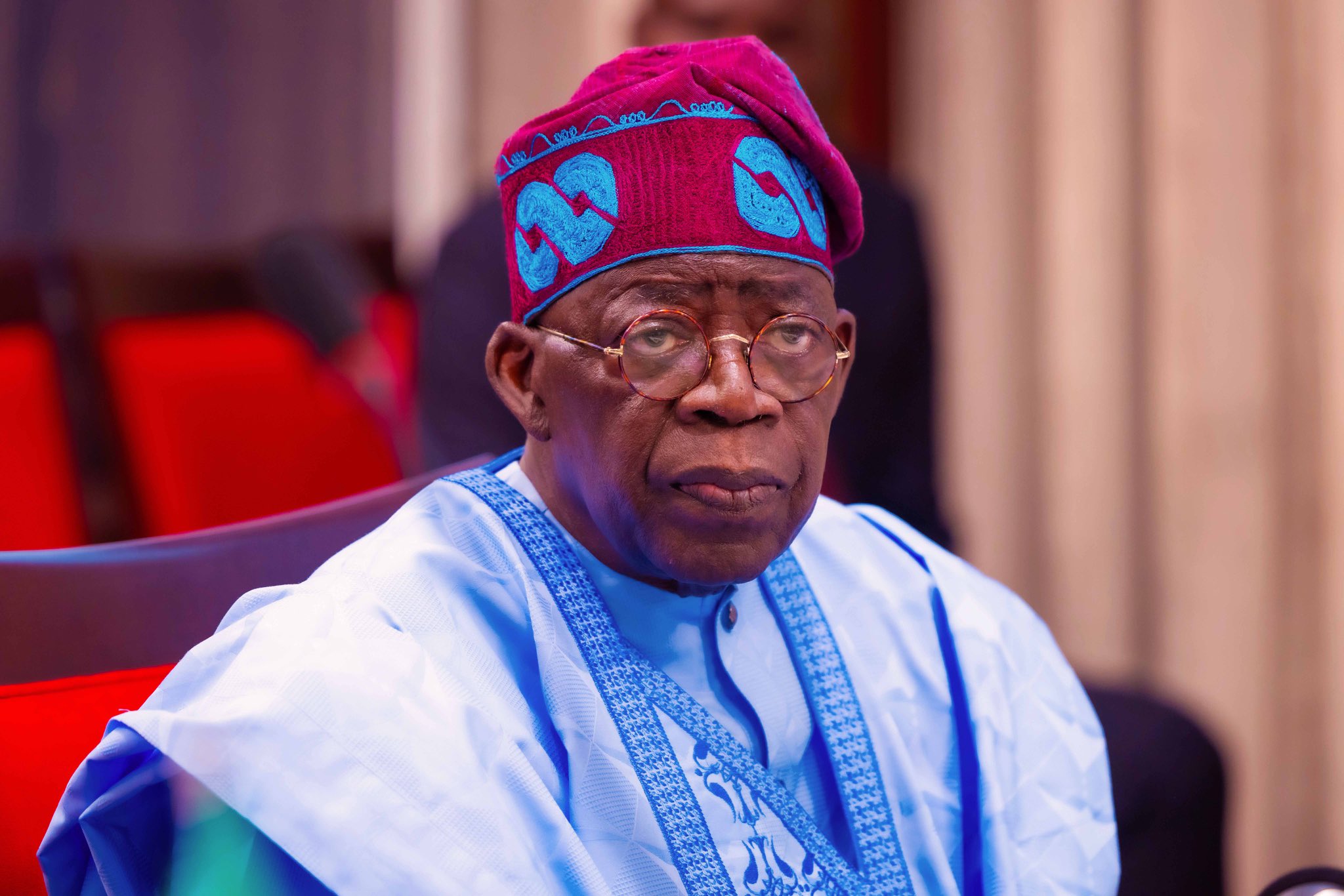
President Bola Ahmed Tinubu has called for the restructuring of global governance, finance, and healthcare systems, urging world leaders to adopt a more inclusive and equitable framework that recognizes the unique challenges facing low-income and emerging economies, particularly in Africa.
Speaking on Sunday at the 17th BRICS Summit in Rio de Janeiro, Tinubu declared that the existing global institutions are outdated and unfairly skewed against countries in the Global South.
“The next issues are financial restructuring and reevaluation of the global structure. Nigeria, therefore, associates with what I have heard today and all that has happened in BRICS,” Tinubu said, according to a statement issued by his Special Adviser on Information and Strategy, Bayo Onanuga.
The Nigerian president, attending the summit at the invitation of Brazilian President Luiz Inacio Lula da Silva, joined fellow leaders from across the developing world in pushing for reforms that will promote balanced and sustainable development.
Nigeria officially became a BRICS Partner Country in January 2025, following a structural expansion at the 16th summit in Kazan, Russia, where the bloc introduced the new category to incorporate emerging economies into its platform.
Addressing the plenary, Tinubu spotlighted a range of global crises — from climate change and healthcare disparities to financial imbalances — that continue to hinder Africa’s growth. He noted the continent’s limited role in contributing to global carbon emissions, yet its disproportionate suffering from the effects of climate change.
“Africa has contributed the least to global emissions but suffers the most,” he said. “We need a global development model based on equity and justice.”
Tinubu emphasized that climate and financial solutions must be rooted in fairness, technology transfer, and accessible financing for vulnerable economies.
He cited Nigeria’s commitment to regional initiatives like the African Carbon Market Initiative and the Great Green Wall as proof of the continent’s proactive role.
“We believe that COP-30 will strengthen our resolve to adopt a strategic approach to achieving a healthy global environment,” he added.
On healthcare, the president called for a renewed global focus on non-communicable diseases, which he described as a silent but escalating crisis that demands urgent, collaborative action.
“Without fairness and inclusivity in the design of global solutions, especially for our youth population — which makes up 70 percent of Nigeria — the future will remain imbalanced and unjust,” he warned.
Reaffirming Nigeria’s alignment with South-South cooperation, Tinubu insisted that African nations could no longer be sidelined in international decision-making processes.
“Nigeria strongly believes in South-South cooperation. We can, therefore, not be passive participants in global decision-making on financial restructuring, debt forgiveness, climate change, environmental issues, and healthcare,” he declared.
He stressed that BRICS must evolve beyond being merely a bloc of emerging economies to becoming a platform for “emerging solutions rooted in solidarity, self-reliance, sustainability, and shared prosperity.”
President Tinubu was accompanied by a high-level delegation that included Minister of Foreign Affairs, Ambassador Yusuf Tuggar, and Minister of Finance and Coordinating Minister of the Economy, Mr. Wale Edun.
Nigeria’s debut as a BRICS partner coincides with a strategic expansion by the bloc, which now includes new partner nations such as Belarus, Bolivia, Cuba, Kazakhstan, Malaysia, Thailand, Uganda, and Uzbekistan. According to the Brazilian government, which currently holds the rotating presidency, Nigeria’s demographic and economic influence in Africa makes it a key partner in advancing the bloc’s reform agenda, particularly in global finance and South-South cooperation.
The summit, continuing through Monday, is focused on reshaping multilateral cooperation, trade, development financing, and sustainable economic growth.
President Tinubu’s robust participation and reform-focused message underscore Nigeria’s growing diplomatic influence and its determination to shape a global order that reflects the aspirations of its people and the broader African continent.