

IMF Signals Up to $50bn Aid Need as Middle East War Disrupts Global Economy
The International Monetary Fund (IMF) has projected that countries affected by the ongoing Middle East conflict could require between $20 billion and $50 billion in urgent financial assistance, citing widening economic disruptions and prolonged global impacts.
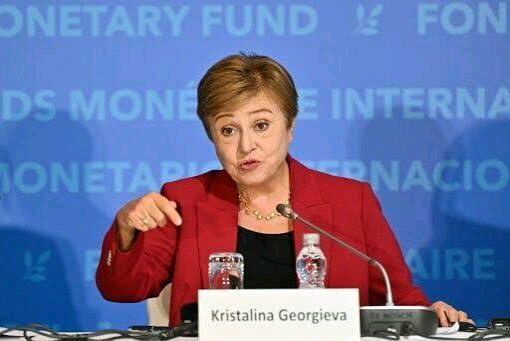
IMF Managing Director Kristalina Georgieva said the scale of support would depend on the durability of the current ceasefire, with demand likely closer to the lower estimate if hostilities ease. She warned that the crisis is already straining supply chains and increasing pressure on vulnerable economies.
The IMF also estimates that at least 45 million people could face worsening food insecurity as transport disruptions and supply bottlenecks linked to the conflict take hold. Georgieva cautioned that even under optimistic conditions, the global economy would not quickly return to pre-war stability due to lasting damage to infrastructure, trade systems, and investor confidence.
Her remarks came at the opening of the IMF and World Bank Spring Meetings in Washington, where global economic leaders are assessing the fallout from the conflict.
The war, which began on February 28 following a United States and Israel offensive against Iran, has escalated tensions across the Middle East, disrupted major shipping routes, and driven up oil prices after Tehran effectively restricted movement through the Strait of Hormuz. Although a ceasefire is currently in place, both Iran and the United States have accused each other of violations, with further negotiations scheduled.
The IMF said it plans to downgrade its 2026 global growth forecast, noting that rising energy costs and supply disruptions are disproportionately affecting low-income, energy-importing countries with limited fiscal capacity. Georgieva described the economic impact as uneven, with some of the most severe consequences expected in nations at the far ends of global supply chains.
Separately, the World Bank reported that the Middle East region is already experiencing significant economic strain.
Excluding Iran, regional growth is now projected to slow to 1.8 per cent in 2026, down from four per cent the previous year.
The IMF also expects global inflation to rise as a result of higher oil and gas prices, along with disruptions in fertiliser supply. In a joint meeting with the World Bank and the World Food Programme, officials warned that increased energy and transport costs would likely drive up food prices and deepen food insecurity.
To address the energy market fallout, the IMF and World Bank have established a coordination group, with a high-level meeting scheduled for next week.
In a recent report, the IMF noted that countries experiencing active conflict typically see economic output decline by about three per cent initially, with continued losses over time. It added that low-income countries face heightened risks, particularly as international aid flows have been declining despite growing needs.