
Exxaro Makes Strong Returns Despite Challenging Year, Breaks Grounds in Renewables
Diversified natural resources company, Exxaro Resources has reported strong operational and financial results for the year ended December 31, 2025, amid the realisation of its diversification strategy.
The company reports a 3% year-on-year increase in group revenue to $41.8-billion, with coal production and sales having both increased by 1% to 39.9-million and 39.6-million tonnes, respectively.
Coal export sales also increased by 2% to 7.1-million tonnes, mainly driven by an improved performance by State-owned Transnet Freight Rail, as well as the efficiency of Exxaro’s alternative distribution channels.
Moreover, despite export coal prices having dropped by 14%, group earnings before interest, taxes, depreciation and amortisation (Ebitda) remained steady, declining marginally by 2% to R10.2-billion, compared with R10.4-billion in financial year 2024.
The company notes that cash generation remained robust, adding that its equity-accounted investments in iron-ore and base metals continued to enhance the quality of the company’s earnings. As a result, headline earnings per share (HEPS) increased by 8% to R32.47 a share.
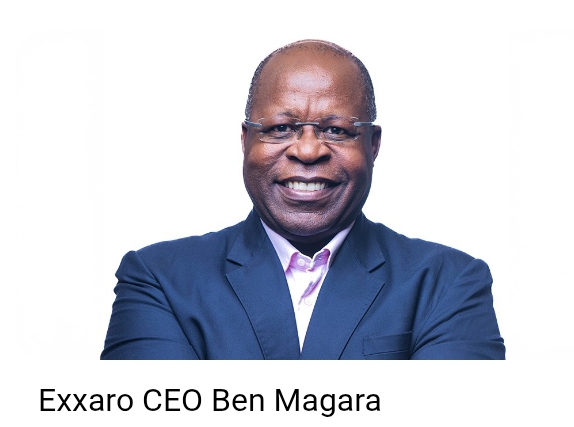
During a financial results presentation on March 19, CEO Ben Magara noted that Exxaro had guided its coal production and sales for 2026 to between 39.4-million and 42.8-million tonnes. Export sales were expected to be between 7.3-million and 8-million tonnes. Sustaining capital expenditure for the coal business is guided to between R4-billion and R4.5-billion.
Meanwhile, Exxaro also grew its renewable-energy business during the financial year under review, more than doubling its capacity. It also expanded its pipeline of projects through strategic acquisitions, including the 140 MW Karreebosch Wind Farm project, which will supply wheeled energy to Northam Platinum.
The project is under construction and is expected to start generating green electrons in the first half of 2027.
The company notes that it also commissioned its 68 MW Lephalale solar plant, designed to generate 176 GWh/y of energy under a 25-year power purchase agreement. Exxaro explained that this was expected to deliver electricity cost savings at Grootegeluk of about R100-million a year and reduce the company’s Scope 2 emissions by 17%.
The company noted another key milestone through the acquisition of majority interests in two fully operational renewable-energy assets – the 138 MW Gouda Wind Farm and the 75 MW Sishen solar facility, as well as Acciona’s Operations and Maintenance business. The company said it anticipated fulfilling the remaining conditions precedent, which included the lenders consent and ministerial approval, during the first half of this year.
Additionally, Exxaro noted that its turnkey energy solutions company Cennergi, in partnership with ENGIE, had been selected as a preferred bidder in Bid Window 7 of the Renewable Energy Independent Power Producer Procurement Programme for the 240 MW Corona solar project, in the Free State. The company explained that reaching financial close on this project would increase Cennergi’s total capacity of assets under construction and in operation to 890 MW.
During the financial results presentation, Magara noted that the company had guided between 1 050 GWh and 1 150 GWh of renewable-energy generation for this year.
As part of its diversification strategy, Exxaro noted that it closed the acquisition of select manganese assets from Ntsimbintle Holdings and OMH on February 27, following the announcement made on May 13, 2025.
Through this transaction, Exxaro acquired 100% of Ntsimbintle Mining – which holds a 50.1% ownership in the Tshipi Borwa mine; 19.99% of Jupiter Mines, which also holds a 49.9% ownership in the Tshipi Borwa mine; 100% of Ntsimbintle Marketing and Trading (NMT); and 9% of Hotazel Manganese Mines.
This acquisition makes Exxaro a globally significant manganese producer underpinned by its interest in the Tshipi Borwa mine, one of the world’s largest manganese producers, delivering approximately 3.5-million tonnes a year of manganese production from the Kalahari Manganese Field.
Manganese is a key metal in steel alloys, adding strength and durability in infrastructure development and is gaining traction in clean energy battery chemistries and the full ownership of NMT strengthens its marketing and trading presence in Singapore and China. Additionally, the company said it enhanced its diversified, future-facing natural resources portfolio and expanded the company’s exposure to energy transition metals.
Additionally, Exxaro noted that it also successfully concluded the sale of the entire shareholding in FerroAlloys to a consortium comprising FerroAlloys employees, management and EverSeed Energy – a black-owned investor – reinforcing the company’s commitment to inclusive ownership.
Exxaro said its social impact initiatives were designed to develop enterprise suppliers, reduce unemployment rates, improve access to quality education, support infrastructure development, empower host communities and foster inclusive growth. For the reporting period, the company’s total social investment amounted to R1.7-billion of the total R19-billion stakeholder value created.
As previously communicated, Exxaro said the group would no longer maintain the previously targeted cash buffer of R12-billion to R15-billion. Consequently, the company explained that the dividend cover ratio range had been revised from 2.5 to 3.5 times adjusted group earnings to a range of 1.5 to 2.5 times, while the 100% pass-through of the Sishen Iron Ore Company dividend remained unchanged.
In line with the revised dividend cover range, it noted that the board had declared a final gross dividend of R10 a share, amounting to about R3.4-billion. Together with the interim dividend of R2.9-billion paid in October 2025, total dividends for the 2025 financial year amount to R6.3-billion. This marks Exxaro’s forty-sixth consecutive dividend since listing on the JSE in 2006.
“My executive team and I, together with everyone at Exxaro, worked very hard in a very challenging year, but it has been very pleasing. We focused on stabilising the business and on operational delivery, and on accelerating the delivery of our strategy. This strengthened our position as a diversified natural resources champion, underpinned by our strong coal base, a growing renewable-energy business, support from our equity accounted investments in iron-ore and base metals and of course, we are proud of the recent acquisition of select manganese assets in the Kalahari Manganese Field,” said Magara.
Looking ahead, Magara said the Middle East conflict had introduced uncertainties into the global energy markets through oil price volatility and rising logistics costs.
“For South Africa, these higher oil prices could weaken our trade balance and put even more pressure on inflation and economic growth,” Magara said during the presentation.
From an operational perspective, Magara explained that Exxaro’s coal exports were largely sold on a free-on-board basis, noting, however, that the company could be impacted by higher freight and insurance costs, which had a greater impact on Exxaro’s customers and on manganese, which was sold on a cost, insurance and freight basis. “This could have some impact on margin pressure,” said Magara.
“However, back to coal, the tighter liquefied natural gas supply could actually support coal demand, and we are seeing these coal prices now, possibly 10%, 15% to 20% higher since the conflict started. It’s not great, given the humanitarian crisis that’s ongoing, but the impact of that is that coal demand, in order to meet the energy requirements of the world, is on the rise,” he outlined.