

Silencing the Lion: Patrice Lumumba, the Congo Crisis, and Belgium’s 65-Year Path to Accountability
Silencing the Lion: Patrice Lumumba, the Congo Crisis, and Belgium’s 65-Year Path to Accountability
Patrice Émery Lumumba remains one of the most significant and tragic figures in the history of African decolonization. As the first Prime Minister of the independent Democratic Republic of the Congo (DRC) in 1960, he represented the aspirations of a continent seeking to break free from centuries of European exploitation.
His leadership was defined by a commitment to Pan-Africanism and a refusal to allow the Congo’s vast mineral wealth to remain under the control of its former colonial masters.
Lumumba’s political journey was fueled by his role as a co-founder of the Mouvement National Congolais (MNC). Unlike many of his contemporaries who relied on ethnic or regional support, Lumumba insisted on a unified national identity.
This stance was radical at the time, as the Belgian colonial administration had long utilized “divide and rule” tactics to maintain control over the territory’s diverse populations.
The defining moment of his career occurred on June 30, 1960, during the official independence ceremony. While King Baudouin of Belgium delivered a speech praising the “genius” of King Leopold II, Lumumba rose to deliver an unplanned rebuttal. He spoke passionately of the “humiliating slavery” and “the ironies, the insults, the blows” endured by the Congolese people, a moment of defiance that made him a hero to his people but an enemy to the Belgian establishment.
His time in power, however, lasted only eighty-one days. The Congo Crisis erupted almost immediately, characterized by a military mutiny and the secession of the mineral-rich Katanga province. Facing a lack of support from the West and the United Nations, Lumumba sought assistance from the Soviet Union. In the heat of the Cold War, this move led Western intelligence agencies, including the CIA and Belgian operatives, to view him as a dangerous communist threat.
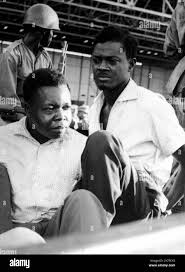
Lumumba was eventually deposed in a coup led by Joseph Mobutu and captured while trying to reach his supporters. On January 17, 1961, he was flown to the breakaway region of Katanga, where he was tortured and executed by a firing squad in the presence of Belgian officers. To ensure no grave could become a shrine for his followers, his body was dismembered and dissolved in acid, a brutal act of erasure that remained a dark secret for decades.
For nearly half a century, the Belgian government maintained a wall of silence regarding its role in the assassination. It was not until the early 2000s that a parliamentary inquiry forced an admission of “moral responsibility.” The inquiry revealed that Belgian officials had not only known about the plot but had actively facilitated the transfer of Lumumba to the very enemies who intended to kill him.
A turning point in the healing process occurred in June 2022, when Belgium finally returned a gold-capped tooth—the only surviving physical remain of Lumumba—to his family. This “relic” had been kept for decades as a trophy by a Belgian police officer involved in the disposal of the body. During the repatriation ceremony, Prime Minister Alexander De Croo apologized for the “unjustifiable and deeply regrettable” role Belgium played in his death.
The quest for accountability has recently shifted from symbolic gestures to legal action. In 2025, the Belgian justice system took the unprecedented step of moving forward with criminal proceedings against former officials. Notably, the prosecution of Etienne Davignon, a former diplomat, marks the first time a high-ranking official has been held to account for the abduction and death of an African independence leader in a Belgian court.
As of early 2026, the trial continues to serve as a landmark case for international law and post-colonial relations. By confronting the specific individuals and systemic failures that led to Lumumba’s murder, Belgium is attempting to reconcile with its violent past. For the people of the DRC, these proceedings are more than a legal formality; they represent the restoration of the truth for a leader whose voice was silenced but whose vision for a free Africa remains unextinguished.