


Military Vows Continued Rapid Campaign Across Zamfara, Neighbouring States
The Nigerian military has declared its commitment to maintaining high-energy field operations aimed at breaking the momentum of armed groups across Zamfara and neighbouring states. Senior officers confirmed that intensified patrols, swift response units, and coordinated land–air actions will continue until rural communities can live without fear of raids, kidnappings, and extortion.
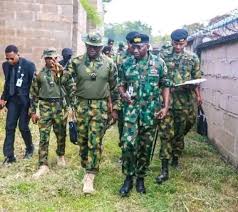
During a recent inspection of troops at forward operating bases, the service chief commended frontline personnel for demonstrable progress in reclaiming contested zones and intercepting criminal activities.
He assured troops that command headquarters is actively working to strengthen tactical support systems including better mobility resources, improved communications, and reinforced aerial surveillance to make field missions faster and more precise. The welfare of officers and men, he emphasized, will remain a priority, with ongoing efforts to improve living conditions at remote duty locations.
Field commanders further explained that operations are shifting into an “unrelenting sweep mode,” using rapid movement units to penetrate suspected hideouts, track dispersed criminal cells, and disrupt supply channels used by illegal networks. Residents have reported seeing more uniformed patrols along major access routes and remote hamlets once known to be vulnerable to bandit activity.
In recent weeks, the military has recorded arrests of armed suspects, seized weapons stockpiles, and secured the release of several abducted civilians through both direct interventions and negotiated recoveries.
Nonetheless, commanders admit that criminal factions are modifying their tactics shifting into smaller, fragmented clusters that exploit difficult terrain and rural isolation prompting the need for sustained operational pressure and enhanced collaboration with local intelligence sources.
Community leaders have expressed support for the intensified campaign but advised that it must be paired with long-term stability strategies, such as rebuilding displaced communities, strengthening local security partnerships, and addressing socioeconomic triggers that enable young recruits to join unlawful groups.
Humanitarian advocates have also called for transparent detention processes and careful engagement rules to ensure that civilians are not inadvertently harmed during military activities.
Security experts note that the success of these operations will depend on consistent supply chains for troops, uninterrupted intelligence flow from both official and community sources, and development initiatives aimed at restoring livelihoods in vulnerable areas.
For now, military authorities maintain that the campaign will continue aggressively until residents can safely return to farms, markets, and schools without the shadow of insurgent violence.