



Somalia’s Supreme Court Blocks President’s Attempt to Extend Tenure
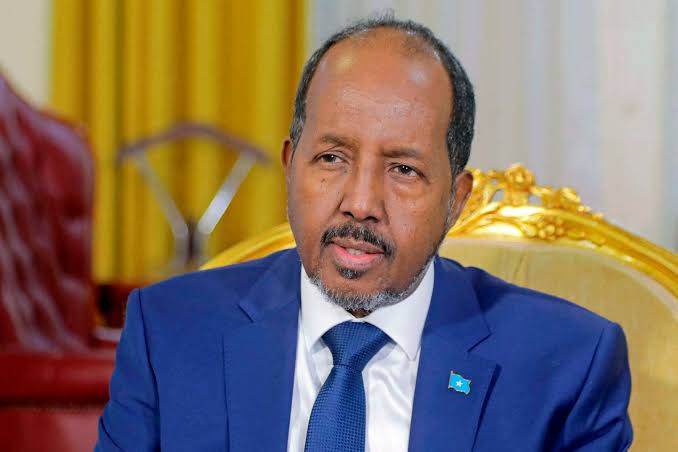
Somalia’s Supreme Court has ruled that President Hassan Sheikh Mohamud’s attempt to remain in office for an additional year is unconstitutional, declaring that his presidential tenure officially ended in May 2026.
The ruling, delivered on Thursday, November 5, followed a legal challenge over constitutional amendments approved by parliament in March, which increased the tenure of the president and lawmakers from four years to five years.
Mohamud had relied on the amendments to justify remaining in office until 2027, arguing that the additional year was necessary to prepare the country for its first nationwide democratic elections.
However, the Supreme Court ruled that the constitutional changes did not apply to public officeholders already serving their existing terms. It maintained that the amendments could only apply to officials elected under the revised constitutional provisions.
The five-member judicial panel consequently declared that the president’s original four-year mandate had expired on May 15, 2026, while the terms of both chambers of parliament ended on April 14, 2026.
The court also ruled that the federal government’s mandate had expired, adding that all actions taken by the affected institutions after the expiration of their constitutional terms were unlawful and legally invalid.
As part of its directives, the Supreme Court ordered Somalia’s political leaders to reach an agreement on an acceptable electoral framework within 30 days and conduct elections within 90 days.
It further restricted the federal government to routine administrative responsibilities pending the conduct of elections, warning against major decisions outside the scope of a caretaker administration.
The judgment came amid growing political tensions between the presidency and opposition groups, which have accused Mohamud of using constitutional reforms to prolong his stay in power.
The controversy has also strained relations between the federal government and some regional administrations, including Puntland and Jubaland, which have opposed aspects of the proposed electoral reforms.
In a related development, Mohamud announced the dismissal of Chief Justice Baashe Yusuf Ahmed a day before the Supreme Court delivered its judgment.
The president’s decision was reportedly linked to concerns about the administration of justice and the need for judicial reforms.
However, the Supreme Court rejected the dismissal, describing it as unconstitutional and arguing that it was an attempt to obstruct proceedings concerning the presidential tenure dispute.
Former Somali President Sharif Sheikh Ahmed, who challenged the legality of the tenure extension, welcomed the court’s decision and called on the incumbent president to engage other political stakeholders in negotiations.
The latest development has deepened uncertainty over Somalia’s political future, particularly as the country continues to battle insecurity and a prolonged insurgency by the militant group Al-Shabaab.