


Today in History: The Treaty of Sèvres and the Map That Never Was
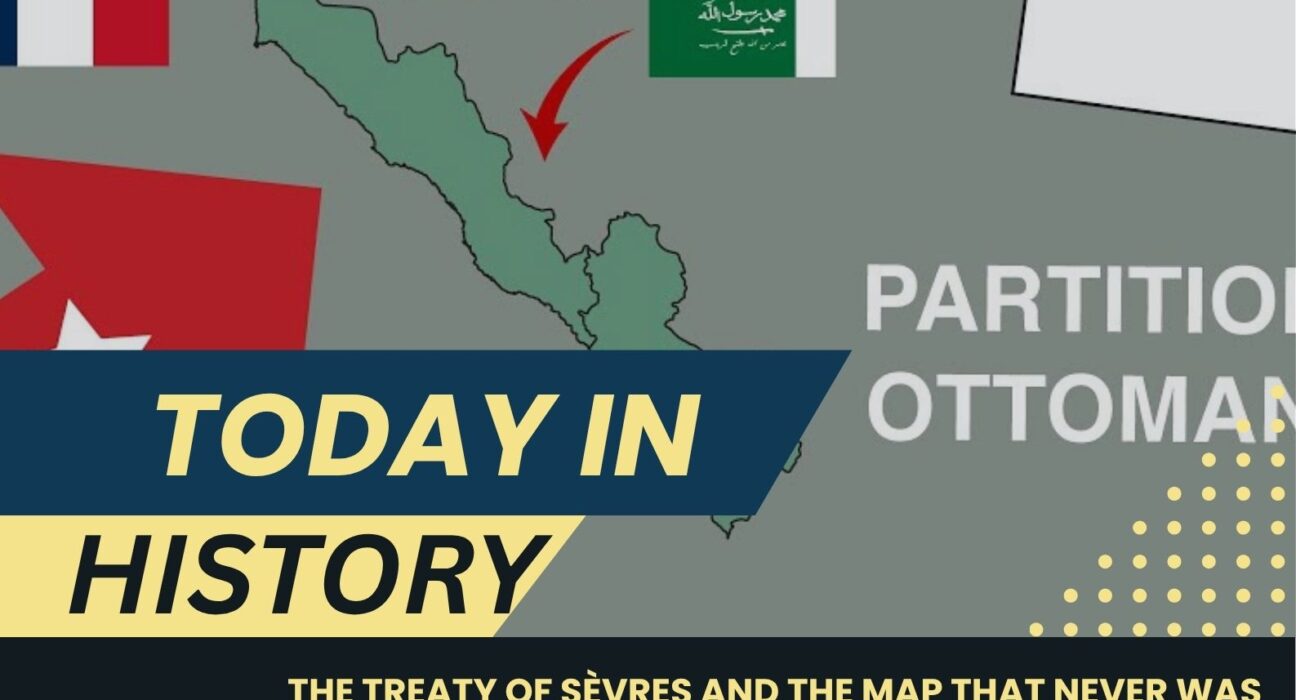
On August 10, 1920, inside a porcelain factory in the Paris suburb of Sèvres, representatives of the Ottoman Empire signed a peace treaty intended to dismantle six centuries of imperial rule and redraft the geopolitical map of the Near East.
Designed by the victorious Allied powers following World War I, the Treaty of Sèvres was meant to finalize the partition of the defeated Ottoman state, distributing its vast territories among European powers and newly designated protectorates. Instead of establishing a lasting peace, however, the treaty ignited a wave of fiercely organized nationalist resistance that reshaped the modern Middle East.
The conditions imposed at Sèvres were among the most severe of all the post-WWI Paris Peace Conference agreements. The Ottoman government, operating under Allied occupation in Constantinople, was forced to accept terms that reduced its sovereign realm to a small rump state in north-central Anatolia. Under these conditions, the empire surrendered all rights over its Arab provinces, with Syria and Lebanon placed under French mandate while Palestine and Mesopotamia fell under British control. In the west, Anatolian territory including the strategic port city of Smyrna, along with Eastern Thrace, was handed over to Greek administration, while southern Anatolia was divided into French and Italian spheres of influence.
Beyond territorial concessions to European powers, the treaty outlined terms for an independent Republic of Armenia in eastern Anatolia and provided provisions for autonomous Kurdish territories. To ensure absolute compliance, the Turkish Straits were internationalized and demilitarized, while an Allied commission was granted sweeping authority over the Ottoman budget, taxation, and financial laws.
While Sultan Mehmed VI and the imperial government in Constantinople reluctantly accepted these terms, the treaty triggered immediate outrage across the Turkish heartland. A rising national resistance movement, led by War of Independence commander Mustafa Kemal Pasha, rejected the partition outright. Establishing a rival government in Ankara through the Grand National Assembly, Kemal mobilized a military force to resist foreign occupation, declaring the Treaty of Sèvres null and void while stripping the Ottoman delegates who signed it of their citizenship.
Between 1919 and 1922, Turkish forces fought a multi-front campaign against Greek troops in the west, French forces in the south, and Armenian forces in the east. Kemal’s military victories and strategic maneuvering gradually forced the Allied powers to realize that enforcing Sèvres was militarily unfeasible without a prolonged and costly conflict.
Because of the Turkish national movement’s triumphs on the battlefield, the Treaty of Sèvres was never officially ratified by a parliament or fully implemented. In late 1922, negotiations reopened in Switzerland, culminating in the Treaty of Lausanne on July 24, 1923. Lausanne officially superseded Sèvres, recognizing the sovereignty of the newly declared Republic of Turkey within its modern borders and abolishing foreign spheres of influence in Anatolia.
Despite never taking full effect, the Treaty of Sèvres left a lasting shadow over global affairs. Its mandate system carved out the artificial borders of modern states like Syria, Iraq, and Lebanon, leaving a long legacy of geopolitical tension across the region. In Turkey, the memory of the treaty gave rise to the enduring concept known as the Sèvres Syndrome, a deep-seated historical caution regarding foreign intervention and national integrity.