Today in History: The Return of Lagos Local Government Seized Revenue Allocation
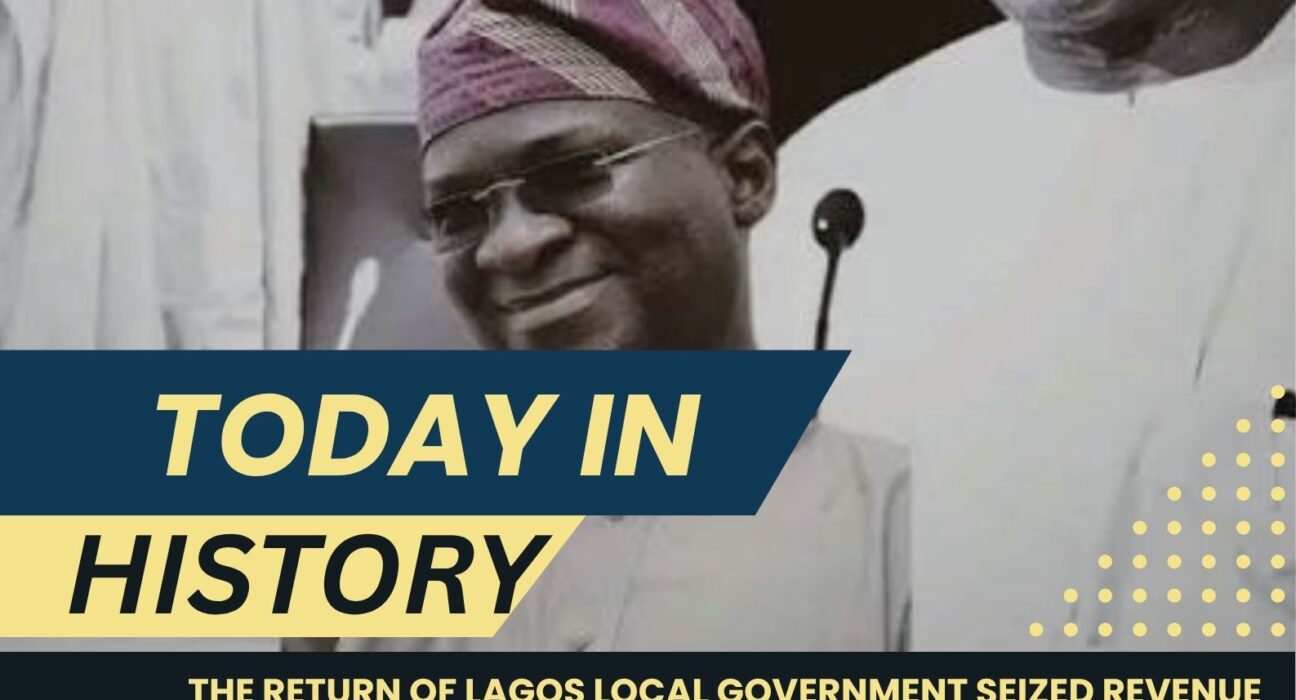
July 24, 2007 marked a defining moment for Nigerian federalism when President Umaru Musa Yar’Adua ordered the immediate release of over 10.8 billion Naira in withheld statutory revenue allocations to the local government councils of Lagos State. This executive directive brought a definitive end to a high-stakes, three-year political and constitutional standoff between the Federal Government and Lagos State. Beyond the financial relief it provided to grassroots administration in Nigeria’s commercial capital, the decision served as a major triumph for the rule of law, constitutional governance, and judicial supremacy under the Fourth Republic.
The dispute originated in 2003 under the administration of then-Governor Bola Ahmed Tinubu. Seeking to bring governance closer to a rapidly expanding population, the Lagos State Government enacted legislation through the State House of Assembly to create 37 new council areas out of the existing 20 local governments, structuring them as Local Council Development Areas. The Federal Government, under President Olusegun Obasanjo, strongly opposed the move, arguing that state governments could not unilaterally establish operational local councils without the National Assembly formally amending the First Schedule of the 1999 Constitution. When Lagos State proceeded to conduct elections across all council areas in March 2004, President Obasanjo directed the Federal Ministry of Finance to freeze statutory allocations from the Federation Account intended for Lagos local governments.
Lagos State challenged the executive action at the apex court. In December 2004, the Supreme Court delivered a landmark judgment ruling that the President lacked any constitutional authority under Section 162 to withhold funds due to any tier of government. While the court noted that the creation of the new councils remained incomplete until listed by the National Assembly, it ordered the immediate release of allocations meant for the 20 constitutionally recognized local governments. Despite this clear ruling, the federal government maintained the financial freeze for years, insisting that Lagos must scrap the development areas entirely.
The multi-year withholding of funds posed severe operational challenges to local governance in Lagos, straining public services, infrastructure, primary healthcare, and worker salaries. To survive without federal support, the Lagos State Government executed aggressive fiscal reforms, rapidly expanding its Internally Generated Revenue mechanisms to sustain operations across all administrative units.
The breakthrough arrived in July 2007, shortly after President Yar’Adua assumed office with a commitment to maintaining the rule of law. Upon reviewing the long-standing legal battle, President Yar’Adua sought formal guidance from the Ministry of Justice, which confirmed that continuing to withhold the funds directly breached Supreme Court orders. He subsequently instructed the Accountant General of the Federation to disburse the full balance of the withheld statutory council funds to the Lagos State Government.
The resolution of this crisis established a crucial constitutional precedent in Nigeria. It firmly demonstrated that executive authority cannot override judicial pronouncements or seize statutory revenues, while simultaneously proving the viability of decentralized local governance models across the country.