

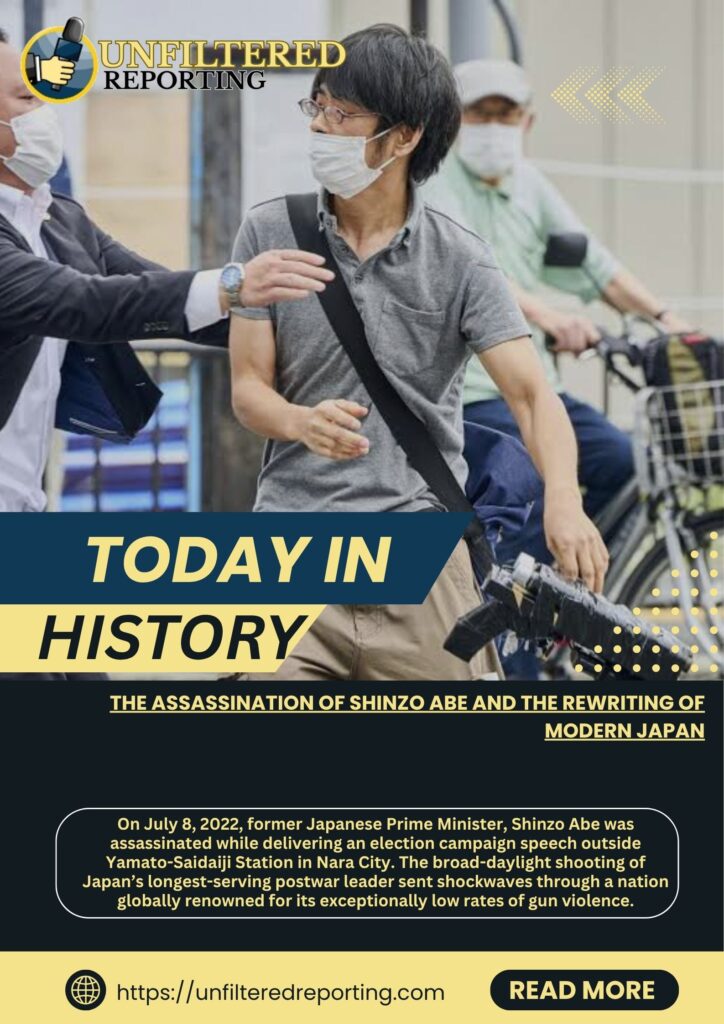

Today in History: The Assassination of Shinzo Abe and the Rewriting of Modern Japan
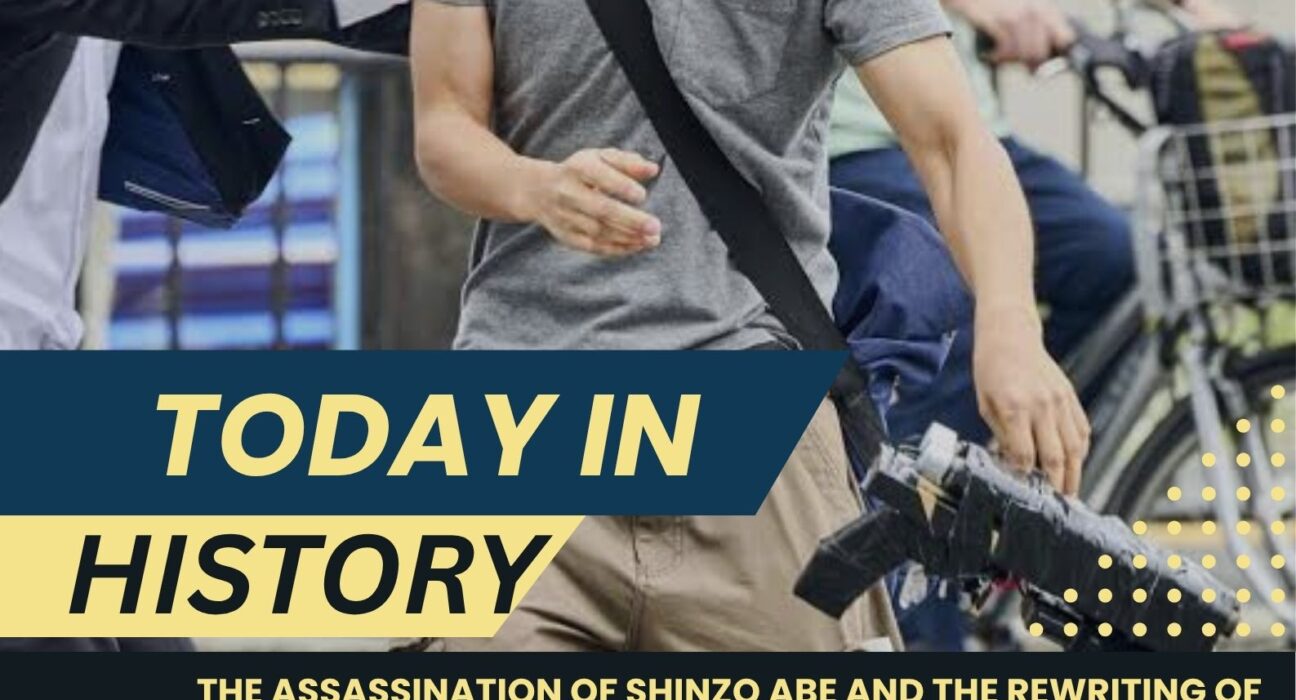
On July 8, 2022, former Japanese Prime Minister, Shinzo Abe was assassinated while delivering an election campaign speech outside Yamato-Saidaiji Station in Nara City. The broad-daylight shooting of Japan’s longest-serving postwar leader sent shockwaves through a nation globally renowned for its exceptionally low rates of gun violence.
Abe was struck by two shots fired from a crude, homemade firearm by 41-year-old Tetsuya Yamagami. Despite an immediate medical evacuation via helicopter to Nara Medical University Hospital, the massive blood loss from wounds to his neck and heart proved fatal, and he was pronounced dead later that afternoon at the age of 67.
The tragedy triggered an immediate crisis within Japan’s security framework, leading to the resignation of high-ranking officials, including the chief of the National Police Agency, after severe lapses in VIP crowd protection were exposed. However, the deepest societal tremors came from the gunman’s motive. Yamagami targeted Abe not out of opposition to his political ideology, but due to a deep-seated grievance against the Unification Church. The shooter’s family had been plunged into absolute financial ruin after his mother donated over 100 million yen to the religious organization, and he blamed Abe for legitimizing the group through high-profile promotional appearances.
This revelation completely redirected public focus away from standard political discourse and toward intense scrutiny of the ruling government’s ties to the church. The resulting backlash forced the Liberal Democratic Party to cut all institutional lines with the organization and prompted an official government investigation that eventually led courts to order the dissolution of the church’s tax-exempt religious status in Japan.
The legal fallout concluded when the Nara District Court found Yamagami guilty of murder and weapons violations, sentencing him to life in prison. While the prosecution emphasized the meticulous premeditation of the public attack, the case triggered unprecedented national debate regarding consumer protection and religious exploitation.
Shinzo Abe left a monumental legacy, defined globally by his “Abenomics” economic strategy and his signature diplomatic vision for a “Free and Open Indo-Pacific.” Decades of political alignment were rewritten on a street corner in Nara, leaving a transformative impact on the domestic political and social landscape of modern Japan.