
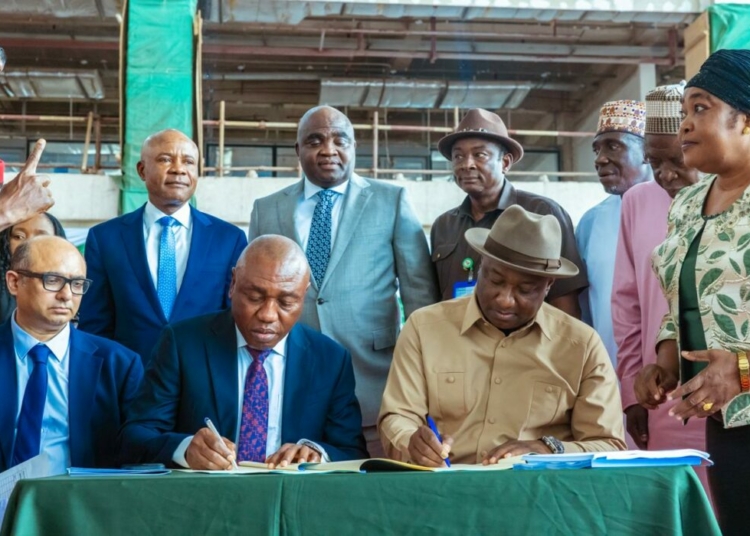

State Assembly Speakers Back Senate’s State Police Bill, Pledge Thorough Review

The Conference of Speakers of State Legislatures in Nigeria has thrown its weight behind the Senate’s passage of the State Police Bill, describing the development as a landmark moment in the country’s constitutional history and security architecture.
The Chairman of the Conference and Speaker of the Delta State House of Assembly, Emomotimi Guwor, made the position known in a statement issued on Thursday, saying the 36 state assemblies have long championed the cause of community-based policing and are prepared to give the proposed amendment a thorough legislative review.
“This development marks a significant milestone in the national conversation on policing, security, and true federalism in Nigeria,” Guwor stated, adding that policing structures rooted in local communities would enhance public safety and improve intelligence gathering across the country.
The statement came after the Senate passed the Constitution of the Federal Republic of Nigeria (Alteration) (State Police) Bill, 2026 an executive bill transmitted by President Bola Ahmed Tinubu following a rigorous clause-by-clause debate and a manual voting process on the floor of the chamber in which more than two-thirds of senators voted in support.
Senate Leader Opeyemi Bamidele, who led the debate, described the legislation as one of the most significant constitutional reforms in Nigeria’s democratic history, saying the country continued to face a broad range of security threats including terrorism, banditry, mass abductions, farmer-herder conflicts and kidnapping that demanded a more responsive policing model.
The bill, if eventually enacted, would replace the existing Nigeria Police Force with a Federal Police Service and create a dual policing structure allowing both federal and state police institutions to operate simultaneously. States would appoint their own Commissioners of Police on the recommendation of the Nigeria Police Council, subject to confirmation by their respective Houses of Assembly, while governors would be empowered to issue lawful directions on matters of public safety.
However, the legislation still requires endorsement from at least 24 of the 36 state Houses of Assembly before it can be signed into law. The Conference of Speakers pledged to engage stakeholders, conduct public hearings where necessary, and deliberate on the matter with the national interest as their guide.
“The Conference commends the Senate for this bold step and urges all stakeholders to sustain the conversation with facts, patriotism, and a shared commitment to a safer Nigeria,” Guwor’s statement read.
Senate President Godswill Akpabio, at the close of deliberations, hailed the vote as a historic legislative action, expressing confidence that the reform would bring policing closer to the people and significantly improve the country’s capacity to tackle crime.