


Tinubu Pursuing Structural Reforms, Not Cosmetic Policies, Says BAT-IG Convener
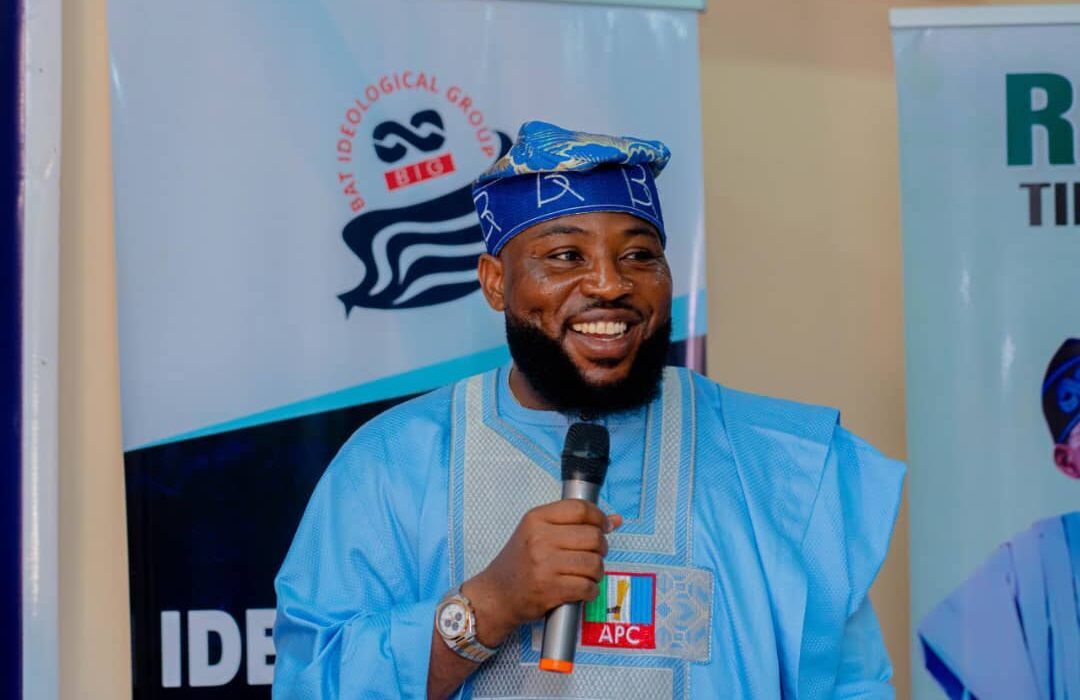
President Bola Tinubu’s administration is focused on addressing the structural challenges hindering Nigeria’s development rather than implementing superficial policies, Convener of the BAT Ideological Group (BAT-IG), Bamidele Atoyebi, has said.
Atoyebi stated this on Tuesday, arguing that Tinubu’s reforms are aimed at rebuilding the country’s foundations through infrastructure development, decentralisation of governance and empowerment of subnational governments.
According to him, Nigeria’s longstanding challenges stem from a faulty system that requires deep-rooted reforms rather than leadership changes alone.
“It is safe to say that a structure usually outlives its builder,” Atoyebi said, adding that meaningful national progress can only be achieved when the underlying institutions and governance framework are strengthened.
Drawing a comparison with the United States, he argued that America’s resilience despite having leaders from different professional and ideological backgrounds was largely due to the strength of its institutions and structures.
Atoyebi described Tinubu as a leader possessing courage, vision and knowledge, qualities he said had been largely absent in Nigeria’s political leadership over the years.
He noted that several infrastructure projects currently being executed by the administration, including the Sokoto-Badagry Highway and the Lagos-Calabar Coastal Highway, had remained on the drawing board for decades due to what he described as a lack of political will by previous administrations.
According to him, Tinubu’s extensive infrastructure drive is intended to expand the productive capacity of the Nigerian economy.
“As I stated in my previous article, an economy can only grow to the size of its infrastructure, and no economy can outgrow its foundational framework,” he said.
The BAT-IG Convener also highlighted the administration’s efforts to decentralise critical sectors, particularly electricity and local government administration.
He said the President’s support for independent state power projects and the enforcement of local government financial autonomy were aimed at ensuring that governance and development reach the grassroots.
Atoyebi cited the Local Council Development Areas (LCDAs) established during Tinubu’s tenure as Governor of Lagos State as examples of how decentralised governance can address community-specific challenges such as healthcare, local security and welfare services.
He further disclosed that the administration was advancing plans for state police and had promoted the decentralisation of military and police training institutions across the country.
According to him, excessive centralisation has weakened Nigeria’s governance structure, making it difficult for the Federal Government to effectively respond to the unique needs of different states and communities.
He argued that regional challenges vary significantly and require localised solutions, pointing to educational deficits in parts of Northern Nigeria and contrasting them with the developmental realities of the South-West.
“The central government cannot implement a one-size-fits-all solution for these distinct regions,” he said.
Atoyebi also defended the administration’s decision to increase allocations to state and local governments, saying the move would enable them to tackle poverty and developmental challenges more effectively while making governors more accountable to their citizens.
He called for greater collaboration among the three tiers of government in areas such as poverty alleviation and education, noting that while the Federal Government had introduced initiatives like the Nigerian Education Loan Fund (NELFUND), states and local governments should implement complementary programmes targeting primary and secondary education.
He argued that many families still bear the burden of hidden educational costs despite claims of free education in some parts of the country.
Speaking on the BAT Ideological Group, Atoyebi said the organisation was committed to promoting Tinubu’s political philosophy and developing future leaders who embody its principles.
He said the group had undertaken several community development projects across the country, including the provision of electricity in rural communities, advocacy for improved healthcare for military and paramilitary personnel, rehabilitation of primary healthcare centres, provision of clean water in Yobe State, and restoration of electricity in parts of Isoko North, Isoko South and Jos.
Atoyebi stressed the need to nurture a new generation of leaders who would continue the reforms beyond the current administration.
He described Tinubu’s reform agenda as a “Buffalo Order of Battle” that requires the collective participation of citizens, institutions and all levels of government.
“The country needs to start working like a well-oiled machine,” he said.