

Falana Accuses Government of Running Power Sector by Impunity, Threatens Legal Action
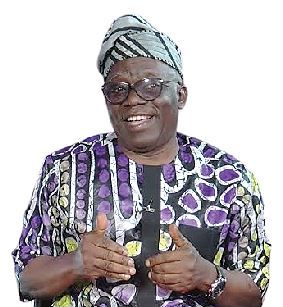
Human rights lawyer and Senior Advocate of Nigeria, Femi Falana, has renewed his condemnation of the Federal Government’s repeated increases to electricity tariffs, insisting that there can be no legal or moral justification for asking Nigerians to pay more for power without a corresponding and demonstrable improvement in electricity supply.
Falana, a consistent critic of the electricity tariff regime under the Tinubu administration, argued that the core problem with successive tariff hikes is that they have been disconnected from any genuine improvement in service delivery. He pointed out that when the Nigerian Electricity Regulatory Commission raised tariffs for Band A consumers those supposedly receiving at least 20 hours of power supply daily the directive that underpinned the hike was violated almost immediately. Nigerians across all bands continued to experience erratic and insufficient supply, yet the higher charges remained in force. “The increase was anchored on the directives of the commission that customers in Band A will have an uninterrupted electricity supply for at least 20 hours a day. That directive has been violated daily. So, on what basis can you justify the increase in electricity tariffs?” Falana had pointedly asked.
The lawyer has also consistently raised fundamental questions about the legal basis for the tariff increases. He noted that Section 116 of the Electricity Act 2023 expressly requires a public hearing, initiated at the request of the electricity distribution companies, before any tariff increase can be approved and announced. In his view, that process was bypassed, making the hikes unlawful and a product of the impunity he argues has come to define the Federal Government’s approach to the power sector. He stressed that Nigerian law does not permit the discrimination of consumers into bands and the charging of different rates for the same product, particularly when what is being delivered across all categories is, in his words, darkness.
Beyond the legal arguments, Falana has accused the government of implementing tariff policies at the behest of the International Monetary Fund and the World Bank, whose positions on subsidy removal he described as a neoliberal script that has consistently sacrificed the welfare of ordinary Nigerians.
He noted what he described as the hypocrisy of Western nations, which continue to subsidise their own agriculture, energy, and student welfare while pressuring developing countries like Nigeria to commercialise all public services and place them beyond the reach of the majority.
The electricity tariff dispute has continued to generate significant public anger, particularly against the backdrop of Nigeria’s ongoing cost-of-living crisis. The removal of the petrol subsidy and the collapse of the naira have already significantly reduced the purchasing power of most Nigerians, and electricity consumers say the tariff hikes have added another punishing layer to their financial burden without any perceptible gain in supply reliability. Falana has urged consumers and civil society not to accept the situation passively, maintaining that the matter must ultimately be resolved in court, where the government and the Attorney General of the Federation would be compelled to legally defend the increases.