

Starlink Boost to Strengthen Nigeria’s Disaster Response, Says Shettima
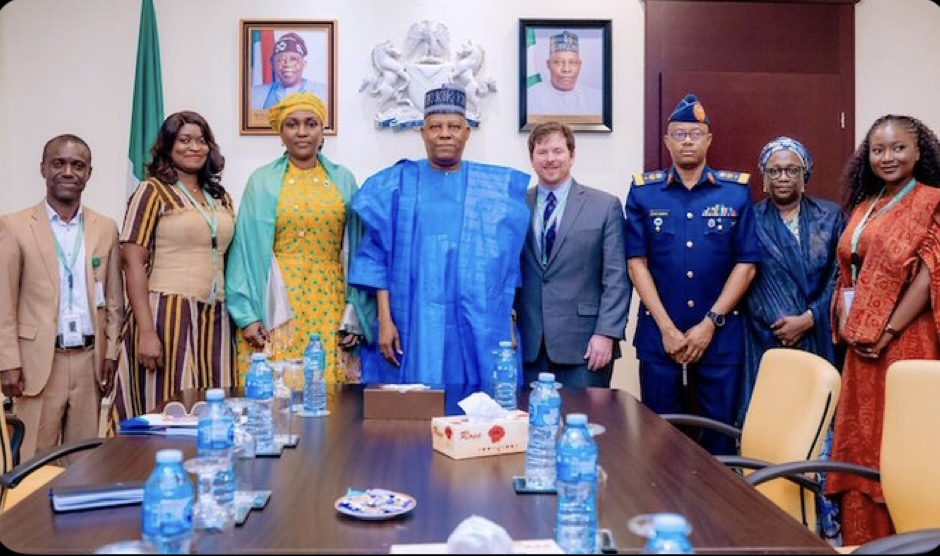
Starlink Boost to Strengthen Nigeria’s Disaster Response, Says Shettima Nigeria’s Vice President, Kashim Shettima, has said that the donation of advanced communication equipment by Starlink will significantly enhance the country’s disaster response capacity and coordination efforts.
Speaking at the Presidential Villa in Abuja, Shettima noted that effective communication remains a critical factor in managing emergencies, particularly in remote and disaster-prone areas where traditional networks often fail.
He said the intervention would strengthen the operational efficiency of the National Emergency Management Agency (NEMA) in responding to crises across the country.
The Vice President emphasised that improved connectivity would enable faster information sharing, better coordination among response teams, and more timely interventions during disasters such as floods, insurgency-related emergencies, and other humanitarian situations.
Director-General of NEMA, Zubaida Umar, disclosed that the donation includes dozens of satellite communication units, comprising both standard and portable kits, along with supporting data plans.
She explained that the equipment would be deployed to key emergency flashpoints nationwide, especially in underserved communities where communication infrastructure is weak or non-existent.
According to Umar, the agency also plans to upgrade its command-and-control centre using the new technology, which is expected to improve real-time monitoring and coordination of disaster response operations.
Representatives of SpaceX, Starlink’s parent company, said the initiative reflects ongoing collaboration to support Nigeria’s emergency management framework.
They expressed confidence that the deployment of satellite-based communication tools would enhance preparedness and response outcomes.
The development comes as Nigeria intensifies efforts to strengthen its disaster management systems ahead of the peak rainy season, when flooding and displacement risks are typically heightened in several parts of the country.