
Ghana Supreme Court Rules Minister Must Settle Mining Compensation Disputes, Dismisses Newmont Landowners’ Case
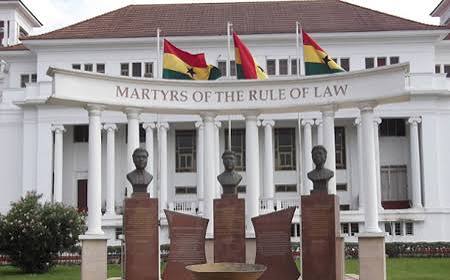
The Supreme Court of Ghana has dismissed a significant legal challenge against Newmont Golden Ridge Limited, ruling that the High Court cannot hear mining compensation disputes unless the matter has first been referred to the Minister of Mines. The decision, delivered on 11 February 2026, provides a major legal victory for the international mining sector and reinforces the state’s regulatory framework over mineral resource extraction.
The case, Ntiamoah Dankyira & 2 Ors v. Newmont Golden Ridge Co. Ltd, centered on a 15-year mining lease granted to Newmont in 2010 in the Akyem Kotoku area of the Eastern Region. The plaintiffs, identifying as usufructuary (traditional land-use) owners, sought enhanced compensation and direct payment of ground rents, arguing the mining operations constituted a de facto compulsory acquisition of their property under the 1992 Constitution.
Writing the majority opinion, Justice Pwamang held that under the Minerals and Mining Act, 2006 (Act 703), the High Court lacks jurisdiction to hear compensation disputes unless the matter has first been referred to the Minister of Mines. “The determination by the Minister is… a condition precedent to the High Court having jurisdiction,” the court noted.
The court drew a critical distinction between compulsory acquisition and mining leases. “On the lapse of a mining lease, the land automatically reverts to the owners and does not belong to the state,” Justice Pwamang explained, distinguishing it from state-acquired land that “remains state land forever.” This prevents mineral leases from being treated as permanent state seizures, which would carry far heavier constitutional and financial liabilities.
In a strong dissent, Justice Dzamefe argued the plaintiffs were not consulted and their consent was not sought. He stated that “without their knowledge, the Minister gave out their lands, including their farms, houses and other personal properties to the defendants.” He declared that Section 75 (1) & (2) of Act 703 are inconsistent with Article 20(2)(a) of the 1992 Constitution and therefore unconstitutional, invalid and of no legal effect.
The court also rejected the plaintiffs’ claim that ground rent should be paid directly to them, affirming that ground rent for stool lands must be paid to the Office of the Administrator of Stool Lands for the benefit of the Stools—the traditional allodial title holders. This reaffirms Ghana’s traditional power structure, where local farmers have surface rights, but title remains with traditional authorities and minerals belong to the Republic.
The ruling is expected to bring predictability to the Ghanaian mining landscape, which has seen increasing friction between local communities and large-scale miners. By affirming the Minister of Mines as the primary arbiter for compensation disputes, the court has prioritized a regulatory-first approach over litigation.