

NYSC Moves to Strengthen SAED Through Digital Partnership with EU
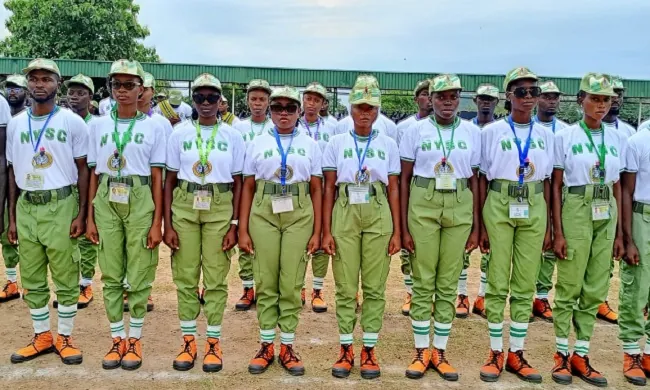
The National Youth Service Corps (NYSC) has expressed its willingness to strengthen collaboration with the European Union (EU) to enhance digital support for its Skills Acquisition and Entrepreneurship Development (SAED) programme.
The Director-General of NYSC, Brig.-Gen. Olakunle Oluseye Nafiu, made this known during a courtesy visit to the European Union Ambassador to Nigeria and ECOWAS, Gautier Mignot, at the EU Mission in Abuja.
Nafiu said the Scheme is committed to building the capacity of its workforce through partnerships that support staff training, professional development, seminars and workshops, noting that such initiatives are essential to improving the delivery of the NYSC mandate.
He also commended the European Union for its continued investment in youth-focused programmes and initiatives that promote entrepreneurship, skills development and economic empowerment.
The NYSC Director-General explained that the SAED programme was established to address graduate unemployment by equipping corps members with practical vocational and entrepreneurial skills needed to become self-employed and create jobs for others.
According to a statement issued by the NYSC Director of Information and Public Relations, Caroline Embu, the programme has trained thousands of corps members since its inception, enabling many beneficiaries to establish businesses while also attracting support from development partners.
In his remarks, EU Ambassador Gautier Mignot described the SAED initiative as an important platform for promoting national development and youth empowerment, saying it deserves sustained support.
He explained that the European Union implements development programmes through various partners, with key areas of focus including digital technology, agriculture, renewable energy, healthcare, women and youth empowerment, and children’s development.
Mignot also disclosed that some European financial institutions have begun operations in Nigeria to improve access to funding for small and medium-sized enterprises (SMEs), noting that inadequate financing remains one of the biggest challenges facing small business owners.
He added that the EU continues to support young Nigerians through educational and academic initiatives aimed at improving employability and easing their transition into the labour market.