


Seun Kuti Sparks Debate With Claim That No One Can Spend $1 Billion in a Lifetime
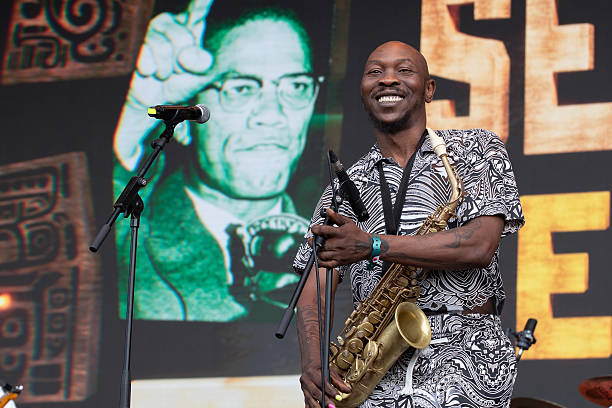
Afrobeat musician and activist, Seun Kuti has ignited fresh debate about wealth and inequality after declaring that it is virtually impossible for any individual to spend one billion dollars within their lifetime, no matter how extravagant their tastes or expensive their purchases.
Speaking on the Selah Meditate podcast, the son of Afrobeat legend, Fela Kuti argued that most people fundamentally misunderstand just how vast the gap between a million and a billion dollars truly is, and that this misunderstanding is rooted in a basic limitation of human cognition. He pointed to a striking illustration to drive home his argument one million seconds amounts to just eleven days, while one billion seconds stretches to eleven thousand days, the equivalent of roughly thirty-seven years.
Kuti went further to argue that even the most lavish spending habits could not erode a billion-dollar fortune, contending that a billionaire who splurges on private jets or a $100 million Manhattan mansion would still retain hundreds of millions in capital generating fresh income through interest, investments and business ventures.
“If you have one billion dollars, no matter what you buy, the money will not finish,” he said, insisting that wealth at that scale is effectively self-replenishing for those who understand how to manage it.
The remarks have triggered lively argument across social media, with opinions sharply divided. Some users agreed with Kuti’s underlying point that society consistently underestimates the incomprehensible scale of billionaire wealth, with one commenter noting that genuine billionaires represent a tiny fraction of even the world’s wealthiest citizens.
Others pushed back, arguing that failed investments, legal battles, luxury purchases and poor financial decisions have historically wiped out fortunes far larger than a billion dollars.
The comments are consistent with a broader critique Seun Kuti has long championed. He has previously questioned the legitimacy of extreme wealth concentration, describing the combined fortunes of the world’s richest individuals as evidence that “we have been lied to” about how wealth is created and distributed. His latest remarks have once again placed him at the centre of a wider conversation about capitalism, inequality, and the widening gap between the ultra-rich and the millions across Africa and beyond who struggle daily with poverty and rising living costs.