

Lagos Rakes in ₦2.6trn Total Revenue as Annual IGR Climbs to ₦1.87trn Amid Tax Digitization
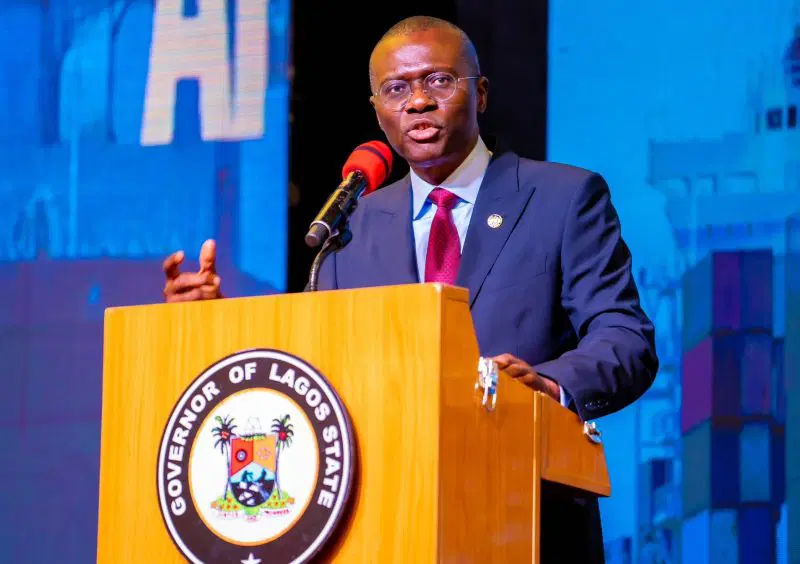
The Lagos State Government has announced a milestone in its fiscal performance, recording a total revenue of ₦2.6 trillion for the 2025 financial year, with Internally Generated Revenue (IGR) jumping to ₦1.87 trillion.
The achievement reflects a strong double-digit growth trajectory driven by aggressive tax administration reforms, digital transformation, and disciplined debt management under Governor Babajide Sanwo-Olu’s administration.
The State Commissioner for Finance, Mr. Abayomi Oluyomi, made the figures public during the 2026 Ministerial Press Briefing held at the Bagauda Kaltho Press Centre in Alausa, Ikeja. The briefing marks the seventh anniversary of the current administration.
According to the audited scorecard, Lagos State’s total revenue increased by 16% year-on-year, climbing from ₦2.3 trillion in 2024 to ₦2.6 trillion in 2025. Over the same period, the state’s IGR recorded an 18.5% leap, rising from ₦1.58 trillion to ₦1.87 trillion, cementing its position as the country’s ultimate economic engine.
A breakdown of the numbers shows that the Lagos State Internal Revenue Service (LIRS) has maintained exceptional momentum since it crossed the historic ₦1 trillion threshold for the first time in 2024 with ₦1.045 trillion. In 2025, overall tax collections rose by an additional 38%, hitting ₦1.443 trillion.
The finance commissioner attributed this steady upswing to the migration of Ministries, Departments, and Agencies (MDAs) to the Lagos Revenue Portal and a massive overhaul of the LIRS e-Tax platform. The upgraded cloud-based system now integrates Capital Gains Tax and Stamp Duties filing, real-time Corporate Affairs Commission (CAC) verification, expatriate tracking via partnerships with the Nigeria Immigration Service, as well as advanced geo-tagging and payment channels through USSD, POS, and WhatsApp.
Addressing concerns over public borrowing, Oluyomi stated that Lagos has maintained a stable and highly responsible debt profile despite heavy capital investments in urban renewal. The state currently boasts a Debt-Service-to-Revenue ratio of 19.2%, well below the national fiscal responsibility threshold of 30%. Additionally, its Total Debt-to-GDP ratio stands at a conservative 4.11%, comfortably under the World Bank’s 20% warning baseline.
This financial prudence has earned the sub-national government high marks from international fiscal assessors, with Fitch Ratings recently reaffirming Lagos State’s stable ‘AAA’ national rating. To fund its expansive infrastructure deficit, the state successfully floated a ₦230 billion bond—the largest single sub-national bond issuance in Nigerian history—at a fixed interest rate of 16.25%.
The state government emphasized that the trillions generated internally are being directly channeled into high-impact capital projects under the THEMES+ development agenda. Key projects actively funded through these revenues and bond initiatives include the Opebi-Ojota Link Bridge to ease gridlock across major metropolitan axes, Phase II of the Blue Line Rail Mass Transit running from Mile 2 to Okokomaiko, the 280-bed multi-specialist Ojo General Hospital, the ultra-modern Massey Children’s Hospital, the Lagos HOMS housing schemes, and the complete structural redevelopment of the Alaba Rago International Market.
Despite severe macroeconomic headwinds and currency fluctuations impacting the country nationally, the state executive maintained that strategic digital enforcement, a broadened tax base, and transparent asset management will allow Lagos to hit an even higher revenue target by the end of the 2026 fiscal cycle.