


Verydarkman Questions Opposition Credibility as Electoral Reform Coalition Jumps Ship from ADC to NDC
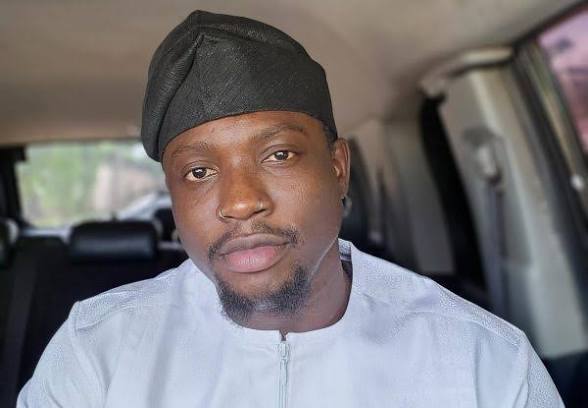
Popular Nigerian social media activist and commentator Martins Vincent Otse, widely known as Verydarkman, has weighed in on the sweeping political realignment currently reshaping Nigeria’s opposition landscape ahead of the 2027 general elections, taking a pointed swipe at the figures who championed the coalition for electoral reform only to abandon the African Democratic Congress for the Nigeria Democratic Congress.
“All the people that said they are coalition for electoral reform have now moved from ADC to NDC,” Verydarkman remarked, in a comment that quickly resonated with a significant section of Nigerians who have grown increasingly cynical about the motivations driving the country’s opposition politics.
His observation cuts to the heart of a dramatic sequence of events that has unfolded over recent weeks. The ADC had been carefully built up as the central platform for opposition consolidation, attracting some of Nigeria’s most prominent political figures under the banner of democratic renewal and electoral reform. Former Labour Party presidential candidate Peter Obi and ex-Kano State governor Rabiu Musa Kwankwaso were among the highest-profile names to pitch their tent with the party, raising hopes that the opposition had finally found a credible and united home from which to challenge President Bola Tinubu’s All Progressives Congress in 2027.
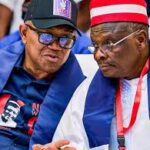
Those hopes proved short-lived. Obi and Kwankwaso formally defected to the NDC on Sunday, citing the ADC’s unresolved internal crises, persistent court cases and deep factional divisions as reasons for their departure.
Obi, in his address at the NDC reception in Abuja, linked his decision to the deteriorating condition of the country, insisting that the move was driven by a genuine desire to build a stable platform rather than personal political ambition.
Kwankwaso echoed similar sentiments, framing the switch as a commitment to democratic values and the creation of a credible alternative for Nigerians disillusioned with the current political order.
The ripple effect was swift and significant. Within 48 hours of their departure from the ADC, 17 House of Representatives members and a senator followed suit, defecting to the NDC from states including Kano, Anambra, Lagos, Edo, Rivers and Kogi.
The lawmakers cited the ADC’s instability, which they described as running from the ward level all the way to the national leadership, as the primary reason for their exit. The coordinated nature of the defections was widely interpreted as a show of loyalty to Obi and Kwankwaso, whose combined voter base of over 7.6 million in the 2023 presidential election makes them among the most electorally significant figures outside the ruling party.
The NDC, formally registered by INEC in February 2026 and led by former Bayelsa State governor Senator Seriake Dickson, held its inaugural national convention on May 9 in Abuja, an event that drew thousands of supporters from across the country and transformed the relatively new party into an instant focal point of opposition politics. The party’s stated agenda includes national unity, youth inclusion in governance and notably electoral reform, the very cause that had been used to justify the original gathering around the ADC.
It is precisely that continuity of language without continuity of platform that Verydarkman’s comment appears to interrogate. For many Nigerians watching the drama from the sidelines, the migration from ADC to NDC raises uncomfortable questions about whether the coalition was ever truly about systemic reform or simply about finding the most convenient vehicle for political ambition. The ADC’s national chairman David Mark, for his part, acknowledged the impact of the departures but vowed the party would regroup and field competitive candidates in 2027.
Whether the NDC can avoid the same internal fractures that brought down its predecessor coalition remains the defining question hanging over Nigeria’s opposition heading into the election season.