Benue APC Crisis Deepens as Leaders Disagree on Resolutions
The internal crisis within the Benue State chapter of the All Progressives Congress (APC) resurfaced last week despite a high-level reconciliation meeting aimed at restoring unity among party leaders ahead of future elections.
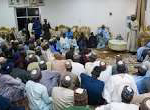
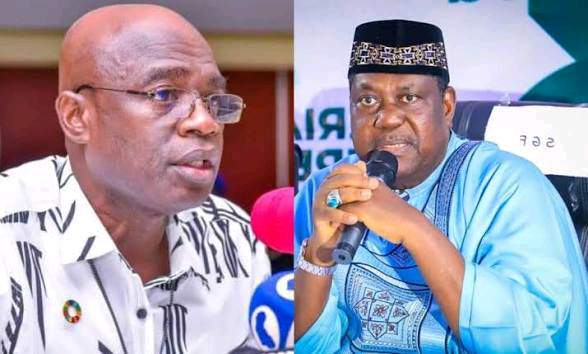
The peace meeting, held behind closed doors at the Government House in Makurdi, was jointly convened by Governor Hyacinth Alia and the Secretary to the Government of the Federation (SGF), I Senator George Akume, following growing concerns over divisions within the party.
The gathering attracted several APC stakeholders, including former Governor Gabriel Suswam, Senators Emmanuel Udende, Jack Gyado, Solomon Wombo, and other influential political figures in the state.
Although participants described the atmosphere as cordial, differing interpretations of the meeting’s outcome quickly sparked fresh controversy within the party.
The long-running disagreement between Governor Alia’s camp and supporters of Senator Akume has continued to split the APC structure in Benue into rival blocs since the beginning of the current administration. Party insiders consider the dispute one of the most serious internal crises the party has faced in the state in recent years.
Speaking after the meeting, Akume said efforts were being made to rebuild inclusiveness and correct areas where the party had faltered. However, controversy erupted after he suggested that Governor Alia and lawmakers elected on the APC platform should automatically retain their tickets for another term.
His remarks immediately generated reactions within party circles, with many stakeholders questioning whether such an agreement had actually been reached during the discussions.
Governor Alia later distanced himself from the claim, insisting that neither he nor the SGF had the authority to grant automatic tickets to political office holders. He maintained that the APC leadership at the national level had repeatedly stated that automatic tickets were not part of the party’s policy.
According to the governor, the meeting was strictly intended to promote reconciliation, rebuild trust, and restore unity within the party rather than negotiate political endorsements.
Alia also disclosed that he apologised on behalf of party members during the meeting in an effort to ease tensions and encourage cooperation among stakeholders.
Former Governor Gabriel Suswam urged party members to focus on unity rather than disagreements over interpretations of the meeting, noting that a committee had already been set up to address unresolved issues.
Senator Emmanuel Udende also expressed optimism that the dialogue would strengthen peace within the party.
However, tensions escalated again after a purported communique from the meeting began circulating publicly. The document reportedly contained references to automatic tickets for lawmakers, prompting outrage from Governor Alia’s supporters, who described it as misleading and unauthorised.
Members of the communique drafting committee later rejected the published version, insisting it did not reflect their work.
Deputy Governor Samuel Ode, who chaired the drafting committee, denied that automatic tickets were discussed or approved during the meeting. He clarified that the committee only prepared a draft document for review by the conveners and was not responsible for approving or releasing any final communique.
Ode questioned how the draft and attendance records found their way into public circulation, describing the development as unauthorized and provocative. Despite the controversy, he maintained that the reconciliation process remained ongoing and should not be judged solely by the disagreements that followed the meeting.
The Governor’s Chief of Staff, Moses Atagher, also dismissed claims that Akume openly endorsed automatic tickets during the session. According to him, the SGF merely expressed hope that current lawmakers could continue in office, subject to party rules and constitutional procedures.
Despite the renewed tensions, some APC leaders remain hopeful that the intervention by senior party figures and national leaders could still help stabilise the party in Benue State.
For now, however, the reconciliation effort has exposed continuing mistrust between the rival factions, leaving the party facing uncertainty over whether genuine unity can be achieved ahead of future political contests.