


10 States Score Below 40% as Health Ministry Flags Gaps in Policy Implementation
The Federal Government has raised concerns over poor implementation of health-sector policies, revealing that 10 states scored below 40 per cent in executing resolutions of the National Council on Health.
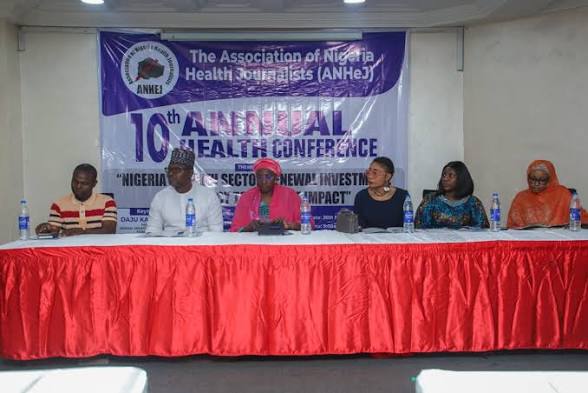
The Permanent Secretary, Federal Ministry of Health and Social Welfare, Daju Kachollom, disclosed this on Thursday in Abuja at the 10th Annual Conference of the Association of Nigeria Health Journalists.
Kachollom said only 412 of the 740 implementation reports expected from states after the previous National Council on Health meeting had been received.
She described the shortfall as a major setback to the country’s health reform efforts, stressing that government policies and commitments would have limited impact without proper implementation at the state level.
The Permanent Secretary also urged journalists to scrutinise government spending and assess whether investments in the health sector were producing tangible improvements for Nigerians.
She said the government had fulfilled all 41 presidential health-sector commitments under the Nigeria Health Sector Renewal Investment Initiative, launched in December 2023.
According to her, 12 of the 13 health indicators being monitored by the government had improved, while 3,526 primary healthcare centres had been revitalised and work was ongoing at another 900 facilities.
Kachollom added that health insurance enrolment had risen from about 16 million Nigerians to nearly 24 million, while the combined health budgets of state governments increased from N1.97 trillion in 2023 to more than N3.3 trillion in 2026.
Despite the reported progress, she acknowledged continuing challenges, including childhood malnutrition, limited health insurance coverage, disparities in healthcare quality and shortages of healthcare workers.
She said about four in 10 Nigerian children under five were affected by stunting, while health insurance coverage remained at roughly one in 10 Nigerians.
To improve accountability, Kachollom said the ministry was strengthening the use of its primary healthcare functionality dashboard and Joint Annual Review scorecard to track performance across the country.
She added that the DHIS2 platform was being developed as a single national platform for health data, while the 2023–2024 National Health Accounts would soon be released to provide a clearer picture of healthcare spending and who bears the cost.
In his remarks, ANHEJ President, Joseph Kadiri, called for stronger accountability in the implementation of health policies, saying public investments should result in better access to affordable and quality healthcare.
Kadiri said the association was prepared to work with the Basic Health Care Provision Fund gateways and the Ministerial Oversight Committee to independently monitor healthcare interventions across states through field visits and investigative reporting.
Also, Dr Victoria Igbinomwanhia, Programme Manager and Oncology Lead at the Institute of Human Virology Nigeria, urged stronger cooperation between health institutions and journalists to promote evidence-based reporting, tackle misinformation and improve public understanding of health matters.