


“Rig and Die”: How Pre-election Violence will Blight 2027 Voter Turnout
“Anybody who rigs the election on that day, we will kill him! If you don’t value your life, come and rig the election. It is ‘rig and die.’” These are the inflammatory words echoed by former Deputy Senate President Ovie Omo-Agege, Peter Obi, and other political figures. Ahead of the 2027 general elections, this rhetoric is already fueling pre-election violence and will definitely suppress voter turnout in the upcoming presidential race.
To understand the gravity of this threat, we must first look at the historical trend of voter apathy in Nigeria. Since the country returned to democratic rule in 1999, voter apathy in presidential elections has climbed steadily, with turnout peaking at nearly 70% in 2003 before plunging to an all-time low of 26.7% in 2023. In 1999, out of 57.9 million registered voters, 30.3 million cast their ballots, leaving 27.7 million non-voters and an apathy rate of 47.7%. Participation reached its highest point in the Fourth Republic in 2003, when 42 million out of 60.8 million registered voters turned out while 18.8 million stayed away, dropping apathy to its lowest level at 30.9%. However, enthusiasm began to wane in 2007, when 35.4 million out of 61.6 million registered voters participated and 26.2 million abstained, pushing apathy to 42.5%. By 2011, 39.5 million votes were cast out of 73.5 million registered voters, leaving 34.1 million non-voters and an apathy rate of 46.3%. In 2015, the introduction of biometric Permanent Voter Cards (PVCs) and Smart Card Readers removed duplicate entries and brought registration down to 67.4 million, yet only 29.4 million people voted while 38 million stayed home, pushing apathy past the halfway mark for the first time at 56.3%. The register grew to 84 million in 2019, but only 28.6 million people voted, meaning 55.4 million registered voters or 65.9% stayed away from the polls. Finally, in 2023, the register reached a record 93.5 million, but only 25 million ballots were cast, leaving 68.5 million registered Nigerians who did not vote and widening the apathy gap to a staggering 73.3%.
Looking at these figures, the unprecedented rise in voter apathy is undeniable. Why does this keep happening? Generally, non-voters fall into four categories: those who are scared of political violence, the “I don’t trust the process” group, the “make God sha choose the better person” group, and the “they don know who go win” group. Right now, the most urgent crisis lies with the first category.
As rational human beings, it is completely understandable for citizens to be apprehensive when their lives are on the line. That natural fear is already a major deterrent, and now politicians are pouring fuel on the fire with the “rig and die” slogan. This statement alone has already convinced millions of Nigerians to stay home on election day.
Some may try to defend the phrase by arguing it is only directed at election riggers. However, as the Yoruba proverb warns, “Nígbà tí ẹlẹ́ṣẹ̀ bá ń jẹ ìyà, olódodo á bá pín nínú rẹ̀” (When the sinner is suffering, the righteous person will share in it). No one is safe when electoral violence erupts, whether they are rigging or not. Once citizens see hostilities building up between rival parties across Nigeria, they will inevitably stay indoors to avoid becoming collateral damage or what the Hausa call “Allah ya kawo.” Moreover, no law in Nigeria prescribes the death sentence for election rigging. Under the Nigerian Electoral Act, 2022, jail terms for rigging-related offences range from 12 months to over 10 years, depending on the specific crime. For instance, the illegal printing or importation of ballot papers and boxes carries a minimum sentence of 10 years, while announcing or publishing false election results attracts up to 36 months. Similarly, snatching or destroying election materials such as ballot boxes or BVAS machines carries a maximum of 24 months, forging result forms or nomination papers carries up to two years, and vote buying, bribery, or voter impersonation is punishable by a maximum of 12 months in prison.
In 2013, Peter Obi was accused of rigging the Anambra governorship election. In a report published by The Nation and several other Nigerian media outlets, Arthur Eze stated: “Obi committed a crime and rigged the election against the poor people to bring in his man, Obiano. For eight years, there were no local government elections in Anambra; now he has brought Obiano, his treasurer, to take over from him. Obiano will spend eight years and bring in somebody else, and then we are in trouble.” Fast-forward to the 2023 presidential election, which Obi claimed to have won. Yet in 2026, when pressed to provide proof of this claim, he stated: “There’s no evidence. Everything is not based on evidence.” Notably, that same election was also trailed by widespread reports of rigging.
Similarly, look at Ovie Omo-Agege. While serving a Senate suspension, a group of thugs broke into the Senate chamber during plenary session and made away with the mace, the chamber’s symbol of authority. Eyewitnesses and reports alleged that Omo-Agege personally led the men into the chamber.
Now, the question I have for both of them is simple: Should we apply your “rig and die” nonsense to the two of you?
If we are being honest, the warning signs we have witnessed throughout 2026 leading into next year are worse than ever. Ahead of the August 15, 2026 Osun governorship election, a report by the Kimpact Development Initiative documented 73 election-related violent incidents resulting in 29 deaths, including an Accord Party member killed by suspected thugs just a day before the poll. The bloodshed did not stop after the election either; a 60-year-old man, Tajudeen Yusuf, was killed by gunfire at the Osogbo palace, and two others were murdered in Ikire.
What makes this even more alarming is the total lack of accountability. So far, none of the perpetrators has been brought to justice because they enjoy political cover. For instance, in Amuwo Odofin, a woman from the Obi camp who committed electoral violence remains at large to this day. Meanwhile, a man claiming to be an Igbo king in Lagos who issued political threats is behind bars. Even worse is the culture of political immunity: in one case where I personally wrote a petition against a perpetrator, the suspect simply decamped to the APC, got “baptized by APC water,” and the case was quietly closed.
This is just the latest gubernatorial cycle, yet it mirrors the deadly trajectory of the 2023 general election. Ahead of the 2023 polls, the Center for Democracy and Development (CDD) and ACLED recorded about 109 election-related deaths in the build-up, while other independent observers documented over 100. On election day itself, the EU Observer Mission reported at least 21 deaths, and Yiaga Africa recorded an average of eight deaths every 24 hours, with Benue (6) and Rivers (5) among the worst hit.
While political violence is not limited to a single party, let us call a spade a spade: 80% of this toxic political aggression and its perpetrators come from the Obidient camp. Recently, Peter Obi remarked, “They said that people are carrying cutlasses and sticks to our campaigns, but everybody knows it’s Kwankwaso’s people that come out with such sticks, and they’ve never used them to harm anyone.” That is a foolish and reckless statement essentially throwing his vice presidential candidate under the bus. If Obi saw someone waving cutlasses and sticks around him, would he stand there calmly? Furthermore, his claim is false; many of his own supporters have been seen brandishing various weapons. Why would a presidential candidate condone supporters marching around with sticks? Is he a Fulani herder, or are Nigerians cattle to be guided with a stick?
Even the digital space is not spared. A Leadership newspaper editorial explicitly condemned the online conduct of these supporters, noting that threatening to kill and maim people simply for holding dissenting views is barbaric. These people have a disgusting way of operating; in the last general election (2023) it was only bullying, harassment and all sort of nonsense, this time around it’s “rig and die”. They are not the only one in political space, the PDP are there so are the APC, have you ever seen these guys with cutlass?
Meanwhile, the “rig and die” rhetoric is already yielding tragic consequences on the campaign trail. Gunmen recently opened fire during a campaign tour for Ovie Omo-Agege, the Nigeria Democratic Congress (NDC) candidate for Delta Central Senatorial District. Between four and six people were killed, including Moses Anaughe (a former Federal Character Commission commissioner and former Delta State House of Assembly member) and Akima Efemena Umukoro (a former Urhobo Progress Union youth wing president). Omo-Agege’s campaign chairman, Evans Ivwurie, and several others were hospitalized with gunshot wounds.
The president made it clear that Lagos is the deal when out of 7 million registered voters, only about 300,000 came out to vote yet they claims victory. “Irọ́ ni” (that is a lie); such dismal participation is a collective failure when turnout does not even approach a respectable fraction of registered voters. Just recently, a man was beaten up at a motor park simply for driving an APC-branded car, yet critics still try to pin all political violence on APC members. This is why I am calling out the president to act, mobilize all the security force to secure the people while they exercise their basic right of freedom of association, expression and choice of any candidate of their chosing without fear of violence, if the president can give them that assurance of protection, the result will be different.
Violence is spreading across the entire country, not just in one state. Given this reality, how can anyone expect ordinary citizens to risk their lives at the polling units? As another Yoruba proverb reminds us, “Ogun àsọtẹ́lẹ̀, kì í pa arọ, tí arọ ọ̀hún bá gbọ́n” (“A foretold battle does not kill a cripple, if the cripple is wise”). People will naturally run for their lives, triggering massive apathy.
This is not the time for the government to show any sign of weakness. Anyone who needs to be checked must be checked, and anyone who needs to be jailed must face the full wrath of the law. While I believe President Tinubu’s victory is assured, I passionately appeal to the President to act decisively right now. A true leader wants a massive turnout and an undeniable mandate behind him so he can proudly claim a superior victory. I beg the President to mobilize all security agencies immediately to clamp down on thugs, enforce the law without favoritism, and prevent electoral violence before it destroys the 2027 elections.
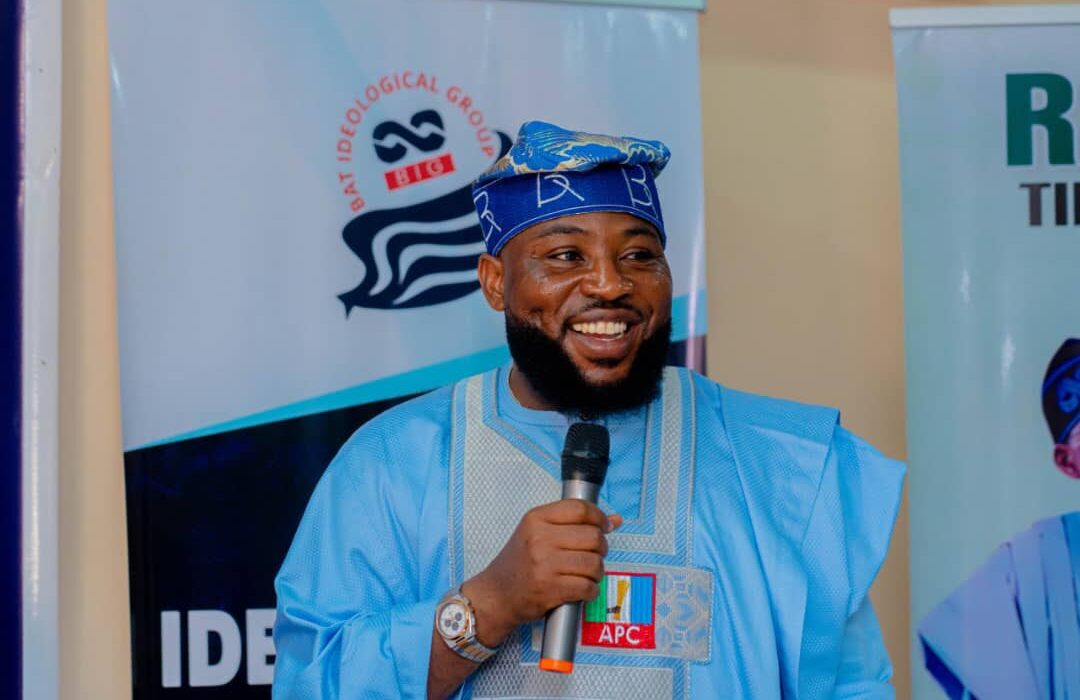
Bamidele Atoyebi is the convenor of BAT Ideological Group, National Coordinator of Accountability and Policy Monitoring and a publisher at Unfiltered and Mining Reporting and political social worker