



FG Links Improved Learning Outcomes to Infrastructure, Teacher Motivation
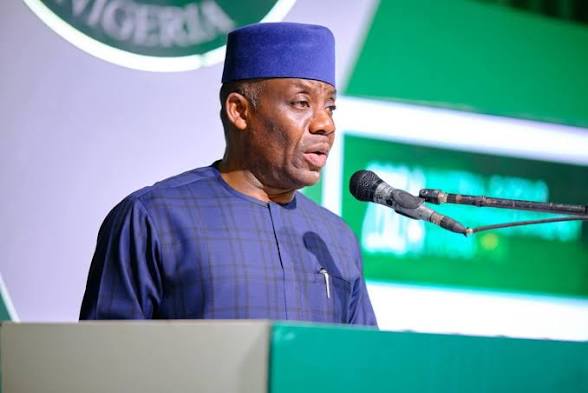
The Federal Government has identified adequate school infrastructure and better motivation for teachers as key to improving learning outcomes and achieving sustainable development in Nigeria’s education sector.
Minister of Education, Tunji Alausa, stated this on Monday in Maiduguri at the opening of the 70th meeting of the National Council on Education.
Alausa, who was represented by Folake David, Director overseeing the Office of the Permanent Secretary, Federal Ministry of Education, said education reforms could not deliver lasting results without functional learning facilities and qualified, motivated teachers.
The meeting, attended by education stakeholders from the 36 states and the Federal Capital Territory, was themed, “Infrastructure Development and Teacher Motivation: Panacea for Improved Learning Outcomes.”
The minister said the Federal Government had introduced several programmes under President Bola Tinubu’s Renewed Hope Agenda to address gaps in access, equity and quality of education.
He listed the Adolescent Girls Initiative for Learning and Empowerment and the Human Capital Opportunities for Prosperity and Equity Education Programme among the major interventions targeting infrastructure deficits and poor learning outcomes.
According to him, the HOPE-ED programme, backed by the World Bank and the Global Partnership for Education, represents an investment of about $552 million to improve foundational learning and increase access to basic education.
Alausa also said the government was reforming Technical and Vocational Education and Training through an 80 per cent practical and 20 per cent theoretical model designed to equip young Nigerians with job-ready skills.
He added that efforts were ongoing under the Safe Schools Initiative to improve the security of pupils and teachers, alongside measures to strengthen teacher welfare, professional development and digital learning.
However, the minister acknowledged that the sector continued to face challenges, including inadequate classrooms, poorly equipped laboratories, shortages of teachers, insecurity and limited instructional materials.
He called on education stakeholders to move beyond policy formulation to effective implementation, supported by clear funding plans, monitoring systems and accountability measures.
The Borno State Commissioner for Education, Science and Technology, Lawan Wakilbe, said the state had reduced its out-of-school population from about 2.2 million in 2019 to fewer than 700,000.
Wakilbe said school enrolment had also risen from 765,000 to 1.8 million under Governor Babagana Zulum.
He noted that formal education, which had previously been limited to five or six local government areas because of insurgency, had now resumed across all 27 local government areas of the state.
The commissioner, however, identified improving learning outcomes among displaced and traumatised children as a major challenge requiring sustained investment in teacher training and development.