

Did You Know? Wole Soyinka Once Held a Radio Station at Gunpoint
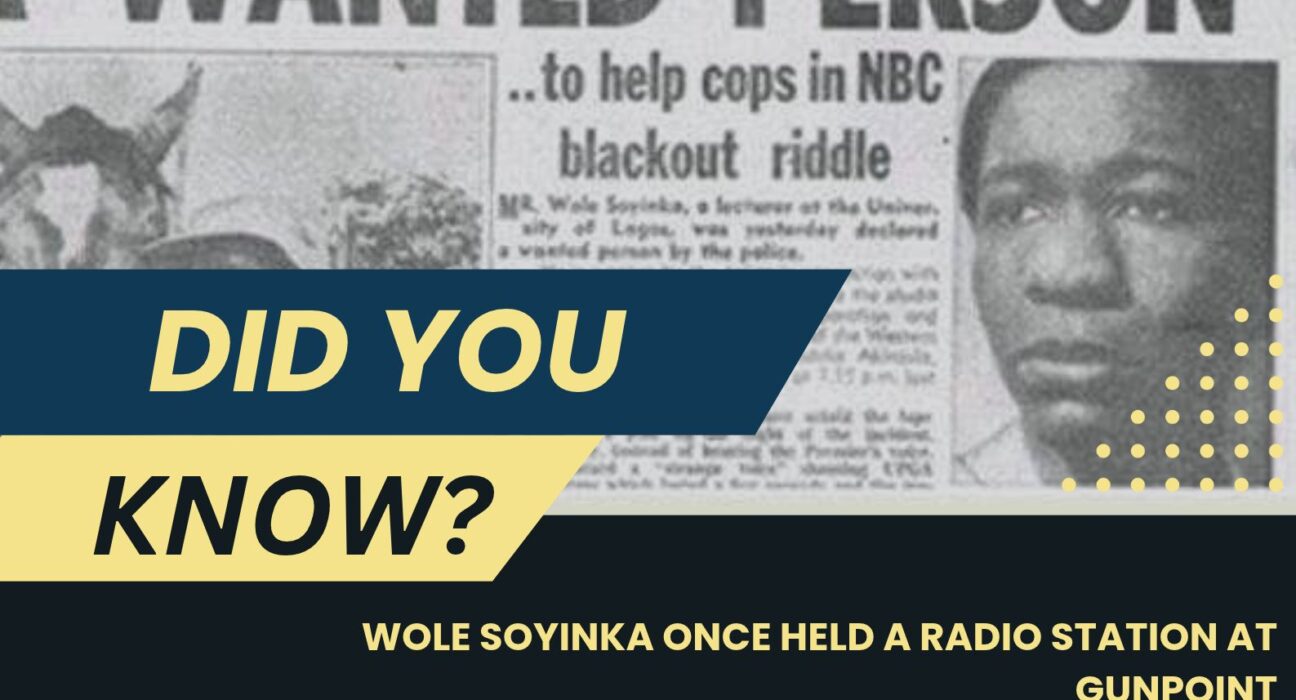
Did you know that Nigeria’s first Nobel Literature was once arrested for holding up a radio station with a gun? It is one of the boldest political stunts in Nigerian history, and it was carried out by a playwright.
The story begins with the 1965 elections in the old Western Region. After the election of October 11, 1965, Premier Samuel Ladoke Akintola used the state broadcasting service to announce alleged false results. Many people believed the vote had been rigged. On the night of October 15, Akintola was due to announce himself the winner.
The broadcast never went out as planned. Akinwande Oshin, the continuity announcer, came into the studio at 6:45 pm with Yoruba and English tapes of the Premier’s speech. At that point a masked man with a gun walked into the Ibadan station. Oshin handed the tapes to the gunman, who gave him another tape as a substitute. Oshin loaded it, and a new broadcast went live. Listeners across the region did not hear a victory speech. They heard a booming voice say “Akintola Go!” Another account says the recording told Akintola to “get out of town.”
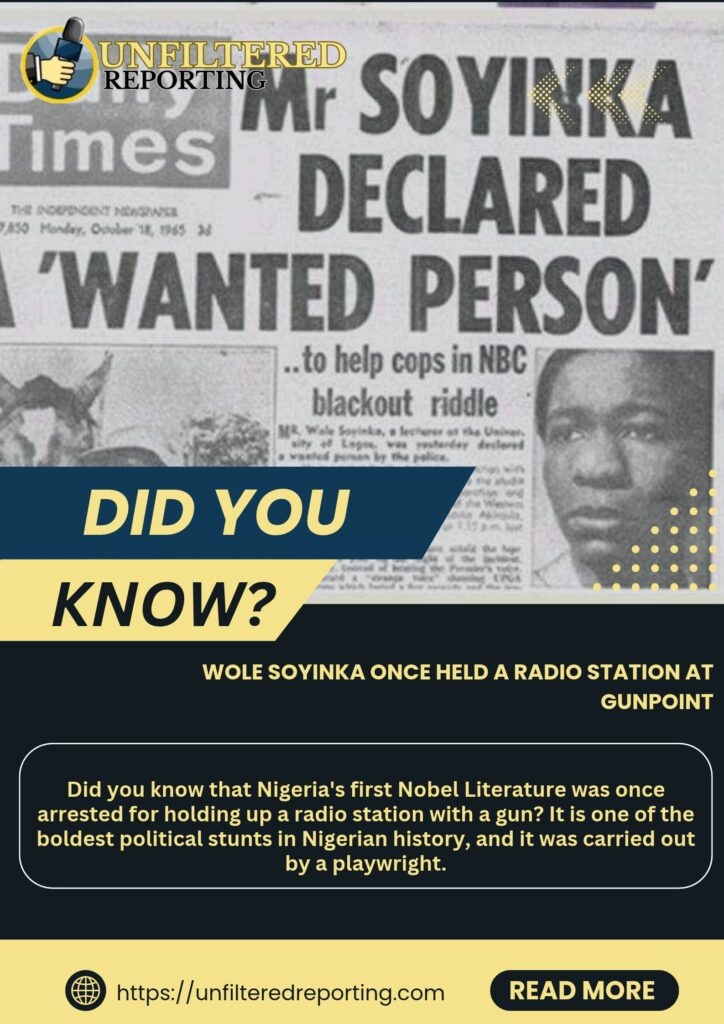
Soyinka was 31 at the time, and he soon became the main suspect. Police declared him wanted. He fled to Enugu in the Eastern Region and sought refuge with Premier Michael Okpara, until his arrest on October 27, 1965. He was charged with robbery with violence. He denied it, and The Times of London reported that he said he was not in Ibadan at the time.
The case ended in his favour. He was acquitted on December 21, 1965. For years he kept up what one reviewer called “coy denials.” Then, in his 1994 memoir Ibadan: The Penkelemes Years, he finally acknowledged his role in the radio station hold-up. Another account says he recorded the substitute tape himself, with the help of an American expatriate. He wrote about the episode again in his 2006 memoir, You Must Set Forth at Dawn.
So the man who later won the 1986 Nobel Prize for Literature, and who has long spoken out against rigged elections and dictatorship, once acted on that anger with a pistol and a tape. It fits a pattern in his life: he has never just written about injustice from the sidelines.