Deep Calls Unto the Deep: How Tinubu Delivered Buhari Before Winning at Polls
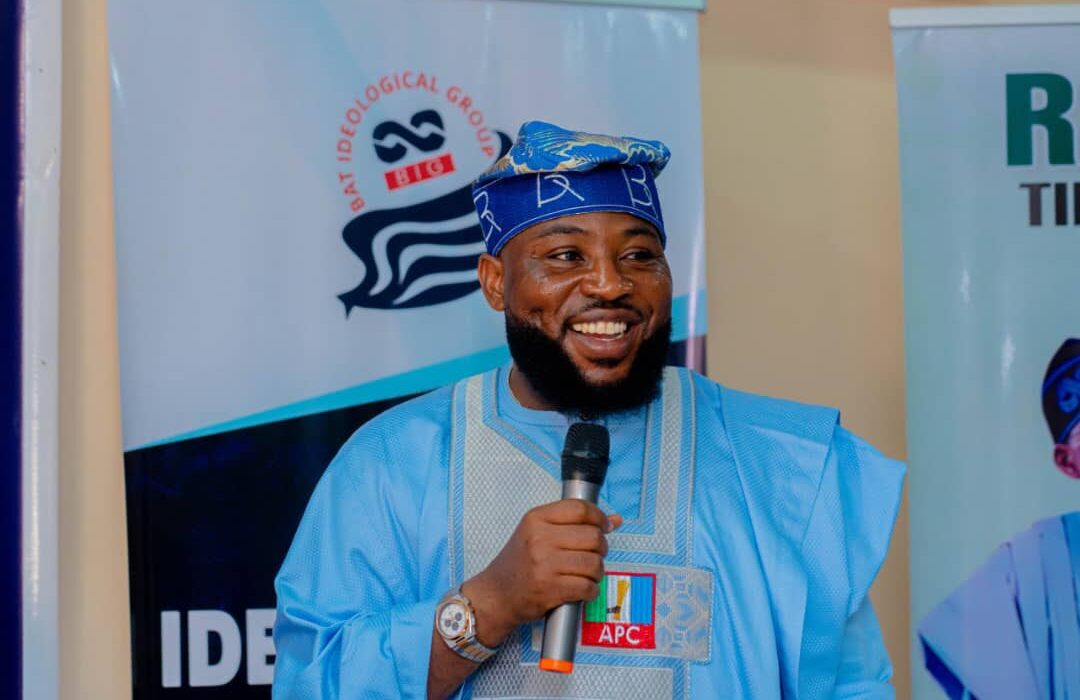
By Bamidele Atoyebi
Many people talk about how President Bola Ahmed Tinubu helped former President, Muhammadu Buhari secure the All Progressive Congress presidential ticket and eventually win the 2015 election. But beyond the primary and the polls, there was another critical battle that played out behind the scenes, one that could have stopped Buhari from appearing on the ballot in the first place. That part of the story is rarely told, yet it reveals just how much Tinubu put on the line to ensure Buhari’s presidential ambition survived.
Tinubu did not just help deliver Muhammadu Buhari at the 2015 presidential poll; he delivered him even at the courtroom, at a moment when his candidacy was shaky and could have been stopped before Nigerians ever got the chance to vote for him. I read Sam Omatseye’s account of the episode in ‘From AD to APC: The Evolution of Nigerian Political Parties and the Exploits of One Man (1998–2015)’ and it immediately took me back to a conversation I personally had with Chief Wole Olanipekun, SAN, on a flight from Lagos to Abuja shortly after the death of former President Buhari. I had heard the story directly from the man who was at the centre of it but I deliberately kept it private because I considered it a personal account. Now that Omatseye has brought the episode into the public domain, I can put it in perspective.
In the days leading to the 2015 election, the Peoples Democratic Party challenged Buhari’s eligibility over his certificate. The military was unable to produce the certificate Buhari said was in the barracks and the matter was moving rapidly before the Federal High Court. Tinubu, recognising what was at stake, reached out to Olanipekun, who was then in Akure handling another matter, and told him, in essence, that Buhari might not make the ballot unless he came to Abuja immediately. An aircraft was arranged to bring him to Abuja. What followed was a legal battle that resulted in a stay of proceedings, effectively keeping the door open for Buhari to contest.
Omatseye’s account records that the legal team eventually prevailed and that Buhari himself did not fully appreciate the battle being fought on his behalf until much later.
For me, this is important because it puts the Tinubu-Buhari story beyond the usual election-day narrative. Tinubu did not simply support Buhari’s candidacy politically; he deployed political relationships, resources and legal strategy at a critical moment to ensure that the candidacy survived. And this was not an isolated intervention. Before 2015, Buhari had made several attempts at the presidency without success. Tinubu supported him through the political negotiations that produced the APC and, crucially, helped create the political environment in which Buhari eventually defeated other powerful contenders for the presidential ticket. So when I say the North should understand the weight of what Tinubu did, I am not making an appeal based merely on sentiment. I am talking about political investment over time. The story becomes even more consequential when one considers what the Buhari victory eventually meant for Tinubu himself. The APC victory in 2015 created the political foundation that would later make the 2023 succession conversation possible. This is why I have always said that politics is not a game of emotions; it is a game of strategy. If Buhari had been stopped in those final legal minutes, the history that eventually produced the Tinubu presidency could have taken a completely different route.
That is also why the relationship between Tinubu and Olanipekun fascinates me. At the recent ceremony celebrating Olanipekun’s 75th birthday and milestones in the legal profession, Tinubu welcomed him with the words, “Amofin, Amofin mi”, a Yoruba expression of deep personal recognition: lawyer, my lawyer. The President later told opposition politicians that if they ever found themselves in court, they should get their own Olanipekun because “this one is already taken, booked and ready for 2027.” Beyond the humour, I saw something much deeper in that exchange: trust built over decades. Olanipekun has himself traced his relationship with Tinubu to 1992, when Tinubu, then a senator, told General Ibrahim Babangida that members of the National Assembly had a stake in democracy because some of them hoped to govern Nigeria one day. More than three decades later, Olanipekun stood before him as President and recalled those words as an example of how what comes from the abundance of the heart can eventually become reality. He also recounted earlier legal engagements involving Tinubu including the attempt to challenge the dissolution of the National Assembly during the military era.
What struck me most is the idea of real recognising real. I once told my wife that one quality that is often missing in leadership is the ability to recognise talent: to look at another person and say, you have something I do not have and I know how to deploy it. You must possess a measure of talent and confidence yourself to recognise exceptional talent in another person without feeling threatened by it. That is what I see in the Tinubu-Olanipekun relationship. Olanipekun is not merely another lawyer who has appeared for a politician. He is one of Nigeria’s most prominent advocates, a Senior Advocate of Nigeria who has served as lead counsel to several presidents in election-related legal battles. Tinubu, for his part, has repeatedly recognised the value of Olanipekun’s intellect and legal prowess. And Olanipekun has spoken not merely as counsel but as someone who says he was attracted to Tinubu by what he heard from him as far back as 1992. At the recent event, he described Tinubu as someone whose words about eventually governing Nigeria had stayed with him for decades. That is a relationship that goes beyond the conventional lawyer-client arrangement. It speaks to intellectual respect, loyalty, trust and reciprocity.
There is another part of this story that I cannot ignore. When I was writing my tribute to Olanipekun, I wrote that he helped make Tinubu’s presidency possible by first helping to make Buhari’s presidential dream a reality. I meant it quite literally. Imagine the APC merger and the political realignment that followed only for Buhari to be removed from the 2015 contest days before the election because of a legal challenge. The political project could have been thrown into uncertainty. Instead, Olanipekun and the legal team assembled by Tinubu stopped that possibility. Omatseye says the episode had the potential to set the country ablaze if it had gone the other way. Olanipekun himself recalled that Buhari was largely unaware of the critical legal battle until afterwards. That, to me, is the remarkable part: some of the most consequential things people do in politics are not necessarily the things that make the headlines.
So when President Tinubu spoke of Olanipekun as “Amofin mi”, I understood the weight behind those words differently. I remembered my own conversation with the Chief, our discussion about Nigeria, the North, Tinubu’s political future and the expectation that people around the President must step up their performance. I remembered the man telling me stories that showed how closely he had followed Tinubu’s political journey and I remembered why, on Olanipekun’s birthday, I thanked him for helping make the Buhari dream a reality, because that victory eventually helped smoothen the road to Tinubu’s own presidency. Real recognises real. Tinubu recognised Olanipekun’s legal brilliance and trusted him with battles that mattered. Olanipekun recognised something in Tinubu in 1992 that many Nigerians would only recognise decades later. Today, one sits as President and the other has been conferred with Nigeria’s second-highest national honour, the Grand Commander of the Order of the Niger. For me, that is not merely a story about a lawyer and his client. It is a narrative about two men who recognised value in each other early, built a relationship through consequential moments and, in different ways, became part of each other’s history.
Yes, I call Tinubu a political sage and I do not use that description lightly. He has been a political strategist and juggernaut for decades but what stands out to me is his ability to envision political possibilities long before they become reality and then deploy the courage, relationships and strategy required to make them happen. Olanipekun’s recollection of Tinubu’s words to General Babangida in 1992 and where that prediction eventually led him, reinforces my belief that Tinubu has a rare political prophetic instinct. He says things, pursues them and, many times, history eventually catches up with his vision.
Comrade Bamidele Atoyebi is the convenor of the Bola Ahmed Tinubu Ideological Group, national coordinator of Accountability and Policy Monitoring PR and a publisher of Unfiltered and Mining reports.