
Obi, Kwankwaso Promise to Raise Nigeria’s Electricity Supply to 10,000MW
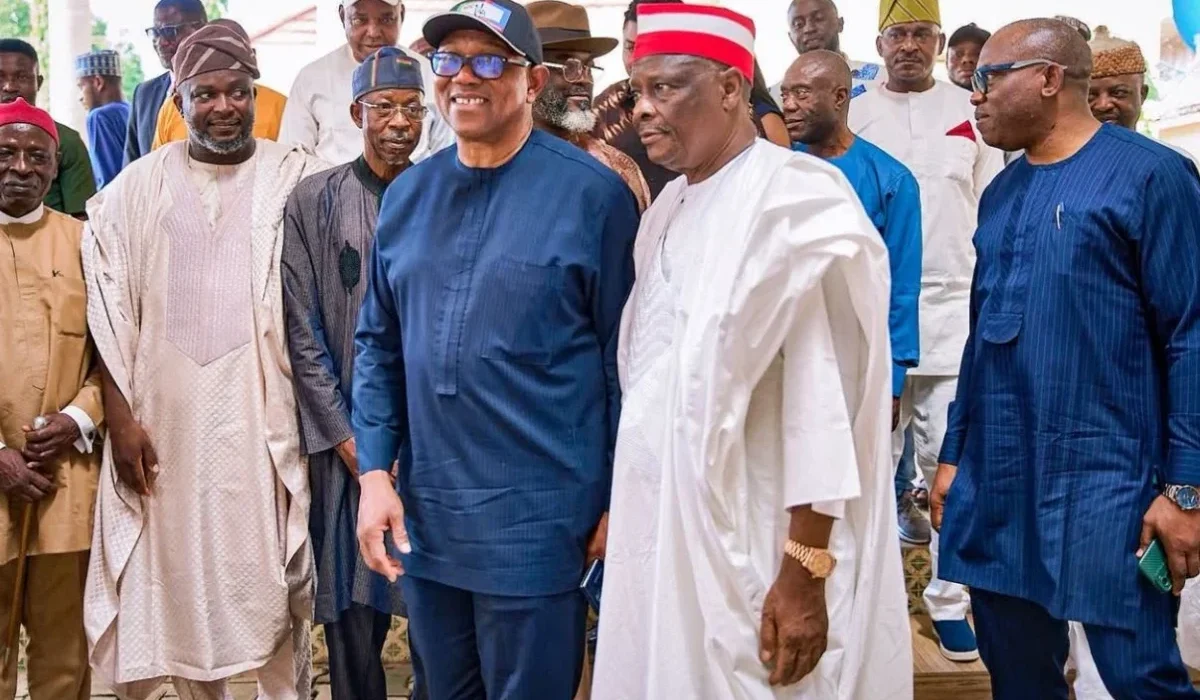
The presidential candidate of the Nigeria Democratic Congress (NDC), Peter Obi, has pledged that an administration led by him and his running mate, Rabiu Kwankwaso, would generate, transmit and distribute at least 10,000 megawatts of electricity.
Obi made the commitment on Friday during a town hall meeting in Onitsha, Anambra State, where he disclosed that both politicians had examined Nigeria’s electricity challenges and were developing plans to address them.
He said Nigeria currently generates, transmits and distributes approximately 4,000MW of electricity, adding that their administration would raise the figure to at least 10,000MW during their tenure.
“Today, Nigeria only generates, transmits and distributes about 4,000MW of electricity. Kwankwaso and I assure you that within our tenure, Nigeria will generate, transmit and distribute at least 10,000MW.
“Take note of everything I said here, we don’t want to make fake promises. And we’re not going to go there and start telling you when we came in what we saw. We are seeing everything now, and we are planning for it.
“We’re not going to come in and tell you that, ‘oh, some people are still in charge.’ One person must be in charge,” Obi stated.
The pledge is among the major commitments being presented by the Obi-Kwankwaso presidential ticket ahead of the January 16, 2027 presidential election, where they are expected to face President Bola Tinubu of the All Progressives Congress and former Vice-President Atiku Abubakar of the African Democratic Congress, among other candidates.
Obi has repeatedly promised to achieve the 10,000MW target during his campaign engagements.
In May, while accepting the NDC presidential ticket, he pledged to meet the target within four years if elected. He reiterated the commitment during the party’s town hall meeting in Enugu on October 29 and another engagement in Lagos on November 12.
Data from the Nigerian Electricity Regulatory Commission showed that grid-connected power plants generated an average of 4,022.40 megawatt-hours per hour in the second quarter of 2026.
The commission also reported that electricity distribution companies had provided meters to 62 per cent of customers nationwide, while their average combined technical, commercial and collection losses stood at 36 per cent, above the approved benchmark of 16.92 per cent.
Meanwhile, the administration of President Bola Tinubu has defended its performance in the electricity sector, highlighting the Electricity Act 2023, investments in grid expansion and off-grid electricity projects, as well as the Presidential Metering Initiative.
The Federal Ministry of Power disclosed in July 2025 that Nigeria’s installed electricity generation capacity had risen from 13,000MW to 14,000MW under the current administration, while peak generation had reached 5,801MW.
However, the Federal Government has acknowledged that significant challenges remain. In September, Power Minister Joseph Tegbe said a review of the sector identified persistent difficulties involving gas supply, electricity generation, transmission, distribution and market financing.
He also noted that commercial and collection losses recorded by electricity distribution companies, alongside outstanding debts owed by government agencies, continued to affect the sector.