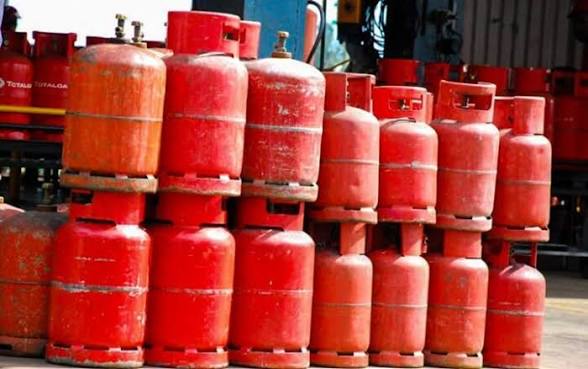



Cooking Gas Price Rises 14% to N1,600 per Kg Amid Supply Shortage
The price of Liquefied Petroleum Gas, commonly known as cooking gas, has increased by 14 per cent to N1,600 per kilogramme in November 2026, from N1,400 recorded in October, amid reported shortages in parts of Nigeria.
Checks in Lagos and other parts of the country showed that several suppliers had exhausted their commercial stocks, leaving Dangote Petroleum Refinery among the few major suppliers with gas available for purchase. The latest increase extends the upward movement in LPG prices recorded over the past three months.
National President of the Nigerian Association of Liquefied Petroleum Gas Marketers, Inyang Edu, said the supply situation remained insufficient to meet rising consumption. He explained that although domestic production had increased, demand was growing at a pace that continued to put pressure on available volumes.
Edu said inadequate storage and transportation infrastructure was also contributing to supply challenges and regional price differences. He noted that having gas available at production facilities or coastal terminals did not necessarily translate into adequate supplies in inland markets because of transportation costs, road conditions, haulage charges, storage limitations and a shortage of suitable LPG trucks.
He cautioned against interpreting higher domestic production as an improvement in supply across all states, particularly areas located far from major supply centres. Edu advocated using domestic production as the main source of supply while retaining imports to cover genuine shortages rather than eliminating them indiscriminately.
Audrey Joe-Ezigbo, Chief Executive Officer of Falcon Corporation Limited, similarly called for government support to focus on infrastructure that reduces the cost of delivering LPG rather than subsidising the product itself. Speaking at the 16th Nigeria Liquefied and Compressed Gases Association Conference and Exhibition in Abuja, she said investment in inland depots, bottling plants and logistics would make distribution more efficient and encourage sustained household adoption.
Joe-Ezigbo also identified trucking, rail and pipeline infrastructure as critical to expanding LPG distribution nationwide, particularly in northern Nigeria where transportation costs significantly influence retail prices. She called for predictable regulations, guaranteed supply and enforceable domestic supply obligations to attract private investment, while also urging policymakers to assess whether beneficiaries of government interventions can continue to afford cylinder refills after support programmes end.