

Atiku, Makinde Inch Towards Possible Alliance Ahead of 2027 Elections
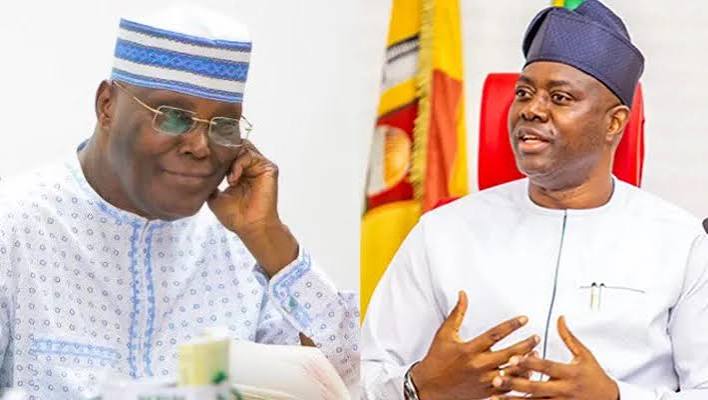
Representatives of former Vice-President Atiku Abubakar and Oyo State Governor, Seyi Makinde, have reportedly held several meetings and reached compromises in negotiations aimed at forming a political alliance to challenge President Bola Ahmed Tinubu in the 2027 presidential election.
The discussions between the duo are understood to be separate from wider consultations involving opposition leaders seeking to present a united presidential candidate against the ruling All Progressives Congress (APC).
Makinde, who is the presidential candidate of the Allied Peoples Movement (APM), has been a vocal critic of Tinubu’s administration and has supported efforts by opposition figures to work together ahead of the next general election.
On April 25, 2026, the governor hosted an opposition summit at the Government House in Ibadan, where political leaders discussed the possibility of presenting a single candidate to challenge the APC in 2027.
However, the initiative has yet to produce a concrete agreement, as Atiku, Makinde and former Anambra State Governor, Peter Obi, have continued to pursue their individual presidential ambitions.
Makinde, however, confirmed on Friday that he was involved in ongoing discussions with opposition leaders, including Atiku and Obi.
During an interview on Arise News, the governor explained that the outcome of the consultations could determine whether the politicians would eventually compete against one another or collaborate in the 2027 election.
He noted that political circumstances could lead to different arrangements, including situations where some of the politicians might become allies rather than electoral opponents.
Information gathered from individuals familiar with the discussions indicated that the possibility of Atiku and Makinde working together was becoming increasingly strong.
Politicians familiar with the negotiations disclosed that representatives of both camps had conducted several meetings and were making progress towards reaching an agreement.
A South-West leader of the African Democratic Congress (ADC), who spoke on condition of anonymity, expressed confidence that the proposed alliance would materialise.
He described the negotiations as purposeful and promising, suggesting that both political camps could soon make their arrangement public.
When asked about the possible timing of the announcement, the party chieftain indicated that it could happen before January 16, 2027.
Similarly, a candidate of the APM familiar with Makinde’s political activities disclosed that the governor was expected to work with Atiku in the forthcoming presidential election.
He said discussions between representatives of the two politicians had continued through both physical and virtual meetings in recent weeks, with indications that compromises had been reached.
The Oyo State Commissioner for Information, Dotun Oyelade, also confirmed that Makinde was holding discussions with other opposition leaders, although he did not specifically confirm a concluded agreement with Atiku.
Oyelade described the individuals involved in the consultations as experienced politicians with a clear understanding of contemporary political developments and the challenges facing the country.
He explained that Makinde was willing to cooperate with other opposition groups if such an arrangement offered a realistic opportunity to address Nigeria’s challenges and improve the living conditions of citizens.
According to him, the governor believes that the increasing hardship and poverty experienced by Nigerians require urgent attention.
Meanwhile, the negotiations have yet to produce publicly disclosed details regarding the proposed alliance, particularly the structure of the arrangement and how the politicians might resolve competing interests surrounding the presidential ticket.
The ADC also confirmed that discussions among opposition parties were continuing as part of efforts to establish a united front against the APC in 2027.
The party’s National Publicity Secretary, Bolaji Abdullahi, maintained that consultations were not restricted to any particular politician or political organisation, adding that opposition parties were still exploring possible areas of cooperation.
Similarly, Atiku’s Senior Special Assistant on Public Communication, Phrank Shaibu, confirmed that the former vice-president was engaging with opposition leaders.
He explained that the consultations were aimed at building a common political platform capable of addressing the country’s challenges and presenting Nigerians with an alternative to the current administration.
Shaibu added that the opposition was committed to working together to promote responsible leadership, make life more affordable and restore the country’s development prospects.
However, neither the ADC spokesperson nor Atiku’s aide confirmed that a specific agreement had been reached between the former vice-president and the Oyo State governor.
With the presidential election scheduled for January 16, 2027, opposition leaders face the challenge of reconciling their individual political ambitions, agreeing on a common strategy and possibly selecting a consensus candidate capable of challenging Tinubu.
Although no formal agreement has been announced, the latest developments suggest that discussions among prominent opposition figures are progressing.
Meanwhile, the G-100, a political pressure group convened by former Director-General of the Progressives Governors’ Forum, Salihu Lukman, was established to facilitate the formation of a broad-based opposition coalition ahead of the 2027 general elections.
The group has maintained that opposition parties may struggle to defeat the APC if they approach the election independently, particularly given the ruling party’s established political structures and electoral advantages.
As part of its efforts, the group has held consultations with Atiku, Obi, Makinde and other political stakeholders to build consensus around a common platform and a single presidential candidate.
However, the initiative has encountered uncertainty as several opposition politicians continue to pursue their individual presidential ambitions and campaign activities, with no clear indication that an agreement on a common candidate is imminent.