Netanyahu Urges Unity Government as Israel’s New Knesset Is Sworn In, Warns of Pressure to Accept Nuclear-armed Iran
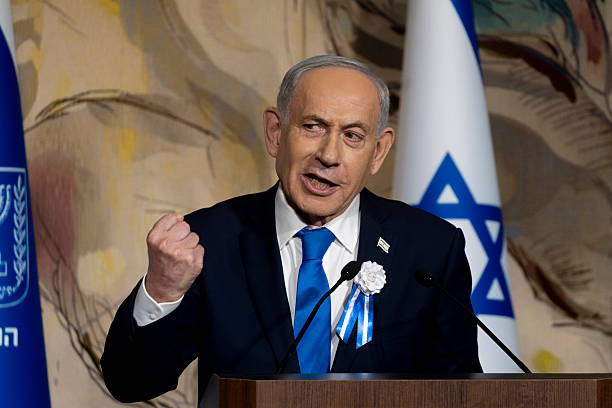
Israeli Prime Minister, Benjamin Netanyahu has called for a national unity government in his first address to the newly sworn-in Knesset, arguing that only a broad coalition can withstand what he described as growing international pressure on Israel to accept a nuclear-armed Iran.
Speaking after Tuesday’s swearing-in of the 26th Knesset in Jerusalem, Netanyahu said Israel would soon face pressure to tolerate a nuclear-armed Iran and to preserve what he called a terror regime seeking Israel’s annihilation.
He said that after Israel removed the immediate existential threat posed by Iran’s nuclear programme, Tehran was now working to revive it, and that the only permanent solution was to overthrow the ayatollahs’ government. A unity government, he said, would be the only one capable of confronting challenges of that magnitude.
The appeal comes at a delicate political moment. Netanyahu remains caretaker prime minister, and his Likud-led alliance with far-right and ultra-Orthodox parties, though it performed better than expected, lost its majority and holds 53 of the 120 seats. President Isaac Herzog gave opposition leader Gadi Eisenkot the mandate to form the next government on Sunday, and Eisenkot has been working with Avigdor Liberman, with whom he has reportedly agreed on a candidate for Knesset speaker. Eisenkot and his allies still lack a majority, however, and have yet to secure deals with other parties. If neither he nor Netanyahu manages to build a coalition, Israel could be heading for another election, a prospect Herzog warned lawmakers to avoid at all costs.
Netanyahu has made clear what kind of unity he has in mind. He has said such a government should include all Zionist and ultra-Orthodox parties, including his former far-right partners, while leaving out the Arab parties. In his address he accused Ra’am and the Joint List of seeking Israel’s destruction and warned rivals against forming a government that depends on them. He has also cast doubt on the election results by alleging voter fraud by Arab citizens, although election officials say they have found no evidence of fraud that could have affected the outcome.
Eisenkot hit back, describing Netanyahu’s speech as hate-filled and saying it proved he was unfit for office. The new parliament could also move on some of Eisenkot’s campaign promises, including a possible commission of inquiry into the October 7, 2023 Hamas attacks, which Netanyahu has largely opposed, and the replacement of the current Likud speaker.
Photo Credit: Getty Images