

Did You Know: How “Keke NAPEP” Got Its Name?
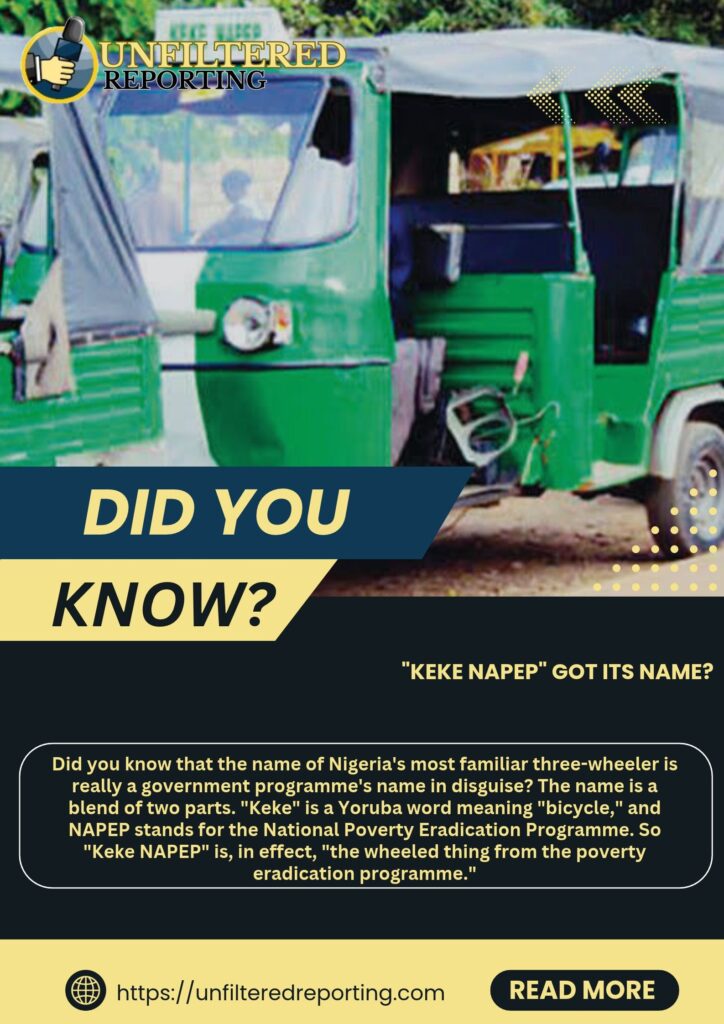
Did you know that the name of Nigeria’s most familiar three-wheeler is really a government programme’s name in disguise? The name is a blend of two parts. “Keke” is a Yoruba word meaning “bicycle,” and NAPEP stands for the National Poverty Eradication Programme. So “Keke NAPEP” is, in effect, “the wheeled thing from the poverty eradication programme.”
The programme itself came from the administration of President Olusegun Obasanjo. The federal government introduced NAPEP in 2001, an initiative that would give rise to “Keke Napep.” The idea was simple. The tricycle was meant to be a tool of empowerment, giving unemployed young people a way to earn a daily income. The programme facilitated the distribution of commercial tricycles to promote job creation and poverty reduction, and its low entry costs and flexible ownership schemes gave thousands of unemployed youths a livelihood. One interview with the person described as the brain behind the concept explained it as an experimental model of poverty eradication that seeks to empower the poor, unemployed or underemployed Nigerian to create measurable and verifiable value in society in order to earn daily bread.
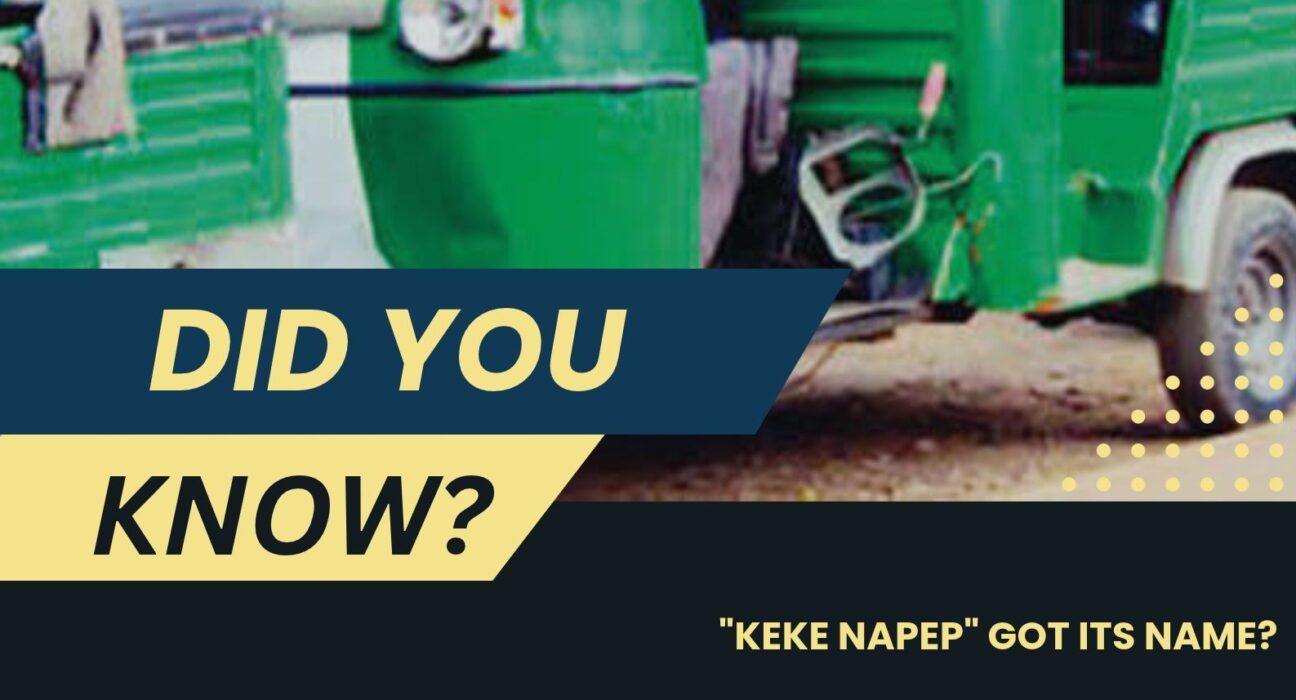
The branding is what made the name stick. The tricycles were branded in national colours and called Keke NAPEP. A tricycle painted in Nigeria’s green and white, rolled out through a national programme, was easy to recognise, and people began calling the vehicle by the programme’s name. A widely repeated figure is that the first major batch was about two thousand units, though sources differ on the exact year, with some saying 2001 and others dating the launch to November 2002.
There is an earlier chapter to the story. Tricycles were not new to Nigeria when NAPEP came along. Colonel Mohammed Buba Marwa, then military administrator of Lagos State, first launched the use of the tricycle as a means of commercial transportation in Lagos from 1996 to 1999, which led to the name “Keke Marwa.” That name is still used for commercial tricycles in Lagos today. The earlier scheme eventually faded, and Obasanjo brought the tricycle back through NAPEP. That explains why the same vehicle has two names depending on where you are. In Lagos and parts of the south-west it is often “Keke Marwa,” while across the north and central Nigeria, including Abuja, “Keke NAPEP” is the name people use.
The name has also outlived the programme. NAPEP is now described as defunct, yet its name survives on every street corner. Nigerians still say “Keke NAPEP” without a second thought, even though most riders and passengers today have never dealt with the programme at all. A government scheme that ended years ago left behind a name that became part of everyday language.
So the next time you flag down a Keke, remember that you are using a piece of Nigerian history, a Yoruba word joined to the name of a national poverty-fighting programme.