
EFCC Records 52 Illegal Mining Cases, Secures Forfeiture Of 102 Tonnes Of Solid Minerals,.Says Olukoyede
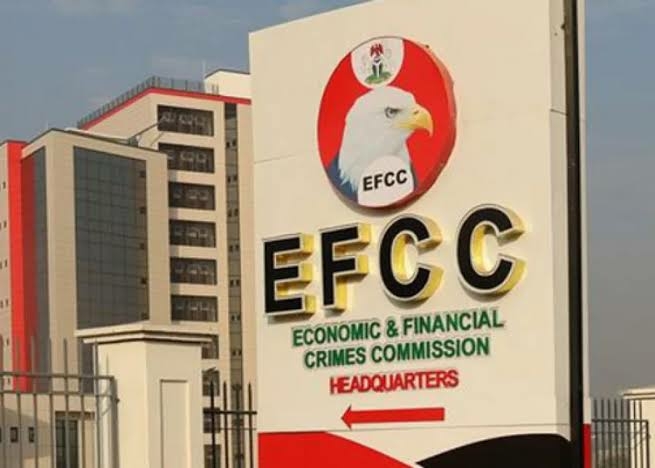
The Economic and Financial Crimes Commission (EFCC) has recorded 52 cases involving illegal mining between October 2023 and July 2026, while securing the forfeiture of 102 tonnes of solid minerals within the same period.
The EFCC Chairman, Ola Olukoyede, disclosed this while delivering a keynote address at a conference organised by the Michael Imoudu National Institute for Labour Studies (MINILS) in Ilorin, Kwara State.
The address was titled, “Uprooting the Roots of Resource Theft: A Zero-Tolerance Approach to Mining Corruption and Increasing Insecurity in Nigeria.”
The conference, organised in collaboration with the Human and Environmental Development Agenda (HEDA), focused on “Safeguarding the Future: Addressing the Nexus of Illegal Mining, Corruption and Climate Resilience in Africa.”
Olukoyede lamented that Nigeria was failing to maximise the economic benefits of its abundant mineral resources due to corruption in the mining sector, illegal exploitation and insecurity.
He, however, maintained that the country’s vast mineral deposits had the potential to position Nigeria as a major economic power globally.
The EFCC chairman explained that illegal mining was not simply an activity carried out by individuals who unlawfully enter mining sites, but involved sophisticated criminal networks with both local and international connections.
According to him, these networks include financiers, mineral buyers, transporters, individuals responsible for processing documentation, compromised government officials and beneficiaries of proceeds from illegal mining.
He stressed that addressing the problem required dismantling the entire chain of criminal operations rather than concentrating enforcement efforts solely on individuals working at mining sites.
Olukoyede noted that the commission’s strategy was to investigate the financial structures supporting illegal mining and identify those financing the activities, purchasing illegally extracted minerals and benefiting from the proceeds.
He also highlighted the relationship between illegal mining and insecurity, warning that economic activities operating outside regulatory control often create opportunities for criminal groups.
The EFCC boss called for collective efforts to eliminate the theft of the country’s mineral resources, emphasising the need for stronger cooperation among mining regulators, financial intelligence institutions, law enforcement agencies, customs authorities and revenue-generating organisations.
He explained that such collaboration should extend beyond official meetings and agreements to include effective intelligence sharing, joint investigations and coordinated enforcement operations.
Olukoyede further advocated a system that would enable authorities to trace suspicious mining activities from licence ownership and mineral extraction to buyers, financial transactions and the ultimate beneficiaries.
He also urged host communities to become active participants in the fight against illegal mining.
According to him, traditional rulers, community associations, youth organisations, civil society groups and local leaders should establish reliable channels for reporting suspicious mining activities to the appropriate authorities.
The EFCC chairman maintained that tackling illegal mining required a coordinated national response to ensure that the country’s mineral wealth benefits Nigerians rather than criminal networks.