We Will Take” ₦70,000 Allowance, PR Stunt or Not, Insists NLC’s Benson Upah
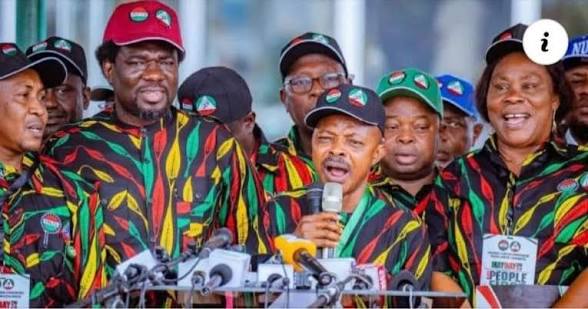
The Nigeria Labour Congress (NLC) has said it will accept the Federal Government’s ₦70,000 monthly transport allowance for public service workers, regardless of whether the intervention is a genuine relief measure or a political gesture, because the money will ease the burden on Nigerian households.
“Whether this is a PR stunt or not, as long as the ₦70,000 allowance puts money in our pocket one way or another and reduces the socio-economic tension in our life and in our home, we will take it,” said Benson Upah, NLC’s Head of Information and Public Affairs.
The allowance, approved on October 27, 2026, following a conciliation meeting between the Federal Government and the NLC in Abuja, will run for six months beginning in November 2026. It applies to public service workers across all levels, with payments expected to commence on November 5.
The agreement also provides for the payment of peculiar allowance arrears in three monthly instalments from November and the clearance of 19 months of health workers’ allowance arrears within three months, beginning in December.
The deal has exposed a rift within organised labour. The Trade Union Congress (TUC) formally rejected the allowance on October 28, dismissing the six-month package as an inadequate response to systemic inflation and demanding direct salary increases instead.
The TUC argued that the government had the resources to pay as much as ₦300,000 and that temporary allowances fail to address the erosion of purchasing power.
NLC President Joe Ajaero pushed back, insisting the TUC had no right to reject an agreement it did not negotiate. “You don’t have the power to reject what a sister agency negotiates. You have the power to ask for your own,” Ajaero said on Channels Television.
He explained that the two labour centres had disagreed over the timing of minimum wage negotiations, leading the NLC to engage the government independently.
The allowance has also drawn criticism from outside the labour movement. Nigerians on social media questioned the timing of the announcement, coming less than three months before the 2027 elections, with some describing it as “vote-buying”.
Critics also pointed to the government’s failure to deliver on a previously promised ₦35,000 wage award, raising doubts about whether the new allowance would be paid.
Former Vice President Atiku Abubakar faulted the intervention, and pensioners protested their exclusion from the relief package. Broadcaster Reuben Abati described the allowance as discriminatory because it excludes private-sector workers.
The Federal Government has stressed that the ₦70,000 is a temporary transport intervention, not a salary increase or a negotiated wage award. Budget Office Director-General Tanimu Yakubu said the support was approved by President Bola Tinubu “without a request from organised labour or negotiations under the collective bargaining process,” and that it is intended to provide immediate relief while preparations are made for negotiations on a sustainable minimum wage settlement.
Upah’s statement reflects the NLC’s pragmatic calculation: the allowance, however imperfect, delivers tangible relief to workers facing transport costs that consume as much as 30% to 40% of monthly salaries in cities like Lagos and Abuja.
But the split with the TUC, the public’s skepticism, and the unresolved question of what happens when the six-month window closes in mid-2027 all point to a deeper problem. The allowance is a palliative, not a solution — and the labour movement remains divided on whether to accept it as a down payment or reject it as a distraction.