





Nigeria’s Daily Petrol Supply Drops 23% Despite Higher Dangote Refinery Output
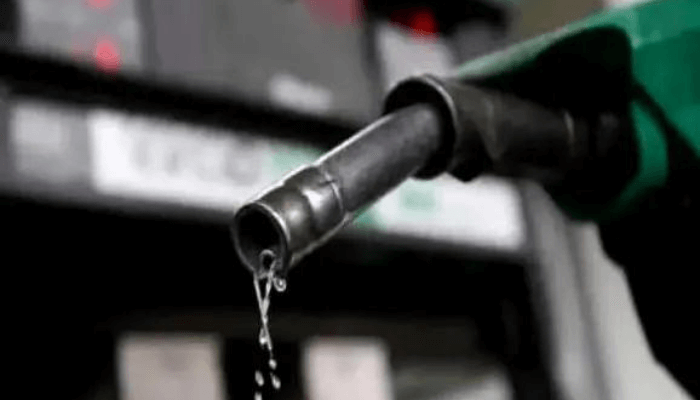
Nigeria’s daily petrol supply fell by 23 per cent in September 2026, even as the Dangote Petroleum Refinery increased production, following a decline in domestic deliveries and fuel imports, according to data from the Nigerian Midstream and Downstream Petroleum Regulatory Authority (NMDPRA).
The regulator’s September factsheet, released on Thursday, showed that average daily petrol receipts dropped from 50.5 million litres in August to 38.7 million litres in September, while daily consumption rose by seven per cent to 44.4 million litres.
The figures indicate that the market received 11.8 million fewer litres of petrol daily during the month, widening the gap between supply and consumption amid high retail prices across several Nigerian cities.
Domestic petrol receipts declined by 21 per cent, from 35.9 million litres per day in August to 28.5 million litres in September. Imports also fell by 30 per cent, from 14.6 million litres to 10.2 million litres daily.
The decline occurred despite a 13 per cent increase in the Dangote refinery’s average daily petrol production, which rose from 41.94 million litres in August to 47.22 million litres in September.
The refinery’s capacity utilisation also increased slightly from 105.21 per cent to 105.98 per cent, exceeding its installed capacity of 650,000 barrels of crude oil per day.
However, higher production did not translate into increased domestic supply, as the refinery’s petrol exports rose significantly during the period.
According to the NMDPRA report, the refinery supplied an average of 28.5 million litres of petrol daily to the domestic market in September, compared with 35.87 million litres in August.
In contrast, its daily petrol exports increased by 59 per cent, from 9.73 million litres to 15.47 million litres.
The refinery also added 3.25 million litres of petrol daily to its inventories, ending September with 366.2 million litres in stock, compared with 360.4 million litres at the end of August.
Although domestic refining remained the major source of petrol supply, accounting for approximately 74 per cent of total receipts in September, the increase in its market share was largely driven by the sharper decline in imports.
The supply reduction coincided with elevated petrol prices in major cities. The NMDPRA’s indicative prices stood at N1,371.01 per litre in Lagos, N1,420.01 in Abuja, N1,447.75 in Kano and N1,464.75 in Maiduguri.
Among the surveyed centres, the highest actual retail price recorded was N1,445 per litre in Abuja, while the lowest was N1,293.75 in Lagos.
Beyond petrol, the regulator reported a decline in crude oil deliveries to domestic refineries, with average daily receipts falling by nine per cent from 681,000 barrels in August to 618,000 barrels in September.
Despite the reduction, the Dangote refinery processed an estimated 689,000 barrels daily, exceeding the crude delivered during the month by about 71,000 barrels. The report attributed the difference to the refinery’s use of existing crude inventories.
Data covering the first nine months of the year showed that domestic refineries received 156.51 million barrels of crude oil between January and September. Of this volume, 125.85 million barrels were sourced locally, while 30.66 million barrels were imported.
Nigerian crude therefore accounted for 80.4 per cent of refinery receipts during the period, with imported crude making up the remaining 19.6 per cent.
The decline in supply was more pronounced in the diesel market, where average daily receipts plunged by 40 per cent from 14.5 million litres in August to 8.7 million litres in September, the lowest level recorded in the 13-month period covered by the regulator’s data.
Domestic diesel receipts fell by 39 per cent to 8.1 million litres daily, while imports dropped by 54 per cent to 600,000 litres. Daily consumption, however, edged up from 14.3 million litres to 14.5 million litres.
Despite increasing diesel production by 35 per cent to 24.32 million litres daily, the Dangote refinery reduced domestic deliveries from 12.37 million litres in August to 8.14 million litres in September.
Its diesel exports rose by 82 per cent, from 8.75 million litres to 15.91 million litres daily, while inventories increased from 137.2 million litres to 232.5 million litres over the same period.
The NMDPRA also reported varying operating levels among modular refineries. Walter Smith recorded 62.25 per cent capacity utilisation, Edo Refinery operated at 104.24 per cent, Aradel recorded 31.90 per cent, while OPAC operated at 18.43 per cent. Duport Refinery remained shut.
Together, the modular refineries supplied about 620,000 litres of diesel daily, representing 4.3 per cent of national consumption.
Meanwhile, liquefied petroleum gas (LPG), commonly known as cooking gas, recorded an increase in supply during September.
Average daily LPG receipts rose by nine per cent to 4.7 kilotonnes, supported by a 50 per cent increase in domestic supply to 4.5 kilotonnes. Imports declined by 85 per cent to 0.2 kilotonnes.
Domestic sources accounted for approximately 96 per cent of total LPG receipts, although daily consumption increased by eight per cent to 5.2 kilotonnes.
In the natural gas sector, total average daily supply, including deliveries to Nigeria LNG Limited, fell by 2.2 per cent to 4.822 billion cubic feet in September.
Domestic gas supply declined by 6.7 per cent to 2.066 billion cubic feet daily, while deliveries to Nigeria LNG rose by 1.5 per cent to 2.756 billion cubic feet per day.