


The Houthis Versus Saudi Arabia: Where It Started
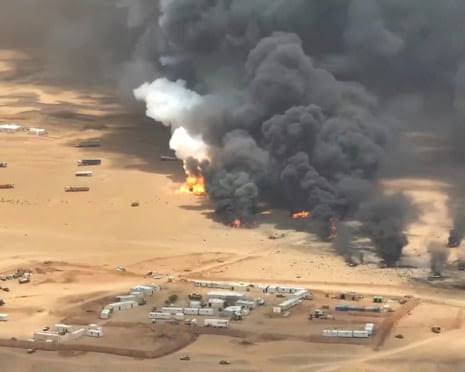
When alarms wail across southern Saudi Arabia and explosions rock critical infrastructure, power stations, and border towns, it is easy to view these events through the lens of modern flashpoints such as the Gaza war, Red Sea shipping blockades, or contemporary Iranian proxy maneuvers. However, looking past the breaking news reveals a much deeper and older reality. This fierce geopolitical rivalry did not start yesterday; it is the culmination of four decades of religious intervention, bruised tribal pride, mountain rebellions, and a protracted military campaign that pushed an entire nation to the edge of famine.
To understand why a mountain-based rebel group in Yemen harbors such deep resentment toward Riyadh, one must look northward to the rugged province of Saada. For over a millennium, this mountainous region was populated by Zaydi Shia Muslims. Zaydism occupies a unique space in Islamic theology. While technically a branch of Shia Islam, its practical and doctrinal traditions share significant common ground with Sunni Islam. For centuries, Zaydis and Sunnis in Yemen coexisted harmoniously, praying side by side in the same mosques without friction.
This delicate socio-religious balance shifted dramatically during the oil boom of the 1970s. Flush with billions in newfound wealth, the Saudi royal family forged a strategic alliance with Wahhabi and Salafi clerics, trading religious legitimacy for state funding to propagate Wahhabism globally. Naturally, Saudi Arabia targeted its impoverished southern neighbor by pouring massive financial resources into northern Yemen, establishing sprawling religious schools and madrasas right in the heartland of the Zaydi community, most notably in the town of Dammaj. Saudi preachers began instructing young Yemenis that their parents’ Zaydi traditions were outdated or heretical. By offering stipends, free food, and educational scholarships to families adopting strict doctrines, the outreach felt to local mountain tribes like an aggressive cultural invasion an ultra-wealthy neighbor stepping into their living room and buying off their children.
## The Rise of Hussein Badreddin al-Houthi
Recognizing that Zaydi identity was facing gradual erasure, Hussein Badreddin al-Houthi stepped forward in the 1990s. He founded the “Believing Youth” movement initially organized as a cultural revival initiative featuring youth camps, summer classes, and community projects designed to defend local heritage and resist foreign financial influence. Simultaneously, Hussein turned his criticism toward Yemen’s central government in Sana’a, led by President Ali Abdullah Saleh. For decades, Saleh treated northern Yemen with profound neglect, trading sovereign security for Saudi financial handouts. Riyadh preferred a weak, divided, and dependent Yemen on its southern border, routinely financing rival tribal chiefs and factions to keep the country unstable.
As Hussein’s fierce sermons against corruption and foreign subservience drew tens of thousands of followers, the Yemeni government felt severely threatened. In 2004, state troops were dispatched to the northern mountains to arrest him. Hussein retreated to a mountain cave, where he was ultimately tracked down and killed by government forces. Rather than extinguishing the movement, his death transformed him into a martyr. The group militarized entirely, adopted his family name the Houthis and fought six brutal wars against the Yemeni army between 2004 and 2010. Throughout these conflicts, Saudi Arabia quietly funneled money, weapons, and intelligence to help crush the insurgency.
When the Arab Spring swept through West Asia in 2011, street protests forced President Saleh to step down after three decades in power. Saudi Arabia quickly stepped in to manage his exit, brokering a political transition that replaced Saleh with his deputy, Abdrabbuh Mansur Hadi. The Houthis rejected Hadi outright, viewing him as another Riyadh-appointed puppet installed to keep Yemen obedient. By late 2014, the Houthis marched south from their mountain stronghold, swept into Sana’a, and took control of government buildings. President Hadi was placed under house arrest before managing to escape south to Aden and eventually fleeing straight to Riyadh.
For Saudi Arabia, a critical red line had been crossed. Their southern neighbor was no longer managed by compliant, payrolled politicians; it was now governed by an anti-Saudi armed rebel group controlling the strategic Red Sea coastline. Panicked by this shift, Riyadh’s response altered the trajectory of the region. In March 2015, Saudi Arabia’s defense minister, Mohammed bin Salman, launched Operation Decisive Storm.
Backed by a 10-country coalition, advanced Western fighter jets, and precision-guided munitions, the military intervention was projected to take mere weeks. Instead, it unraveled into nearly a decade of unrelenting devastation. The Saudi coalition imposed a strict air and naval blockade on Yemen’s main ports. With food, fuel, and medical supplies choked off, the United Nations designated Yemen the world’s worst humanitarian crisis, leaving millions facing starvation and preventable diseases. While ordinary Yemenis may have held mixed views toward the Houthis prior to 2015, the relentless bombing campaign united millions against a common external aggressor.
Before 2015, Iran’s involvement with the Houthis was limited; both shared anti-Western sentiments, but the Houthis operated as an independent, homegrown rebel force with local grievances. However, facing advanced Western air power with nowhere else to turn, the Houthis reached out to Iran and Hezbollah for assistance. For Tehran, this presented an exceptionally cost-effective asymmetric strategy. While Saudi Arabia spent billions maintaining and flying expensive fighter jets, Iran funneled compact drone parts, ballistic missile guidance kits, and technical advisors into Yemen. Within a few years, the Houthis evolved from mountain fighters into a sophisticated force capable of launching long-range precision strikes. By September 2019, a massive drone and cruise missile attack temporarily knocked out half of Saudi Arabia’s oil production in a single morning.
The mathematical reality of the conflict proved economically unsustainable for Riyadh. While a basic Houthi drone built with consumer parts and commercial GPS costs roughly $15,000 to $20,000, intercepting it with advanced Patriot missile systems costs between $3 million and $4 million per shot.
Today, Crown Prince Mohammed bin Salman’s ambitious economic diversification plans including visionary projects like Neom, high-tech startups, and global tourism initiatives require absolute regional stability. Sirens blaring across the kingdom and international flights dodging drones are incompatible with a modern economic future. While Saudi Arabia has spent recent years quietly pursuing direct ceasefires and diplomatic channels behind closed doors, deep-seated historical grievances, decades of religious friction, and the enduring scars of war ensure that the legacy of the Yemen-Saudi conflict remains complex and profoundly entrenched.