

Nigeria’s Carbon Projects Must Deliver Genuine Climate Benefits, Says NCCC DG
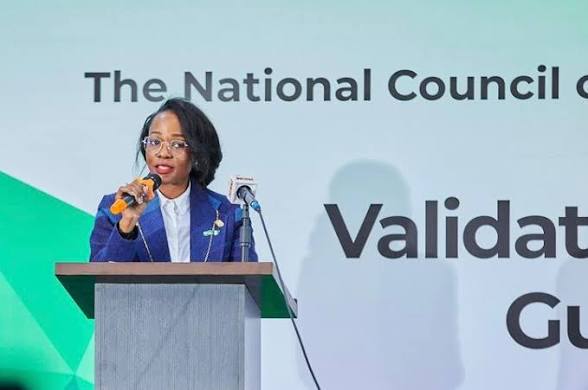
The Director-General and Chief Executive Officer of the National Council on Climate Change (NCCC), Omotenioye Majekodunmi, has said Nigeria’s carbon market projects must deliver genuine emissions reduction and climate mitigation outcomes.
Majekodunmi made the remarks in Abuja at a Stakeholders’ Review and Validation Workshop on the draft Host Country Approval Criteria for Nigeria’s Carbon Market Operations, organised by the NCCC.
She said Nigeria had already taken important steps towards establishing the institutional architecture for the carbon market, adding that the next task was to develop approval criteria that would protect the country’s interests while providing certainty for credible investors and project developers.
According to her, the criteria should ensure that Nigeria participates in the global carbon market through processes that are credible, transparent, equitable and beneficial to Nigerians, with strong national oversight.
Majekodunmi said a properly regulated carbon market could help attract financing for clean energy, sustainable agriculture, nature-based solutions, improved waste management and methane reduction.
She added that the sector could also create green jobs and contribute to Nigeria’s broader economic transformation.
Also speaking, the Vice-Chancellor of the University of Nigeria, Nsukka, Prof. Simon Uchenna Ortuanya, said the country had taken a significant step towards institutionalising carbon market governance through the approval of its framework.
Ortuanya said partnerships between government and research institutions would be critical to developing evidence-based policies and ensuring effective implementation of the framework.
He noted that the next major task was to establish clear, practical and transparent Host Country Approval criteria to guide the eligibility, screening and assessment of carbon market projects.
The Vice-Chancellor said a well-governed carbon market could mobilise resources needed to support greenhouse gas emission reductions, climate finance and Nigeria’s transition towards a low-carbon economy.
He stressed that the opportunities presented by the global carbon market were particularly important to Nigeria as the country seeks to balance economic growth, industrial development, energy access and poverty reduction with the need to address climate change.
Ortuanya said the proposed criteria would clarify institutional responsibilities, approval procedures, measurement, reporting and verification requirements, environmental and social safeguards, as well as alignment with Nigeria’s Nationally Determined Contribution.
“Our investment in research institutions, policy development and stakeholder engagement is an investment in Nigeria’s capacity to respond effectively to climate change while pursuing sustainable economic development,” he said.
He commended the NCCC and the Resource and Environmental Policy Research Centre, Environment for Development (REPRC-EfD Nigeria), for convening stakeholders to strengthen the implementation of Nigeria’s carbon market framework.