Otti Urges Ndigbo to Shift From Traditional Trading to Manufacturing, Digital Commerce
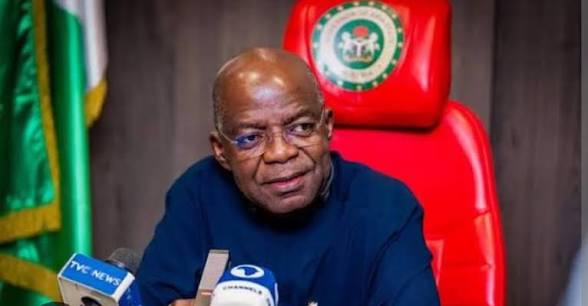
Abia State Governor, Alex Otti, has urged Ndigbo to move beyond conventional trading and invest more in manufacturing and digital commerce amid growing competition from Chinese businesses in Nigeria’s retail sector.
Otti made the call on Monday night at the Michael Okpara Auditorium in Umuahia during the Igbo Day lecture and dinner organised by Ohanaeze Ndigbo Worldwide.
The governor said the changing nature of commerce required Igbo entrepreneurs to adapt rather than focus on preserving traditional trading models.
He said Abia was repositioning itself as a manufacturing and technology hub while investing in digital skills to prepare young people for opportunities in the global economy.
“We are leaving that place of trading. In Abia, we have markets; the markets are important. But we are moving from the market to manufacturing,” Otti said.
He added that his administration was promoting digital delivery as an alternative to dependence on physical stores and conventional markets.
“We are driving digital delivery. We are leaving that physical store for digital delivery. So, when somebody talked about Alibaba, that’s exactly where we are headed,” he said.
Otti was responding to concerns about the increasing presence of Chinese nationals in Lagos retail markets and the competition they pose to businesses traditionally dominated by Igbo traders.
He said the development should instead encourage Ndigbo to respond to changes in the global economy by developing new business models.
According to him, Abia’s strategy combines manufacturing with a transition from conventional to digital commerce.
The governor also cited the state’s TechRise initiative, which he said was designed to train young people in digital technology and equip them for the global labour market.
He said some beneficiaries were already working remotely for international companies, including Google and Amazon, from Aba.
However, the President-General of Ohanaeze Ndigbo Worldwide, Senator John Azuta-Mbata, expressed concern over the growing presence of Chinese traders in Lagos.
Azuta-Mbata said the development was significant because retail trade had historically been an important area of Igbo entrepreneurship.
He called for a coordinated strategy that would enable Ndigbo to protect and expand their economic interests while building on their record of enterprise and individual achievement.
He said the Igbo Day lecture and dinner was organised to harness the collective strength of Ndigbo through a unified development strategy.
Azuta-Mbata also highlighted the Igbo Charter for Strategic Engagement for National Development, prepared by more than 67 Igbo technocrats and business leaders, as a framework for engagement with the Nigerian government and the international community.
The Ohanaeze leader called for stronger efforts to preserve Igbo culture and language, including making Igbo a compulsory subject in primary and secondary schools across the South-East.
He also appealed to the Federal Government to pursue a political solution to the continued detention of IPOB leader, Mazi Nnamdi Kanu.
Chairman of the occasion, Chief Onyema Ugochukwu, urged Ndigbo to focus on practical steps towards improving their collective future rather than concentrating on complaints about political and economic challenges.
“We must look forward to building a brighter future, moving beyond complaining about those who won’t give us our due, to taking our destiny in our own hands,” Ugochukwu said.
He commended Otti’s administration and praised Ohanaeze for sustaining the annual Igbo Day celebration.
Otti, in turn, pledged his administration’s support for Ohanaeze and said the theme of the celebration, “Njikọ Ka” meaning “Unity is Supreme”, underscored the importance of collective action.
The governor said his administration had established the foundation for the state’s transformation.
Prof. Kingsley Moghalu, Chairman of the Igbo Charter Committee for Strategic Engagement for National Development, delivered the keynote address at the event.
The gathering was attended by political leaders, traditional rulers, clergy, business leaders, members of the National Assembly and other prominent members of the Igbo community.