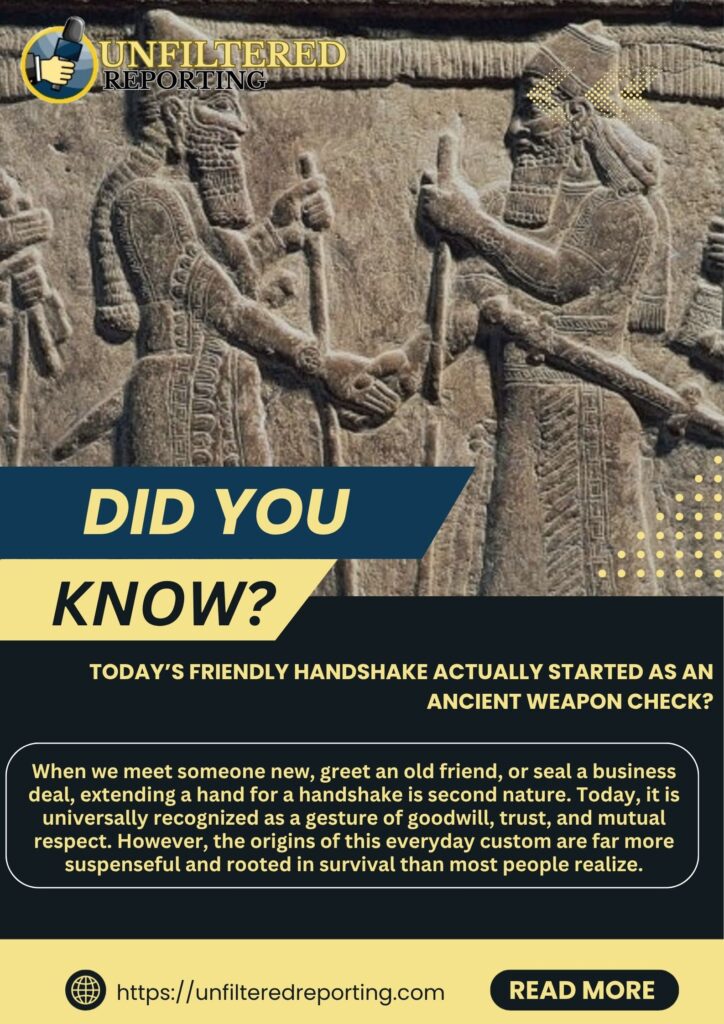



Did you know: Friendly Handshake Started as an Ancient Weapon Check
When we meet someone new, greet an old friend, or seal a business deal, extending a hand for a handshake is second nature. Today, it is universally recognized as a gesture of goodwill, trust, and mutual respect. However, the origins of this everyday custom are far more suspenseful and rooted in survival than most people realize.
Long before it became a polite social nicety, the handshake was a literal safety inspection. In ancient times with roots often traced back to ancient Greece and later popularized throughout medieval Europe men routinely carried concealed daggers or short swords tucked into their sleeves or tunics.
When two strangers or potential adversaries met, extending their right hand and grasping each other’s palms served a vital defensive purpose. By locking hands, both parties demonstrated that they were not holding a weapon in their dominant hand. Furthermore, the traditional up-and-down shaking motion was designed to dislodge any hidden daggers or blades that might be slipped further up the sleeve or trapped in heavy folds of fabric. If a blade fell out during the shake, it immediately exposed hostile intent.
Over the centuries, as societies evolved and carrying hidden daggers became less of an everyday concern, the physical necessity of the weapon check faded away. However, the gesture itself endured. The core symbolism of the act demonstrating open palms and a willingness to meet on equal, unarmed terms remained powerful, allowing the handshake to transition smoothly from a tactical security measure into a cultural symbol of peace and agreement.
The next time you extend your hand to greet someone, you are carrying on a centuries-old tradition that once stood between life and death.