

Subsidy Reforms Free N15.8bTrillion for Nigeria in 30 Months, Says Oyedele
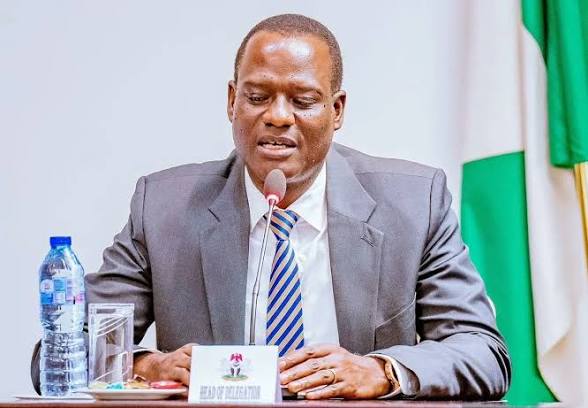
Nigeria’s petrol subsidy and foreign exchange reforms generated N15.8 trillion in additional resources for the federation between June 2023 and December 2025, Finance Minister Taiwo Oyedele said on Wednesday.
The Federal Government received N5.4 trillion of the total, while N10.4 trillion was distributed to state and local governments through the Federation Account.
Oyedele disclosed the figures during a media briefing in Abuja on the government’s reform scorecard covering 2023 to 2026.
“Between June 2023 and December 2025, subsidy savings mobilised a sum of N15.8tn in resources for the Federation,” he said.
He clarified that the savings did not appear as a separate line item in the Federation Account. Instead, they showed up through higher revenue collections—customs duties and petroleum profit tax receipts rose in naira terms after the naira floated from about N460 to over N1,000 per dollar.
“Not just the subsidy removal, but also the exchange rate flotation, because we were subsidising the exchange rate. And that subsidy was not going to the ordinary person or manufacturers. It was going to rent-seekers,” Oyedele said.
The government raised an additional N3.1 trillion in independent revenue during the period, mainly from increased remittances by state-owned enterprises. Combined with N11.9 trillion in incremental borrowing, total additional resources reached N20.4 trillion.
“The additional borrowing taken for that period of time from June 2023 to December 2025 amounted to N11.9 trillion, a figure that would have been far higher and economically destabilising without the fiscal space the reforms created,” he said.
Total federal government incremental expenditure stood at N30.64 trillion over the same period. The largest share—N9.39 trillion—went to wage adjustments, minimum wage increases and allowances for public servants.
Another N9.37 trillion was spent servicing external debt, a cost that rose sharply following naira depreciation. “If we’re paying $1 million interest on foreign debt, instead of N460 million, it’s now about N1.415 billion. That’s more naira than we need to incur,” Oyedele explained.
The government allocated N6.5 trillion to strategic infrastructure, N3.14 trillion to electricity subsidies, and N423.8 billion to social welfare transfers.
Oyedele stressed the reforms were never about raising revenue. “That, in itself, is evidence that the reform was never introduced for revenue purposes, but to address entrenched corruption in an artificially managed fuel subsidy and foreign exchange market,” he said.