


FG Won’t Publish Spending Details of $5bn First Abu Dhabi Bank Facility, Says Oyedele
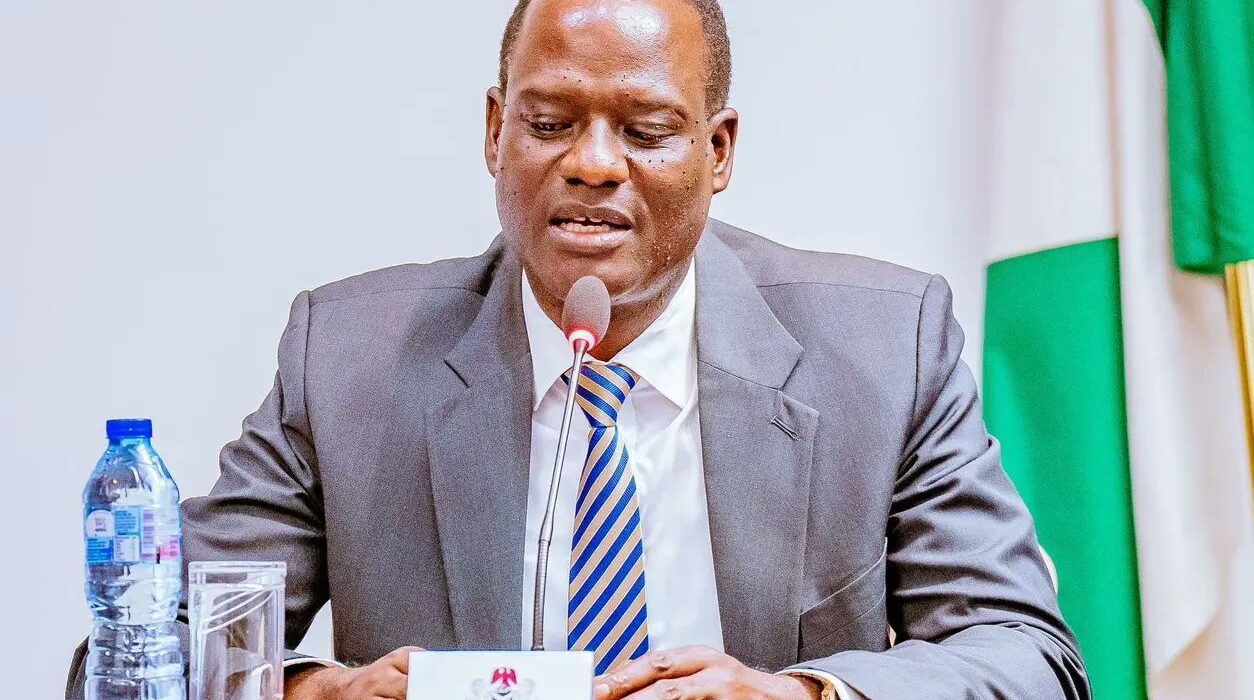
The Federal Government will not release a specific breakdown of how it intends to spend the $5 billion financing facility secured from First Abu Dhabi Bank (FAB), Minister of Finance and Coordinating Minister of the Economy, Taiwo Oyedele, has said.
Oyedele disclosed this on Wednesday during a media briefing in Abuja while responding to questions about the government’s borrowing strategy and the structure of the FAB transaction.
The minister said there was no reason to subject the facility to a different disclosure requirement from other sources of government financing, noting that the transaction had passed the necessary approval procedures, including consideration by the National Assembly.
“We will not publish how we are spending it. We will publish how we spend government money. There’s nothing special about that loan,” Oyedele said.
He questioned why the FAB facility should attract a separate spending disclosure when similar details are not routinely published for funds obtained through instruments such as World Bank loans, Eurobonds and Sukuk.
The $5 billion facility forms part of a broader $6 billion external borrowing programme approved by the National Assembly in March. The government has so far accessed about $1.5 billion from the FAB arrangement as its first tranche.
The transaction has generated public interest because it is structured as a total return swap (TRS), rather than a conventional sovereign loan.
Oyedele maintained that the facility received approval from the Federal Executive Council before being presented to the National Assembly, arguing that the transaction was subjected to the required legislative process.
He also disclosed that the government would access the facility in phases rather than draw down the entire $5 billion at once.
According to him, phased withdrawals would prevent the government from incurring financing costs on funds that have not yet been deployed.
The minister explained that the FAB arrangement also differs from conventional fixed-rate borrowing, including many of Nigeria’s existing bonds and Eurobonds.
He said fixed-rate instruments require the government to continue paying the agreed interest even when prevailing market rates decline, while the FAB facility carries a flexible rate that allows borrowing costs to fall when interest rates decrease.
Oyedele acknowledged that the floating-rate structure could increase the government’s financing costs if interest rates rise. However, he said the government expects the facility to reduce overall borrowing costs by using it to refinance more expensive existing debt.
The minister said the government would publish frequently asked questions about the FAB transaction on the websites of the Ministry of Finance and the Debt Management Office to provide additional information about the arrangement.
He maintained that the government remained committed to transparency but reiterated that it would not release a separate itemised account of how proceeds from the FAB facility would be spent.
The comments come amid continued scrutiny of Nigeria’s borrowing strategy and concerns over the structure and fiscal implications of the Abu Dhabi financing arrangement.
The International Monetary Fund has previously encouraged Nigeria to consider more transparent financing instruments, including conventional Eurobonds and concessional loans, while drawing attention to the potential fiscal risks associated with complex financing structures.