

Colombia’s New President Declares War on Narco-Terrorism, Says Time for Dialogue Over
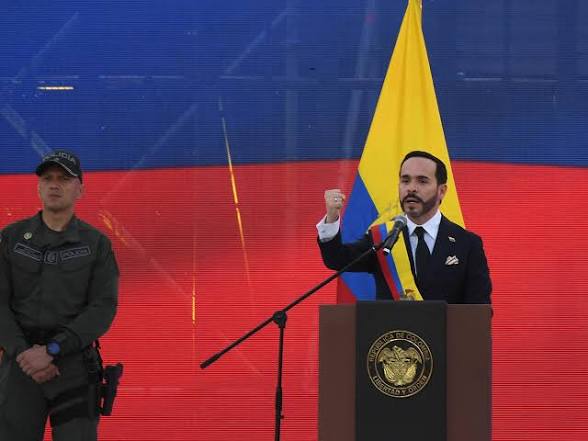
Colombia has a new president with a starkly different playbook for tackling the country’s armed groups, after Abelardo de la Espriella used his first major address in office to declare that dialogue with narco-terrorists is finished and vowed a relentless military crackdown in its place.
The 48-year-old, inaugurated on Friday in the southwestern city of Cali, flew by helicopter straight from the ceremony to address soldiers at a military garrison, where he delivered a lengthy, combative speech setting the tone for his presidency.
He told the assembled troops there would be no room for manoeuvres that undermine the stability of the nation, pledging to relentlessly defeat narco-terrorism and declaring that the option of dialogue was completely exhausted, a clear rebuke of his left-wing predecessor’s efforts to negotiate peace with the country’s armed groups.
De la Espriella, who has taken to calling himself “The Tiger,” laid out plans for a hardline security strategy that includes building new “mega-prisons,” resuming aerial spraying to destroy illicit coca crops, and forging closer military ties with both the United States and Israel in what he has dubbed “Plan Colombia II,” a nod to a multi-billion-dollar US-backed anti-drug initiative from the 2000s.
Among his first acts in office, he confirmed Colombia would join a US-led regional anti-cartel alliance known as Shield of the Americas, signalling a sharp pivot toward Washington after years of friction between Bogotá and the Trump administration.
The new president’s approach marks a dramatic departure from that of his predecessor, Gustavo Petro, whose left-wing government spent four years pursuing peace talks with the country’s patchwork of armed groups, a strategy critics argue allowed increasingly profit-driven criminal organisations to expand under the cover of government truces.
De la Espriella narrowly won the presidency by less than a single percentage point, and now governs with a divided Congress in which his party lacks a majority, leaving him to prove his tougher stance can deliver results where dialogue reportedly fell short. Petro, who has alleged electoral fraud without providing evidence, called for nationwide protests on the day of the inauguration, with demonstrations held peacefully in cities including Bogotá and Barranquilla.
The shift in Colombia’s security posture comes as Washington moves to back the new administration financially, with US officials signalling plans to work with Congress on a $1 billion assistance package for the country.
Photo Credit: RFI