
Orire Rescue, Nigeria Stock Market And Why Unbelief is Popular
Human nature is a complex maze. When faced with sudden shifts, monumental news, or sudden turnarounds, our default setting is to doubt. We see this play out globally and locally, stretching from ancient history to the modern digital town square of social media.
Recently, Nigeria witnessed two major milestones: the rescue of the abducted school children in Orire town , and a historic surge in the Nigerian stock market, which briefly outpaced South Korea to rank the best-performing in the world. Yet, alongside the applause, a volume 100% wave of skepticism echoed across social media. Some questioned the authenticity of the rescue claiming the government paid ransom, while others dismissed the economic indices as mere manipulation.
Why is unbelief so popular, even when confronted with evidence? The answer lies deep within human psychology, historic precedents, and our innate cultural and spiritual frameworks.
Skepticism is not a modern invention born of Twitter or TikTok; it is as old as humanity itself. Even in sacred texts, unbelief has always competed fiercely with faith.
When Moses sent 12 leaders to spy out the Promised Land of Canaan, they all saw the same reality: a land flowing with milk and honey. Yet, 10 of the 12 returned with an evil report of doubt. They claimed the inhabitants were giants and that the land was untamable. Only Joshua and Caleb possessed the mindset of belief, declaring that they were well able to overcome it. The majority chose the comfort of fear over the possibility of breakthrough.
A similar wave of doubt occurred during a devastating famine in Samaria, where conditions were so grim that desperation had turned inward. The prophet Elisha declared a dramatic turnaround, predicting that fine flour and barley would be sold cheaply by the next day. The king’s right-hand man, a noble officer, openly mocked the prophecy, saying that even if God opened the windows of heaven, such a thing was impossible. The turnaround happened exactly as predicted, but the officer, trapped in his skepticism, did not live to enjoy it.
Even within the inner circle of Jesus Christ, unbelief reared its head. After the resurrection, when the disciples excitedly told Thomas they had seen the Lord, he ferociously refused to believe unless he could physically press his fingers into the nail wounds. Thomas required tangible validation before his mind could accept a reality that defied his current expectations.
This pattern of doubt extends into modern socio-economics across the African continent. Consider the post-apartheid economic trajectory of South Africa. As the nation transitioned, the government insisted that the economy was expanding and creating new frontiers.
However, many local citizens, locked in a mindset of historic skepticism and doubt, failed to see or believe in these emerging micro-economic opportunities. While they doubted, enterprising individuals from other African nations saw the gaps, dived in, invested, and ultimately took over vital sectors of the informal and micro-economy. Today, the realization of what was lost has fueled economic frustration and xenophobic tensions. Unbelief blinded a population to the wealth growing right under their feet.
When the military successfully secured the release of the Orire school children, social media filled with theories. Critics claimed it was a staged political drama or that ransom must have been paid behind closed doors. The presidency later detailed the strategic operation, explaining that eight kidnappers were arrested and handed over to the DSS, several others were neutralized, and security agencies utilized psychological leverage by tracking and detaining family members of the bandits to force a surrender. Despite this structured military operation, the default response for many was to disbelieve.
Similarly, when global financial indexes reported that the Nigerian Exchange had outperformed major global markets like South Korea, the reactions were mixed with deep disbelief. Despite international validation from institutions like S&P, the IMF, and the World Bank alongside Nigeria’s exit from the financial grey list many citizens remain doubtful. The common refrain is that until they feel the money in their own pockets, they will not believe it.
While it is entirely natural to connect macro-economics to personal purchasing power, dismissing institutional progress altogether is a dangerous form of blindness. While skeptics argue on timelines, new businesses are springing up, foreign investors are taking positions, and those who recognize the changes are quietly capitalizing on the reforms.
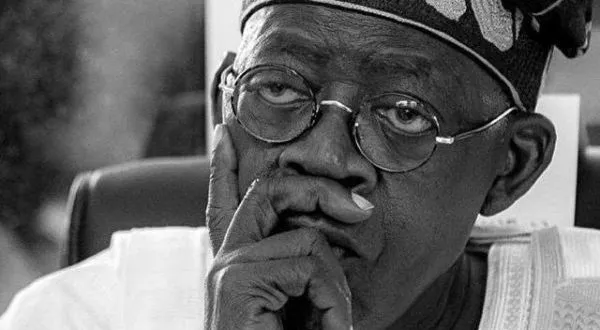
Steering a nation through intense economic reforms requires a leadership that is immune to the noise of popular skepticism. President Bola Ahmed Tinubu’s trajectory has long been defined by an unyielding focus on the bigger picture.
Even in the final weeks leading up to the 2023 general elections amidst the biting dual crises of fuel scarcity and the naira redesign many insiders and observers lost faith, believing the compounding hardships would doom his candidacy. Yet, for me with a long-term perspective, his victory was not a surprise. It aligned with a decades-long track record of political engineering and a steadfast vision for structural transformation.
True faith in a nation’s future is a matter of choice. In times of transition, those who wait for perfect conditions before they believe are often left behind. The signs of structural stabilization are visible for those willing to look beyond immediate hardships.
History shows that the cynical majority rarely inherit the future; it is inherited by the few who see opportunity amidst chaos. Nigeria is undergoing a profound economic repositioning. The revenue base is expanding, leakages are being blocked, and the foundations of the economy are being rebuilt.
Rather than letting the persistent noise of social media dictate your outlook, it is time to look at the data, identify the growth sectors, and invest in the future of the country. Blessed are those who can see the seeds of a new era while the ground is still being plowed. Let us move past the popularity of unbelief, tap into the current momentum of reform, and claim our stake in the rebuilding of our nation.
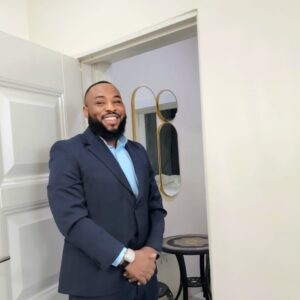
Bamidele Atoyebi is the Convener of BAT Ideological Group, National Coordinator of Accountability and Policy Monitoring and a publisher at Unfiltered and Mining Reporting and political social worker