
NNPC Reports $3.4 Billion Savings, N19.5 Trillion Remittance as FG Streamlines 270 Oil Sector Charges
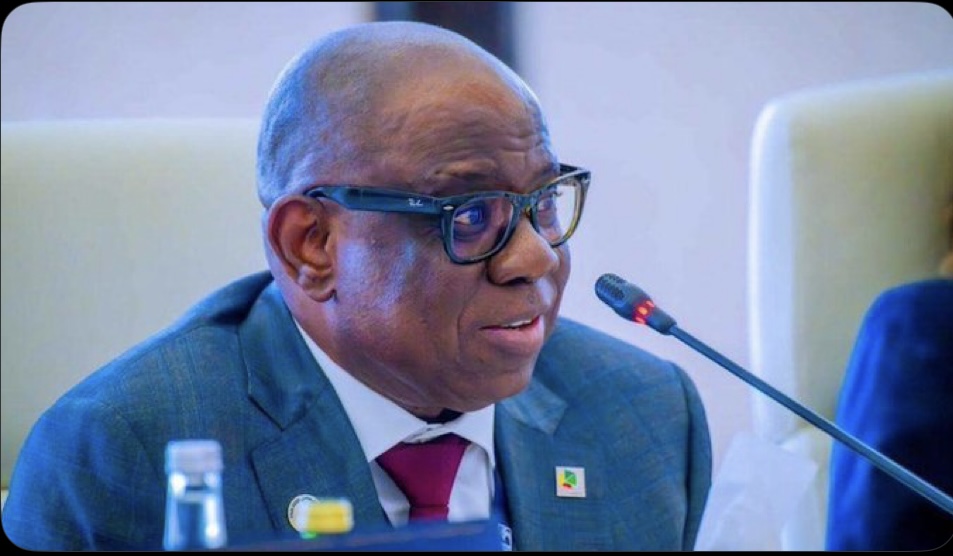
The Nigerian National Petroleum Company (NNPC) Limited says it has saved $3.4 billion through cost optimisation and contract restructuring while remitting N19.5 trillion to the Federation Account over the past 14 months, as the Federal Government pushes ahead with reforms aimed at making Nigeria's oil and gas sector more competitive.
The announcement was made by the Group Chief Executive Officer of NNPC Ltd, Bayo Ojulari, during the opening of the 25th Nigeria Oil and Gas (NOG) Energy Week in Abuja, where government officials and industry stakeholders reviewed the progress of ongoing reforms in the petroleum industry.
Ojulari said the savings were achieved between April 2025 and July 2026 through improved commercial discipline, contract optimisation and operational efficiency initiatives implemented across the company's operations.
According to him, the reforms also led to a 21.8 per cent increase in remittances to the Federation Account, with the company contributing a total of N19.5 trillion during the review period.
He noted that NNPC maintained 100 per cent compliance with its joint venture cash-call obligations, despite funding shortfalls by several of its joint venture partners.
The NNPC boss also highlighted improvements in Nigeria's oil and gas production, disclosing that crude oil output has risen to approximately 1.71 million barrels per day, the highest level recorded in five years.
He added that gas production has increased to about 7.5 billion standard cubic feet per day, supported by major infrastructure projects such as the Ajaokuta-Kaduna-Kano (AKK) Gas Pipeline and the ANOH Gas Plant.
Meanwhile, the Minister of State for Petroleum Resources (Oil), Heineken Lokpobiri, announced that the Federal Government has engaged global consulting firm PricewaterhouseCoopers (PwC) to review and benchmark the more than 270 taxes, levies, fees and regulatory charges imposed on operators in Nigeria's oil and gas industry.
Lokpobiri said the exercise is intended to simplify Nigeria's fiscal framework and eliminate unnecessary administrative burdens that discourage investment.
According to the minister, while many of the individual charges are relatively small, the cumulative effect of processing hundreds of separate payments significantly increases the cost of doing business and weakens the country's competitiveness.
He explained that the benchmarking exercise would compare Nigeria's fiscal regime with those of other leading oil-producing nations to identify areas for reform and improve the investment climate.
The minister said streamlining the multiple charges forms part of the Federal Government's broader strategy to attract new investments, boost production, strengthen government revenue and enhance the long-term sustainability of the country's energy sector.
Industry stakeholders at the conference welcomed the reforms, expressing optimism that a simplified fiscal regime, combined with improved operational efficiency at NNPC, would increase investor confidence and support Nigeria's ambition to expand oil and gas production while maximising economic benefits from the sector.