


Focus on Substance, Tinubu Upbraids Media Forum as He Defends Economic Reforms at Inaugural State House Dinner
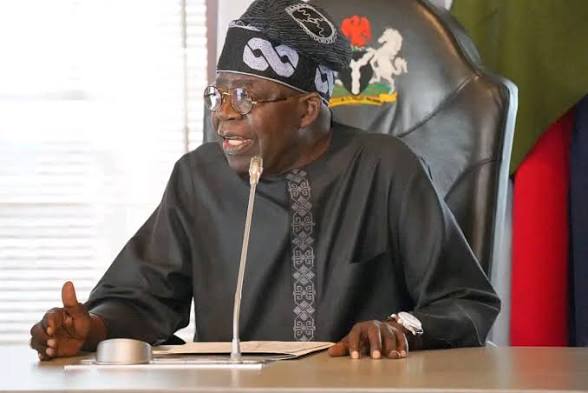
President Bola Tinubu has urged Nigerian journalists to prioritize “substance over sensation” at the maiden State House Media Dinner Thursday, defending his administration’s economic record.
Speaking to State House correspondents and senior editors, Tinubu argue that Nigeria’s economy was turning a corner under his reforms.
“Our economy is stabilising,” Tinubu said, adding that public revenues have strengthened significantly and that state governments are receiving substantially higher allocations to support development.
He said investor confidence is returning to the country.
The president pointed to several specific indicators. He cited improved foreign reserves, renewed investment in the oil and gas sector, and remarkable growth in the stock market as evidence that key economic indicators are moving in the right direction.
Tinubu credited tax reforms, fiscal reforms, infrastructure investments, and improvements in the business environment for laying the foundations of a more competitive and productive economy.
He did not claim the work was finished.
“The journey is not yet complete,” Tinubu acknowledged, saying challenges remain even as the direction is clear and the foundations for long-term growth are being firmly established.
Tinubu also addressed security, an issue closely tied to economic stability in Nigeria’s resource-producing regions. He said military operations have intensified across several theatres, that intelligence gathering has improved, and that inter-agency and international cooperation have expanded, resulting in thousands of criminal elements and terrorists being neutralised and numerous hostages rescued.
The economic remarks came inside a broader address on press freedom and media responsibility. Tinubu contrasted two hypothetical headlines — one declaring Nigeria’s economy was expanding under his leadership, the other claiming he was “losing grip” — to illustrate what he described as inconsistency in economic coverage.
“Between those two headlines, a lot must have happened,” he said, asking whether the media had done its homework and provided citizens with the context and analysis needed to understand what changed, or whether coverage was drifting toward the old newsroom creed that “if it bleeds, it leads.”
He tied that critique directly back to reform coverage, arguing that responsible journalism was essential to how the public understands economic policy.
“The media must choose fact over falsehood. The media must choose substance over sensation,” Tinubu said, calling on journalists to choose credibility over clickbait and the endless race for followers, likes, and viral outrage.
Details on independent economic data corroborating the president’s figures remain unclear from the address alone